
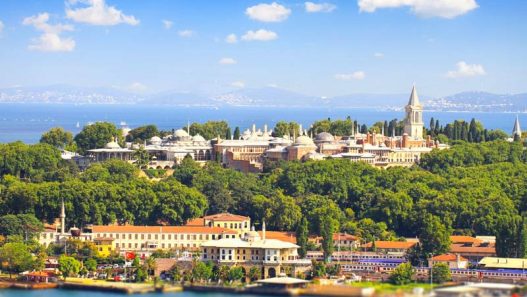
Istanbul’s coastline is a living archive. You can read time across the water: Byzantine domes, Ottoman minarets and palaces, Republican bridges, and new towers pushing the city’s boundaries. The silhouette of the Historic Peninsula—with the massive dome of Hagia Sophia alongside Süleymaniye and Topkapı—did not survive by chance; it is actively protected thanks to conservation plans that treat this silhouette itself as a cultural heritage.

Along the Bosphorus, this heritage takes on a different form. Here, the city speaks through wood and tides. Yalı mansions—seaside residences built almost at the water’s edge—bring together a lifestyle shaped around the daily choreography of light, breeze, and ferries, crafted by skilled carpentry. Many of these structures, made of wood and flexible under seismic stress, depend on constant maintenance to survive. Both academic studies and policy discussions treat these structures as fragile and valuable evidence of coastal culture.

The bridges frame this memory with modern lines. The First Bosphorus Bridge opened in 1973, the Fatih Sultan Mehmet Bridge in 1988, and the Yavuz Sultan Selim Bridge in 2016. Each one sits like a new necklace across the strait, each one changing how the city is seen from the water and how neighborhoods connect across the strait’s two shores. These bridges are engineering marvels, but they also create powerful silhouettes and alter the camera angles through which the world imagines Istanbul.
The Architectural Memory of the Strait
Istanbul’s memory is spatial. On the peninsula, urban plans clearly preserve the view so that the classic silhouette can be clearly seen from the sea. Around the Bosphorus, the Bosphorus Law No. 2960, a separate legal framework, divides the coastline into zones ranging from the “front view” at the water’s edge to wider “impact” areas. It regulates what can be built and how tall it can be, recognizing that the city’s identity lies not only in its individual monuments but also in its silhouette.
This policy language exists alongside a cultural language. Writers such as Orhan Pamuk define the city through sorrow, collective melancholy, fog, and memory. You can feel this emotion most powerfully by the water’s edge, where ruins, restored houses, and working docks coexist. Literature does not make laws, but it shapes how residents and visitors perceive the waterfront, strengthening social support to preserve certain landscapes and textures intact.

The Bosphorus, therefore, serves as both an archive and a stage. While conservation experts struggle to reinforce wooden houses, engineers are renovating symbolic structures such as the Maiden’s Tower, and planners are trying to strike a balance between development pressures and the irreplaceable experience of reading Istanbul’s past from the opposite shore of the Bosphorus. The silhouette is part of daily life and a shared public asset.
Temporal Layers in Istanbul’s Silhouette
Looking at the Historic Peninsula from the ferry is like seeing centuries layered upon each other. Conservation documents clearly state that not only buildings, but also domes, minarets, and palace roofs are elements that must be protected. This means height restrictions, scenic corridors, and careful evaluation of new construction, so that the long dialogue between Byzantine and Ottoman architecture remains legible even from the water.
As you travel north along the strait, the timeline shifts. Some describe the wooden mansion architecture dating back to the 18th century or earlier, seasonal living, boat access, and rooms designed to capture breezes and light. Once chosen for craftsmanship and comfort, the wooden frames also provide flexibility under seismic loads. This traditional feature is highlighted by modern conservation experts who advocate for skilled maintenance over renovation.

Modern bridges add a final chapter. Bridges built since 1973 not only direct traffic, they also redraw the city’s landscape geometry, creating new vantage points from hills and quays, and skillfully re-centering what is considered the “skyline.” Each new bridge demonstrates that infrastructure can be a cultural act, capable of altering how a city is depicted in postcards and memories.
Where Architecture and Urban Identity Meet
In the Bosphorus, politics meets identity in a definitive way: the law names visible areas because visibility is part of Istanbul. By separating the “front view,” “back view,” and broader “impact” zones along the waterfront, regulators acknowledge that even distant hills can disrupt or reinforce the consistent reading of the shoreline. This is an unusual form of visual urban lawmaking, born from the understanding that a city lives in the shared lines of sight of its own image.
This legal framework is part of the global heritage framework. The entries on UNESCO’s List of Historic Areas emphasize that the “unique silhouette” is not only something to admire but also a value that must be actively managed through planning. This places architects and planners in the position of editors of a long text, requiring them to add new lines without erasing the previous ones. Ultimately, this results in a city where new works are evaluated not only on their own merits but also on how well they harmonize with the horizon.
In practice, this means sensitive restorations and sometimes controversial debates. Saving a dilapidated mansion or stabilizing a tower at sea preserves more than just wood and stone; it preserves the city’s ability to recognize itself in its reflection. When maintenance is delayed or development progresses rapidly, this recognition becomes blurred, and with it, the collective orientation is lost.
The Triangle of Sea, Architecture, and History
Water dictates the rules. The houses here are designed to blend in with the pier, capture daylight through the canal, and embrace the salty air as a design parameter. The Maiden’s Tower, standing alone on the islet at the southern entrance of the strait, embodies this triangle of sea, structure, and story. Rebuilt over the centuries due to earthquakes, fires, and weather conditions, this structure demonstrates that maritime risks require both engineering resilience and narrative patience.
Engineering on the sea also holds a similar symbolic significance. The Bosphorus bridges compress vast distances into a single line, thus becoming part of the city’s mental map. Dates such as 1973, 1988, and 2016 are turning points in the story of modern Istanbul, and especially at night, they form a contemporary layer of writing over the old calligraphy of domes and minarets.

Among these piers, the villas continue to exist as domestic infrastructure for observing the passage of time. Morning light, winter fog, and summer boat traffic become part of the architecture, and careful restoration efforts strive to keep this choreography alive. When policy protects the “front facade,” it also protects the daily theater in which these houses find meaning.
Cultural Representation of Strait Structures
Istanbul’s coastline lives on not only in stones, but also in stories and images. Pamuk’s melancholy has accustomed readers to see fog and ruins as part of the city’s reality; this mood further enhances the sorrowful atmosphere of wooden facades and worn-out piers. This literary framework influences tourism, photography, and even design briefs, reminding professionals that the atmosphere is a public asset.
Symbols summarize this cultural work. Maiden’s Tower is now managed as a cultural monument, renovated and reopened, transformed into a small museum that tells the story of the city’s relationship with water. A camera in the city serves as a lighthouse for both memory and navigation. Therefore, keeping it intact also means keeping a symbol in focus.

Global media and design publications reinforce the romanticism of Bosphorus life, from articles praising restored waterfront mansions to photo essays presenting the strait as a corridor of domestic elegance. This interest helps finance the restorations and fosters pride, but it can also increase pressure; the best responses strike a balance between visibility and management, ensuring that the waterfront remains a place to live in, not just to look at.
The Historical Layers of the Bosphorus: Walls, Palaces, and Mansions
Coastal Protection and Development from Byzantium to the Ottoman Empire
Before palaces and mansions were built, the coastal strip served as a defense mechanism. After Byzantine architects surrounded Constantinople with land and sea walls, they stretched a large chain across the mouth of the Golden Horn to close the harbor in times of danger. The sea walls and chain worked together: the walls limited the coastline, while the chain blocked the entrance. Sources describe the chain being stretched between towers on both sides of the river; this feat of engineering turned the water into a gate.
The Ottoman strategy shifted its focus northward to the strait. First, during the reign of Bayezid I, Anadolu Hisarı was built, followed by Rumeli Hisarı on the opposite shore during the reign of Mehmed II. These castles narrowed and controlled the strait like a valve, preventing aid from reaching the city and making its conquest possible. Their position, squeezing the narrowest point, fully reveals how power reads the coastline.

After the conquest, military borders softened and became settlement borders. Ports filled with shipyards and customs offices; the extended parts of the Bosphorus began to host seasonal pavilions and waterfront residences. Centuries later, modern law recognized that what mattered here was not individual monuments, but the whole visible landscape: the Bosphorus Law (No. 2960) divided the coastline into front, rear, and impact zones to protect how the coastline was seen and used.
Waterfront Mansions: The Reflection of Elite Architecture on Water
A yalı is a house that overlooks the Bosphorus. Most of these waterfront residences were built in the 18th and 19th centuries, typically made of wood, with angled rooms designed to capture breezes and light, and staircases leading down to private docks. Today, this word is used to describe the hundreds of houses that adorn the Bosphorus; the architecture of these houses has transformed into a continuous coastal strip.
The charm of the wooden house is as much material as it is legendary. Wooden frames breathe with changes in humidity and temperature; they behave flexibly during earthquakes, but they also require maintenance and meticulous care and expert restoration to preserve their identity. The conservation literature on the Bosphorus highlights how easily authenticity can be lost when renovation replaces restoration. This is a constant source of tension for homes that are both lived-in and symbolic.
You can see this balance in places like the Esma Sultan Mansion in Ortaköy, where the fire left only the brick shell standing. Contemporary intervention has restored the ruins to civilian life as an event space by placing a steel and glass structure inside these historic walls, while leaving its coastal presence intact. This type of adaptive reuse makes the memory of elite home life visible without freezing the building in time.
The Presence of Palace Complexes on the Coast
In the mid-19th century, the coastal strip became the stage on which the empire showcased itself. Built between 1843 and 1856 by members of the Balyan family, Dolmabahçe blended European Baroque, Rococo, and Neoclassical styles with Ottoman spatial traditions. While its long façade facing the sea resembles ceremonial columns, the interior layout still separates the public reception area from the private harem, creating a synthesis of outward-looking modernity and inward-looking continuity.
The palace opposite Beylerbeyi, designed in the 1860s, presents this hybridity on a more intimate scale. From the Bosphorus, you can see the pavilions built for the harem and selamlik right on the edge; this is a true meeting of domestic life and sea views. Academics describe Beylerbeyi as a structure that, when viewed from the outside, embodies the spirit of the Second Empire, but when viewed from the inside, is organized according to the familiar Ottoman logic of movement and privacy.

Upstream and downstream of the Bosphorus, smaller kiosks and more magnificent residences complete the royal surroundings. Çırağan rose with a clear façade along the waterfront in the 1860s, burned down in 1910, and was restored as a hotel within its historic shell in the late 20th century, bringing it back to life. Completed in 1857 between Anadolu Hisarı and today’s FSM Bridge, the Küçüksu Pavilion reflects the neo-baroque style of the period in a compact seaside retreat. These two structures demonstrate how the palace used the Bosphorus as a kind of front porch.
The 19th Century Wave of Modernization and Western Styles
The architecture stretching along the Bosphorus became a barometer of reforms. During the Tanzimat period, the empire’s leaders wanted buildings that could speak the language of Europe without compromising Ottoman grammar. Dolmabahçe’s eclectic facade and ceremonial halls reflected modern power to passing ships, while its interior layout remained faithful to tradition. This was a deliberately ambiguous message conveyed through stone and plaster.
Behind these façades lay a consistent design culture. The Balyan family, who had been designing palaces for generations, built the palaces, pavilions, and coastal mosques that defined the image of 19th-century Istanbul, mediating between imported styles and local expectations. Their work serves as a record of how Western forms were localized rather than merely copied, and why the Bosphorus today is both European and distinctly Ottoman.
This wave also redefined everyday elegance. While the plans followed the Ottoman approach of separating public and private life, the cladding, staircases, and coastal gates began to borrow from Europe’s ornate style. The result was a layered urban theater where steamships and palaces, mansions and mosques spoke the mixed language of reform and tradition with their waterfront faces.
Protected Structures and the Issue of Memory
This memory is protected by two legal foundations. Law No. 2863 defines and protects cultural and natural assets throughout Turkey, while Law No. 2960 on the Straits establishes a visual geography, including front, rear, and impact zones, to regulate structures built along the waterfront and how they appear from the water. These two laws treat the shoreline not only as real estate but also as a public image that must be protected.
International recognition strengthens this mission. Istanbul’s Historic Areas are inscribed on the UNESCO World Heritage List, and management documents explicitly state that the peninsula’s silhouette must be preserved through planning measures. This reminds us that silhouettes and sightlines are also part of the heritage, and that what we see from the ferry are things that must be protected.
On the ground, institutions such as the National Palaces preserve palace complexes as museum-palaces, while private and public owners undertake the delicate task of restoring waterfront mansions without compromising their character. Conservation guidelines warn that authenticity can be lost very quickly in such fragile and valuable homes; careful, reversible interventions and uses that keep the buildings alive without completely renovating them are the most reliable way to preserve both the structure and its memory.
Architectural Typologies Shaping the Silhouette
Houses and Villas: Horizontal, Not Vertical
The Bosphorus teaches not the elevation of houses against the shore, but their extension alongside it. Traditional waterfront houses are low and long, with main rooms aligned with the water, so that light, breeze, and tides become part of daily life. Wood was the classic material for these mansions; it retains its flexibility in Istanbul’s humid summers and seismic tremors and gives the facades a fine-grained, almost textile-like appearance. Even when new materials are used in restorations, historic waterfront mansions are still recognized by their wooden appearance and distinctive scaffolding.
This horizontal habit is not only cultural but also legal and visual. Since the 1980s, planning around the Bosphorus has divided the coastline into “front view,” “back view,” and “impact” zones, ensuring that the view perceived from the water remains consistent. These bands limit volume and height and treat the horizon as a shared resource, thus preserving the low, ribbon-like rhythm of the houses and creating the impression of a continuous shoreline rather than a wall of towers.
Urban historians describe the Bosphorus villages as a series of linear blocks formed by the first row of houses connected to the sea and the roads immediately behind them. Rapid urbanization in the second half of the 20th century disrupted this order, but the old pattern is still discernible in places where wooden mansions, narrow gardens, and boat docks are strung along the river like beads. Seeing these houses from the ferry is like watching a living diagram of Istanbul’s domestic life.
Complexes and Mosque Silhouettes
Mosques give Istanbul its long-distance voice. From the Golden Horn to the Sea of Marmara, the city’s silhouette is traced by domes and minarets. This composition is protected by the city through open planning measures that preserve the view towards the historic peninsula. The legibility of the skyline is no accident; it is a managed cultural value that makes the classic silhouette of Topkapı, Hagia Sophia, and Süleymaniye visible from the water.
Süleymaniye explains why the silhouette is important. The complex, built by Sinan in the sixteenth century, was placed on the Third Hill to embrace a wide horizon; paintings and photographs taken since then confirm a conscious pursuit of visual monumentality, showing that the mass of the mosque is in harmony with the city in terms of scale. In this sense, the dome and slender minarets are more than just places of worship; they are tools that harmonize the city’s silhouette.

Language evolves but maintains its consistency. The Sultanahmet Mosque responds to Hagia Sophia with its own grand dome and imperial foundation, featuring six unprecedented minarets that add a bright, soaring rhythm to the peninsula’s skyline. Together, these complexes anchor the city’s memory in stone and space, continuing to define the horizon line against which all new works are evaluated.
Port and Shipyard Structures
Ports and shipyards form the industrial section of the coastline. The Ottoman Empire’s Imperial Dockyard grew along the Golden Horn from the mid-15th century onwards, becoming the empire’s main naval base. This base created a landscape of slipways, quays, rope factories, and workshops that transformed the inner harbor into a machine. This mass of infrastructure gave Istanbul a working silhouette of cranes, hangars, and chimneys, alongside domes and palaces.

Today, parts of this industrial waterfront are being redesigned. The Golden Horn shipyards are being transformed into “Tersane Istanbul,” a waterfront redevelopment project that preserves their origins dating back to 1461 while also opening up their docks, halls, and dry docks to new cultural and commercial uses. The project reshapes rather than erases the old profile, maintaining the scale of the docks and slipways to ensure the Golden Horn is still perceived as a port.
Across the strait, the city’s working life is still visible in its ferry architecture. Üsküdar’s public pier, built in 1852, recalls the nineteenth century when regular steamship services connected the two shores, while recent research has mapped dozens of pier buildings, advocating for their preservation as a connected legacy of daily transportation. Shipyards, cruise terminals, and ferry piers keep the silhouette realistic by showing how a water city actually functions.
Relationship with Pavilions, Mansions, and Green Areas
Imperial pavilions transform the hills overlooking the Bosphorus into architectural gardens. Yıldız Palace is located on a plot of land surrounded by a large forest, a pond, and winding paths, and the park extending towards the water still features kiosks such as Malta and Çadır. These kiosks are light, two-story pavilions designed for enjoying the view in the afternoon. This complex combines built rooms with green rooms, filling the silhouette with trees as solid as stone.
Outside the palace grounds, smaller pavilions along the water’s edge display the same choreography. Completed in 1857 between the castle and the bridge, Küçüksu compresses its neo-baroque exuberance into a compact object surrounded by lawns and plane trees; while Ihlamur is laid out as a landscaped valley with twin pavilions under the shade of lime trees, demonstrating how nineteenth-century notions of entertainment shaped both architecture and planting. In both cases, the facade is only half the story; the other half is the surrounding garden.
These vistas persist because they were designed as a series of thresholds: shaded paths opening onto terraces, terraces opening onto vistas, vistas opening onto water. This layered experience softens the city’s boundaries, allowing the hills between the mosque and the mansion to still breathe. Preserving this breath through the careful maintenance of groves, ponds, and pergolas is crucial for safeguarding the city’s profile.
Late Period Structures and Apartment Buildings
In the late nineteenth century, the Bosphorus was introduced to a new type of housing. Multi-story apartment buildings first appeared in the Galata-Pera neighborhoods. This development was supported by new building regulations, changing households, and a cosmopolitan market. Research from the period shows how apartment buildings brought new social arrangements and spatial practices to a city long shaped by courtyard houses and wooden mansions. The skyline incorporated these blocks in neighborhoods away from the water, able to accommodate the scale of the streets.
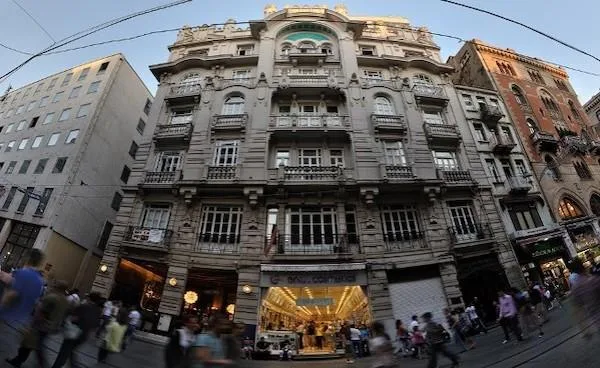
As the twentieth century progressed, internal migration and rapid growth accelerated apartment construction in the metropolis. Academics examine how neighborhoods such as Elmadağ embraced row houses and apartments as modern housing solutions, while coastal areas attempted to balance the new density with older, low-rise buildings. The result is a layered city where nineteenth-century apartments, Republican-era blocks, and contemporary infill buildings coexist in a single view.
Policy has limited this growth along the Bosphorus. The 1983 Bosphorus Law established scenic corridors and restricted new residential construction in the most sensitive coastal areas, thereby formalizing a preference for “horizontal” settlement along the waterfront while apartment buildings proliferated inland. These rules were shaped to reveal the long, low rhythm of the shoreline against the backdrop of a taller, denser city.
Material, Rhythm, and Texture in Throat Structures
The Spirit and Fragility of Wooden Houses
Wood along the Bosphorus is not merely a material, but a character. The classic waterfront mansion is a wooden house that breathes with the humidity and light of the Bosphorus, with rooms facing the water and facades as finely textured as fabric. The origins of this tradition date back at least to the seventeenth century: Amcazade Hüseyin Paşa’s waterfront mansion, one of the rare early examples, has survived to the present day, and standard references still cite wood as the defining material of historic yalı.
This vitality comes with fragility. Wood ages, swells, dries out, and attracts organisms unless carefully maintained; conservation researchers in Turkey have repeatedly documented that many wooden houses have been lost due to fires and neglect. International guidelines provide a clear roadmap: diagnose before intervening, prioritize repair over replacement, and keep traditional carpentry knowledge central to any work involving historic wood. First codified by ICOMOS in 1999 and updated in 2017, these principles now form the basis for treating Istanbul’s wooden heritage with restraint and respect.
When restoration is carried out, a balance is usually struck between authenticity and durability. Owners and architects sometimes use structural timber as cladding while employing stronger frames on the interior. These choices preserve the building’s silhouette but carry the risk of compromising the building’s material integrity. Heritage accounts clearly point out this deviation in recent restorations and remind us that the “feel” of a mansion is conveyed as much by its wooden structure as by its silhouette on the water.
The Durability of Stone and Its Use in Public Buildings
If the Wooden Strait is written in cursive, the stone provides the capital letters. For centuries, builders in Istanbul extracted küfeki stone—a fossil-rich limestone that is easy to cut and also known as Bakırköy stone—from nearby quarries during the Byzantine, Ottoman, and Republican periods. Technical studies describe the porosity of this stone, its workable veins, and its long-standing use in large structures. Therefore, matching the original küfeki stone remains important in conservation work today.
State architecture built along the Bosphorus in the 19th century elevated stone to a ceremonial status. Dolmabahçe’s seaside façade is a stone structure enriched with Marmara marble and Egyptian alabaster, featuring a Western color palette. Beylerbeyi, while a more intimate structure, sits upon a high and solid foundation of brick and stone. These palaces demonstrate their permanence by the water’s edge, while the mineral masses anchor the living woodwork around them.
Rhythmic Facades and Shadow Play
If you look closely at the facades of the Bosphorus, you can see music written in wood. Traditional Turkish houses arrange their openings at measured intervals; planks, battens, and profiles divide the surface into calm proportions, then light completes the composition. Notes from the Ministry of Culture on historic residences emphasize how these elements create rhythm, while research on Ottoman house architecture explains that protruding windows (cumba) push rooms toward the street, creating deep, shifting shadows that change with the time of day and season.

Eaves make the shadow legible from a distance. Long projections protect walls from rain and sun, but also present the facade as a shallow relief where window sills, consoles, and cornices alternate between brightness and partial shadow. In wooden houses and mosques, carved wooden elements enhance this effect, so that the Bosphorus coastline reads as a slow, shimmering play of planes.
The Visual Relationship Buildings Establish with Water
Strait architecture treats water as a fundamental principle. By definition, a waterfront house is built on the water’s edge, with its main rooms and windows arranged to frame the shifting horizon. The typology has developed with direct access from sea level: docks for daily comings and goings, and in some notable examples, integrated boathouses beneath or beside the dwellings. In the descriptions of specific mansions and periods, these water rooms are recorded not as peculiar luxuries, but as elements of daily infrastructure.
The city’s iconic monuments speak the same language. Although the Maiden’s Tower consists only of stone, sky, and its surroundings, every restoration decision here concerns how the structure harmonizes with and reflects the Bosphorus. The work carried out between 2021 and 2023 culminated in its reopening on May 11, 2023. Official records detail the structural consolidation and fabric repairs carried out to preserve this iconic water-wall relationship. In a place where much can be seen from ferries, “how it meets the sea” is a heritage value in itself.
Color Palettes in Bosphorus Structures
The colors along the Bosphorus are calmer than you might expect. The historic wooden facades were typically covered with lime wash or breathable paints; this served more as a protective coating than cosmetic decoration. Engravings and watercolor paintings from the period (most famously those by Antoine-Ignace Melling) reflect the light, serene facades, accentuated by dark shutters and rooflines. The result is a sense of tranquility along the coastline: pastel-colored wood and pale plaster capture the light, while green hillsides and tiled roofs create a more vibrant effect.
Writers on the Bosphorus note that softer tones (cream, green, blue) are typically used in wooden houses, while some yalı mansions have gained fame for their bolder colors, such as pink and dark red. Today’s guides still describe symbolic examples painted in pastel colors. These observations appear in travelogues, university articles, and local heritage writings. Together, they confirm that the colors here are less a fixed rule and more a long dialogue between climate, maintenance, and taste.
Heritage Under Threat: Urban Pressures and Demolition
The Shadow of Development Pressure and Demolitions
Development pressure along the Bosphorus rarely manifests as a single tower; instead, it gradually emerges through additional floors, roof extensions, expanded terraces, and “temporary” additions that become permanent. Recent inspections show how widespread this has become: in July 2025, authorities issued demolition orders for unauthorized additions to several well-known coastal venues and hotels, citing violations of heritage and zoning regulations. The message is simple but difficult to sustain: Protecting the coastline means rolling back the silent encroachments that are gradually thickening the skyline.
A deeper structural problem is the “urban planning amnesty” policies occasionally implemented in the country, which largely legalize unauthorized construction. Engineers, planners, and academics have long warned that such amnesties weaken rule-based planning and disaster safety, rewarding non-compliance while undermining public trust. The deadly collapse in Istanbul in 2019 was a painful example of these risks. When permissive frameworks combine with high-value coastal areas, heritage sites bear the brunt of gradual and visually jarring changes.
Touristification and Commercial Transformation
Tourism can save buildings, but it can still put a place at risk. The Galataport redevelopment project partially facilitated economic activity and public access by transforming the historic Karaköy-Salıpazarı waterfront into a cruise terminal and luxury promenade, but it also accelerated the transformation from a working port to a branded entertainment district. Critical studies assess Galataport as a typical state-led waterfront redevelopment project—ambitious, image-focused, and commercially driven—while its supporters highlight employment and visitor spending. Both views are correct; the open question is how much commercial intensity a fragile, historically layered waterfront can withstand without disrupting daily life.
UNESCO’s guide for Istanbul’s Historic Areas emphasizes that tourism must be planned in conjunction with traffic and heritage management. Thus, the outstanding universal value is not sacrificed for short-term gains. In practice, this means adjusting the flow of cruise ships, buses, and car-sharing services according to scenic corridors, street capacity, and residents’ routines. Otherwise, the waterfront will become a stage set that locals can no longer use.
Destroyed or Reconstructed Historic Buildings
Wherever restoration is highly visible, debates arise. The Maiden’s Tower was dismantled and rebuilt between 2021 and 2023; while social media labeled this as “demolition,” officials published a step-by-step restoration log explaining structural consolidation and the reintegration of historical fabric. This incident highlights a modern paradox: necessary interventions, especially when it comes to symbolic structures surrounded by water and rumors, can appear to be demolition. Clear documentation and patient communication are now integral to preservation.
In other places, the line between restoration and excessive intervention is more clearly defined. In Üsküdar, in 2017, pile driving work carried out for a new coastal promenade caused cracks in the walls of Mimar Sinan’s Şemsi Paşa Mosque, and the municipality was forced to halt construction due to public outcry. When illegal additions such as pools, retaining walls, or roof structures are made to the mansions along the Bosphorus, authorities periodically take action to remove them, sometimes after long delays. Each incident demonstrates how quickly minor physical changes can lead to cultural losses when the environment is so sensitive.
Shortcomings in Protection Policies
Turkey’s legal instruments are sound on paper—Law No. 2863 on the protection of heritage and regulations on the protection of the Bosphorus define responsibilities and visual zones—but in practice, fragmentation is often seen between institutions and political cycles. UNESCO has repeatedly called on Istanbul to maintain an integrated management plan that harmonizes conservation with transportation and tourism policies as a single system, protecting both the horizon and the streets. Without this harmony, even good rules produce uneven results along the waterfront.
Independent assessments have also highlighted the risks to the visual exposure of the historic skyline when large objects are introduced into sensitive areas of global investments. These warnings date back nearly twenty years, but are now read as prescient: the threats stem not from a single mega-project, but from the accumulation of poorly coordinated decisions that alter the city’s appearance from the sea. Sustainable, transparent assessments before, during, and after projects remain a habit that is still lacking.
Loss of Collective Memory
Heritage is not just about wood and stone; it is the routines that make it understandable. Ferries cutting the same diagonals, fishermen taking the same steps, shopkeepers following the same currents… These patterns teach newcomers how to read the Bosphorus. When tours replace work and venues replace homes, this scenario disappears. UNESCO’s warnings about combining tourism and traffic planning point to this abstract layer: if residents cannot move, they cannot sustain the memory of use that gives meaning to the shore.
When mistakes meet monuments, risks become most apparent. A cracked mosque wall or a “temporary” roof box is a scratch in a shared story. Therefore, protecting the Bosphorus means more than just saving facades. This means defending the slow choreography of boats, prayers, meals, and maintenance through policies that value daily life as heritage and sanctions that view minor violations as major shadows in the future.
Perspective for the Future: Preserving and Rebuilding the Coastal Silhouette
Istanbul’s coastline is legendary. To continue reading this in the future, the city needs rules that both observe and shape it, ethical rules that slow down before adding, and a memory system that does not forget when facades change. The world has already warned us of what is at risk: UNESCO describes the “exceptional silhouette” of Historic Districts as vulnerable to development, and local laws divide the Bosphorus into visual zones, because what we see from the water is public heritage. These two frameworks, international and local, form the basis for everything that touches the horizon.
Design Principles Compatible with New Structures
Harmony begins with sightlines. Design in the Bosphorus must demonstrate that it preserves the “front view/back view/impact” sequence defined by the conservation law: a low mass in the foreground, controlled height in the background, and a wider band where volume remains significant because it enters the panorama. Treating these not merely as zoning boundaries but as visual carrying capacities makes the long, horizontal rhythm of the villas, piers, and woodlands legible from the ferry deck.
This also means that each project must be integrated into a city-wide horizon plan. Historic Peninsula management plans already frame the skyline as a managed asset; future approvals along the Bosphorus should follow this meticulous approach by testing skyline views from fixed vantage points before granting permits. Simply put: model first, then build. Istanbul is developing 3D city models from LiDAR and aerial data. Using these as the default design environment, additions are evaluated in the same virtual light that residents will actually see.
Climate and seismic performance are also part of the silhouette maintenance. Buildings that overheat require reflective adjustments that reflect water; unrenovated structures may collapse in the next Marmara earthquake. A future-ready Bosphorus, combining visual discipline with energy and earthquake discipline, aligns with the Istanbul Vision 2050 commitment for a climate-resilient, sustainable city.
Ethical Responsibility in Architecture in the Bosphorus
The designers here are inheriting the public’s opinion. The 2011 UNESCO Historic Urban Landscape Recommendation is clear and explicit on this matter: conservation and development must be integrated, and changes must respect the layers of cultural and natural values. In the Bosphorus, this means prioritizing restoration over renewal, clearly articulating interventions, and making reversibility the default when intervening in the historic fabric.
Recent high-profile restoration projects have demonstrated ethical practices in plain view. The Maiden’s Tower project (2021–2023) published a scope that prioritized structural consolidation through step-by-step diaries and historical profiles; transparency became part of the intervention. This communication standard should be the norm, not the exception, for any major coastal project.
Digital Documentation and Visual Memory
A city that lives through its landscape requires a sharper memory than nostalgia. Laser scanning, photogrammetry, and city-scale digital twins capture facades, cornices, and tree lines with centimeter precision, transforming “before” and “after” comparisons from rhetoric to objectivity. Istanbul municipality’s 3D modeling efforts (LoD2/LoD3) and smart city research conducted around historical elements demonstrate that these tools already exist; the next step is to make them mandatory for heritage studies and disaster preparedness on both sides of the Bosphorus.
Digital memory also supports climate adaptation. As sea levels and water dynamics in the strait change, repeatable, geographically referenced images allow planners to test flood boundaries, flash flood paths, and evacuation routes without touching a stone. Local studies and long-term observations around the Bosphorus-Marmara system, when read alongside global projections, form a basis for simulating how today’s coastline will behave in mid-century storms.
Public Awareness and Community Participation
Protecting the horizon is a civic duty. Istanbul’s Vision 2050 process has been developed as a public, participatory roadmap. Approaching the Bosphorus with the same spirit means publishing visual impact studies in plain language, organizing site visits before approvals, and inviting neighborhoods to jointly determine maintenance priorities. Participation here is not symbolic; it is how the city determines which daily views are not open to debate.
UNESCO’s urban guidance supports this approach and calls on cities to incorporate heritage into transportation and tourism planning so that daily life can maintain its place in the face of ostentatious living. For the Bosphorus, this means synchronizing ferry capacity, bus traffic, and cruise routes with the carrying capacity of streets and docks. Because if residents cannot use the waterfront, the skyline becomes more like a stage set than a home.
A Commentary on Istanbul’s Coastal Future
Look ahead one generation and imagine three promises fulfilled.
- First, a set of rules that prioritizes opinions over volume, so that each new building enters into a dialogue rather than a shouting match.
- Second, a transparency ethic where restorations are slow, explained, and reversible—more like careful medicine than cosmetic surgery.
- Thirdly, a living memory that honestly reveals what the city changed and why, thanks to a shared digital model and a patient public process.
When they come together, they form a resilient silhouette: absorbing earthquakes without losing its line, adapting to the warming climate without blinding itself, and making the Bosphorus the city’s most authentic text.arak okunaklı tutan bir siluet.
Discover more from Dök Architecture
Subscribe to get the latest posts sent to your email.