

Moriyama Evi: Ryue Nishizawa
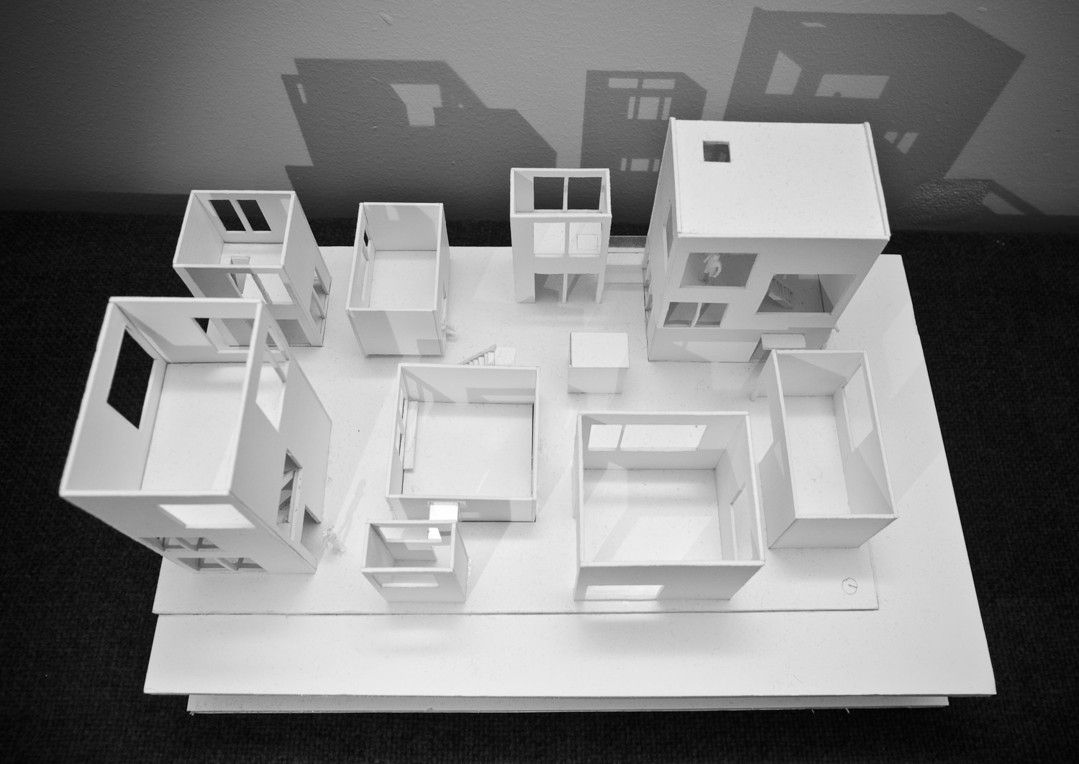
Moriyama Evi radically rethinks the single-family home as a miniature urban fabric. Designed by Ryue Nishizawa of SANAA, this house dismantles the notion of the home as a singular, holistic shelter. Instead, it proposes a delicate ecosystem of ten small white boxes scattered across a plot in Tokyo. This arrangement transforms domestic life into a daily negotiation between private refuge and communal gathering. The project stands as a profound architectural statement on contemporary isolation and the desire for connection within a dense
Deconstruction of the Domestic Program
This project begins by taking the standard program of a house and deconstructing it into its components. A house is not a single entity but a collection of functions—sleeping, bathing, cooking, socializing—brought together. Nishizawa separates these functions into distinct architectural units. This deconstruction allows each activity to find its ideal form, light, and relationship with the outdoors. The result is an architecture that prioritizes the experience of each domestic ritual over the convenience of their integration. By
From Single Family to Multi-Unit Collective
Mr. Moriyama, the client, initially requested a house for himself but anticipated that others might join him in the future. Nishizawa’s design inherently embraced this social possibility from the outset. The house was conceived not for a nuclear family but for a potential community of individuals. Its fragmented layout allows separate lives to coexist with both autonomy and optional interaction. This shifts the architectural question from how a family lives together to how individuals might live alongside one another. It foreshadows alternative models of cohab
Programmatic Abstract: A Customer’s Unusual Request
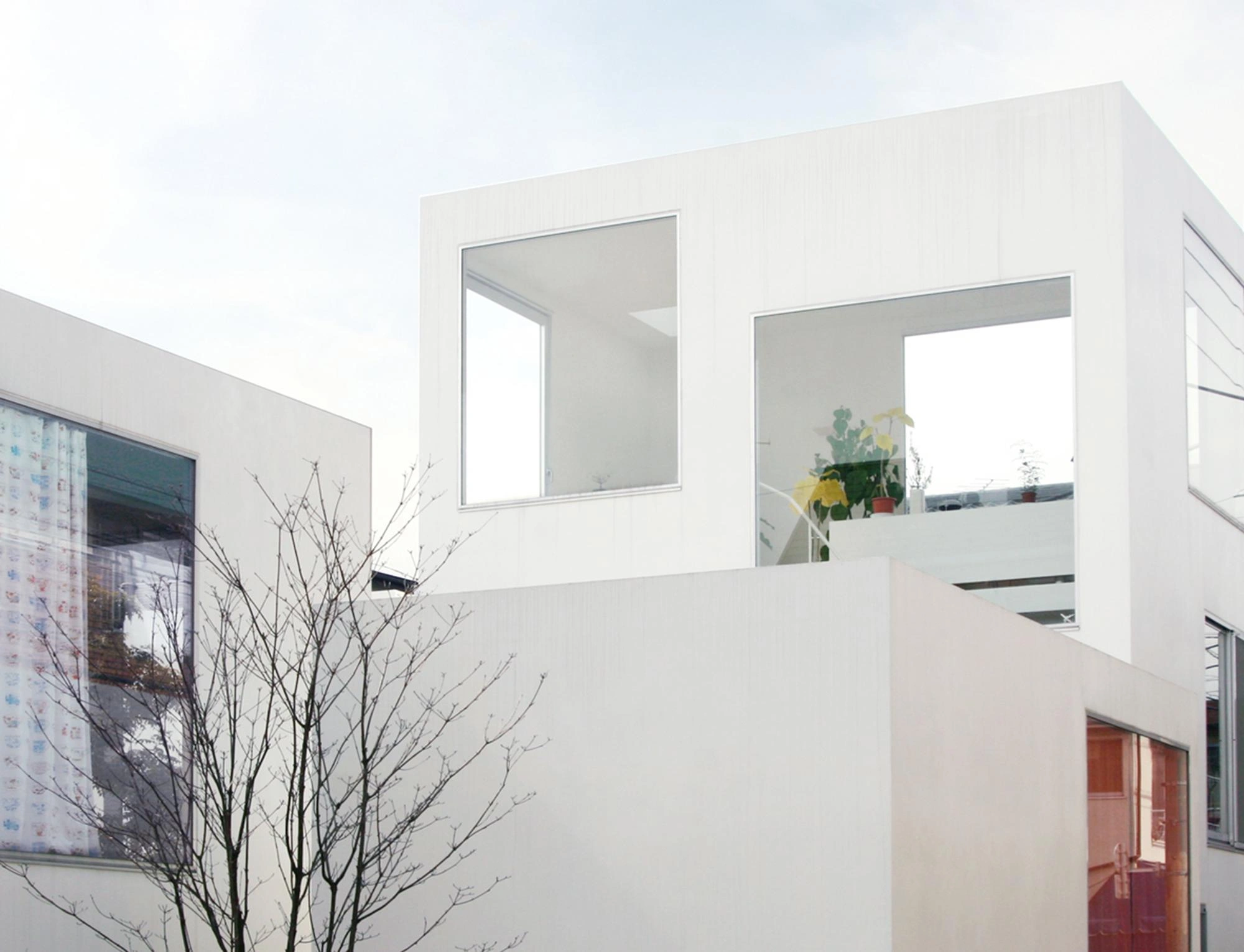
In summary, the request for a house with rooms rentable to strangers served as a catalyst. This was not a demand for maximum privacy but rather an invitation to consider permeable domestic boundaries. The client sought an architecture capable of accommodating both known and unknown, shifting relationships. This demand liberated the design from traditional assumptions about family life and security. It framed the house not as a fixed monument dedicated to a single lifestyle, but as a living, adaptable entity, making architecture inherently future-oriented and socially participatory.
In Ten Volumes: A Village in the City

The white box is like a collection of small buildings, each with its own sloped roof and distinct purpose. Within the narrow confines of a standard urban plot, they create the feeling of a village cluster. The spaces between them transform into streets, courtyards, and gardens, becoming the true living rooms of the house. This miniature silhouette introduces a pedestrian scale and chance encounters into the daily routine. This is important because, by replacing the inward-looking suburban model with an outward-facing, urban one, it
Rethinking Privacy and Community Concepts in the Dense Urban Context
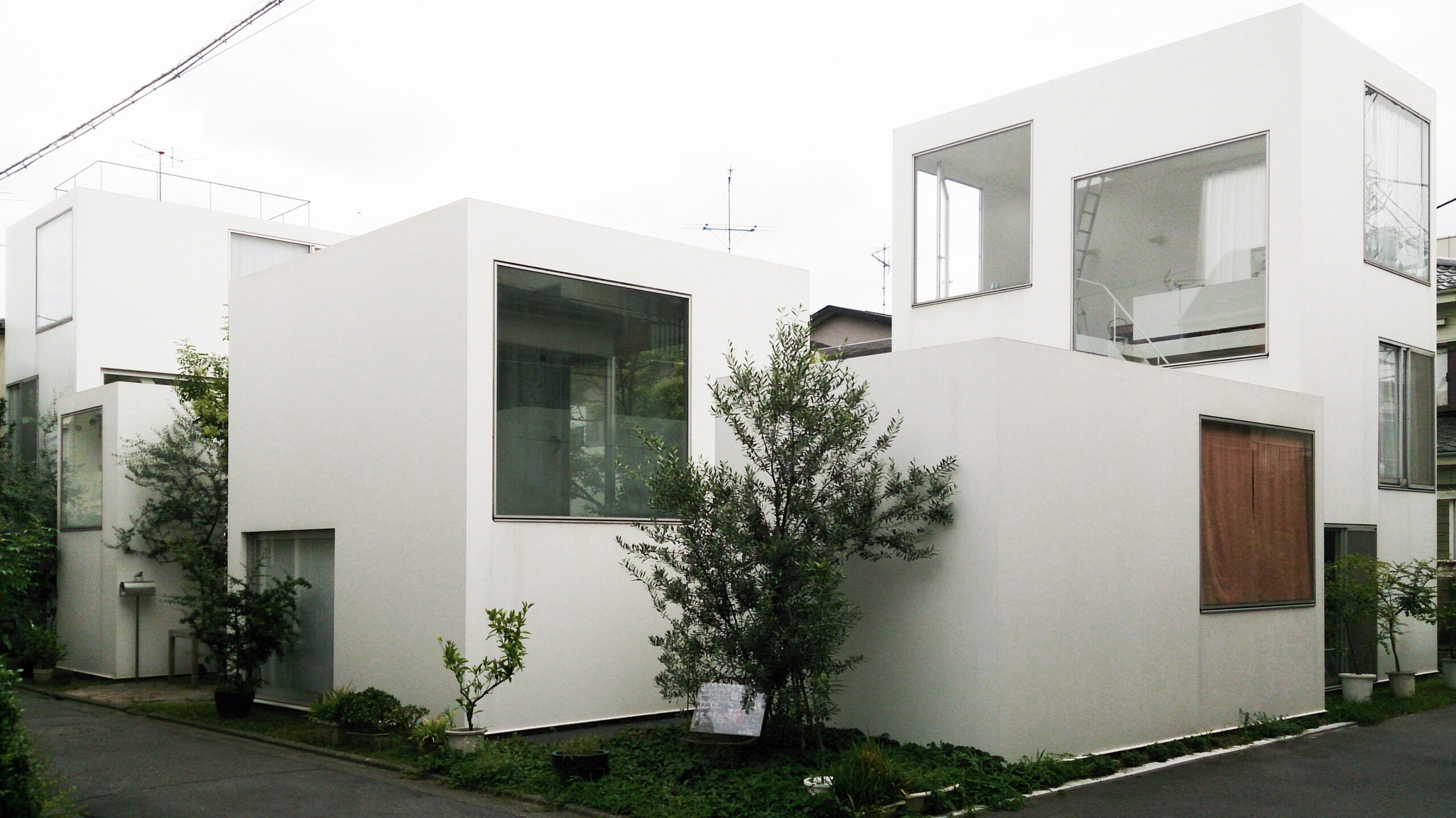
Here, privacy is not achieved through solid walls and distance, but through a subtle choreography of separation and visual connection. One must move through the outside, the shared space, to travel between private areas. This transforms community into a conscious and active choice with every journey. The design treats urban density not as a constraint to be excluded, but as a condition to be creatively engaged with. This approach redefines what it means to be neighbors, offering a model where a sense of belonging is cultivated through
Architectural Philosophy and Spatial Experience
Architecture is the art of shaping space for human existence. Going beyond mere shelter, it choreographically organizes how we feel and think within a space. This philosophy treats walls and voids not as boundaries, but as instruments for experience. The true material of architecture is not concrete or glass, but the consciousness of those who inhabit the space.
Beyond the Box: Fragmentation as a Design Principle
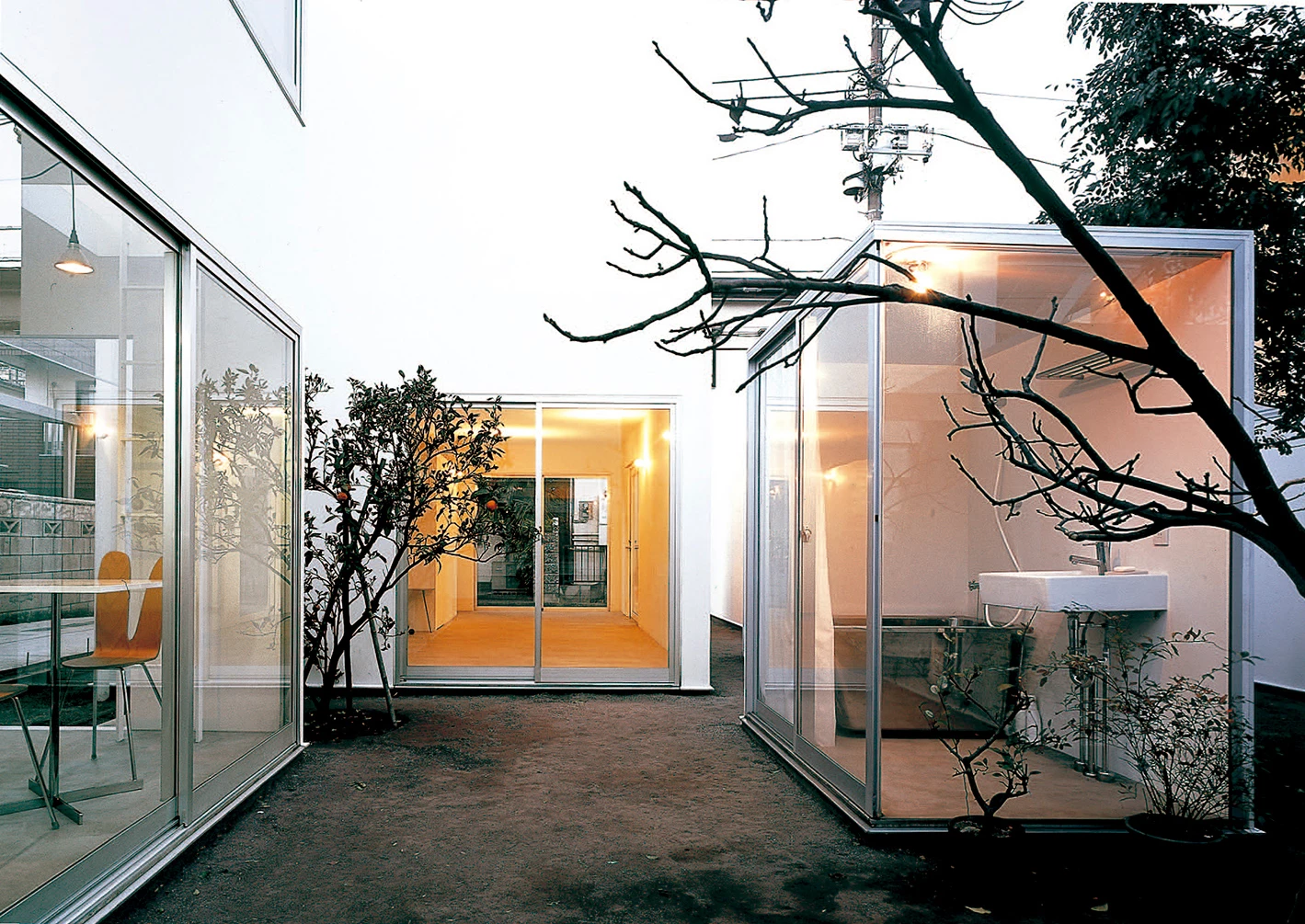
Fragmentation prefers a collage formed by assembling different pieces, rejecting the integrity of a single whole. This principle acknowledges that our perception is never singular but rather a cumulative journey extending from one moment to the next. In this way, a building can tell a more complex story, one composed of the coming together and dialogue among its elements. The result is an architecture that reflects the fragmented nature of memory, giving a sense of being discovered rather than imposed.
Ara Garden: Landscape as a Connective Tissue
A garden is not merely a decorative element placed between buildings. It serves as a vital connective tissue, a breathing space that links different architectural volumes. This interstitial landscape becomes a room without a ceiling, a place for pause and transition. It softens the built environment and reminds us that architecture is a guest within a larger, living world.
Material Integrity and Tactile Simplicity
This is an ethic of authenticity that allows materials to express their inherent nature without concealment. Concrete reveals the veins of its formwork, wood displays its knots and grains, and brick bears the mason’s fingerprints. This honesty fosters a profound, tactile connection that evokes a sense of touch, creating a lasting impression. It crafts spaces that feel solid and genuine, where beauty emerges not from applied style, but from the material itself.
Phenomenology of Light, Air, and Motion
Architecture is the careful framing of natural phenomena. Light is transformed into a tangible substance that defines time and mood, while air movement is directed to animate a silent room. Design takes into account the body in motion, how shadows stretch across the floor, or how a breeze guides a path. This creates a living environment that directly engages the senses, allowing inhabitants to become aware of their own presence within the elements.
Controlled Anarchy: Order Within Disintegration
This is a sophisticated balance between chaos and tranquility, a serene arrangement that appears effortlessly free. Think of a cluttered library where books find their own logic, or a city skyline in harmony with its contrasts. Design establishes a subtle foundational rule that liberates its components: a grid, a rhythm, a material palette. It captures the vibrant energy of life without succumbing to disorder, achieving a dynamic and poetic equilibrium.
Miras and Critical Discourse
His legacy is not a static monument, but an active and contentious dialogue. This discourse goes beyond simple appreciation to question the very foundations of architectural value and intent. This is important because it forces the discipline to confront its own narratives, ensuring that history remains not just nostalgia, but a tool for critical thought. Through this ongoing debate, the work continues to generate new meanings long after its physical completion.
Influence on Contemporary Japanese House Architecture
This effect is felt as a quiet yet pervasive grammar of space. It taught a generation to see the home not as a collection of rooms, but as a carefully framed sequence of light, shadow, and perception. Contemporary residential architecture in Japan often inherits this understanding of radical simplicity and deep connection to fundamental elements. The result is a living tradition in which ordinary domestic life transforms into a poetic encounter.
Challenging Traditional Typologies: A Case Study for Architects
It stands out as a powerful case study of typological disobedience. The project rejects expected programmatic containers, merging, separating, or eliminating them to serve a higher conceptual order. For architects, it demonstrates that breaking typical patterns is not merely an aesthetic gesture, but a methodological one that can reveal new ways of living. It is significant as a reminder that the deepest innovations often arise from questioning the most fundamental assumptions about what a building should be.
Home as a Living Diagram of Social Theory
This house embodies social theory through wood, concrete, and glass. Its spatial arrangements transform abstract concepts into tangible experiences by directly expressing ideas about family structure, privacy, and interaction. Living in this house turns a philosophical proposition about human relationships into a daily engagement. Thus, it transcends mere shelter to become a tool for understanding, inviting its inhabitants to live out a theory.
Protection and Architectural Authenticity Issue
Here, conservation faces a paradox because the essence of the building is tied to the lifespan and patina of its original materials. The question is whether authenticity lies in the frozen artifacts or in the enduring spirit of their spatial ideas. This dilemma is significant because it reveals the contradiction between architecture as a physical object and architecture as an evolving experience. This debate forces us to define what we truly value from the architectural past and wish to carry forward.
Discover more from Dök Architecture
Subscribe to get the latest posts sent to your email.