

National September 11 Memorial
This is not a monument built on the ground, but one carved out of it. It transforms a site of profound loss into a space for quiet reflection and public gathering. The monument does not seek to reconstruct what once was, but rather to honor the void left behind, making absence a permanent and tangible part of the city’s history. Erected as an act of collective remembrance, it demonstrates how healing and resilience can take root at the very heart of destruction.
Concept and Vision: The Birth of the Monument
This vision emerged from a fundamental need to balance profound grief with dignified hope. It required transforming an indescribable event into a physical form capable of holding both memories and the future. The concept was not to erase the past, but to create a framework through which the public could engage with history on their own terms. This core idea aimed to turn a site of tragedy into a sacred space, offering a place of pilgrimage within the daily flow of urban life.
From Tragedy to the Holy Lands: Design Competition
The open international competition was a crucial step in a democratic and creative healing process. It invited the entire world to envision the future of this wound in the heart of New York City. The process signaled a transition from a period of trauma to one of purposeful creation. Selecting a design meant choosing the language through which generations would engage with this history, transforming the site from a ruin into a place of reverence.
Reflecting Absence: A Fundamental Architectural Metaphor

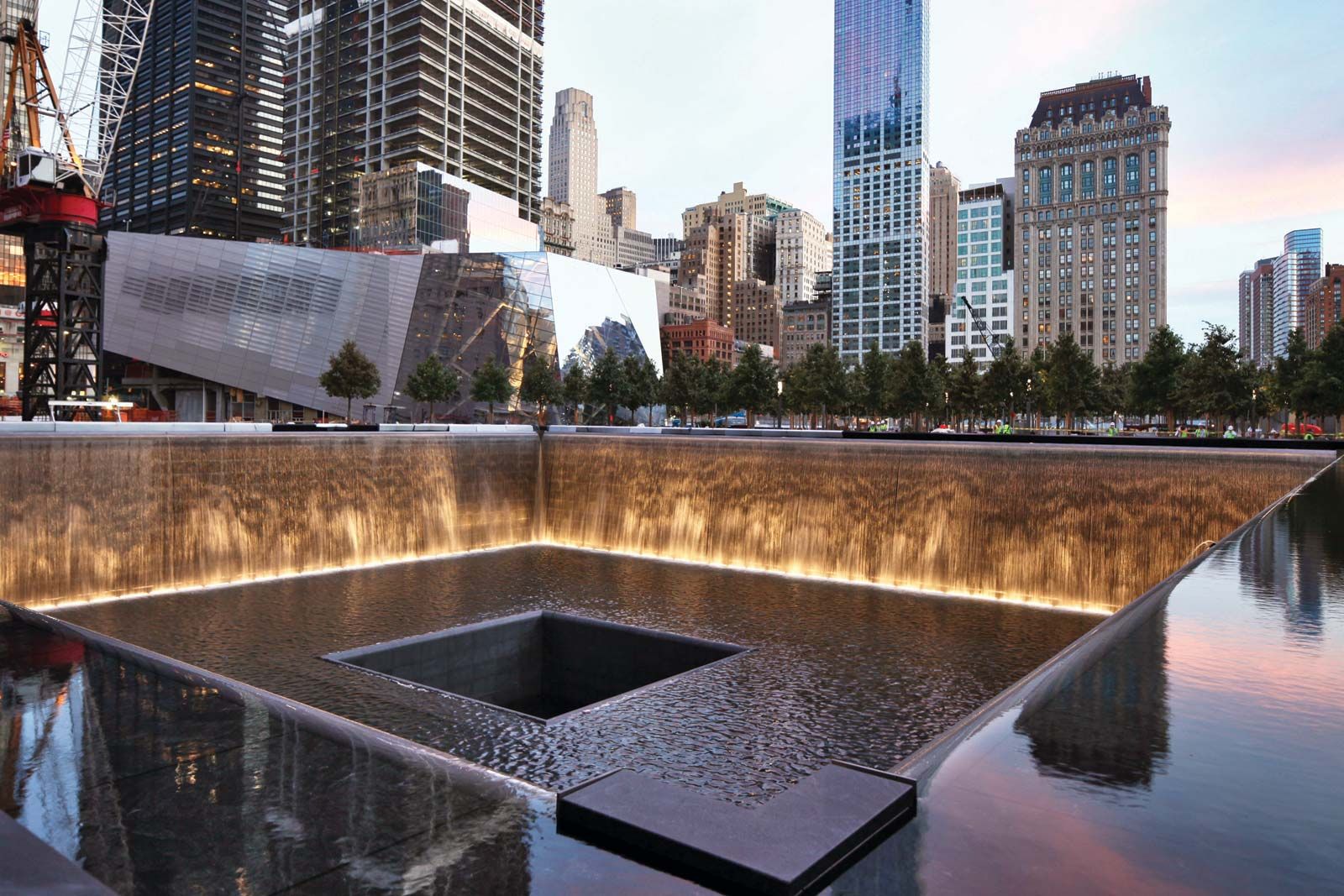
Two large voids carved into the footprint of the old towers make the loss physically readable. Water flows into these seemingly bottomless squares, its sound creating a reflective soundscape that overpowers the city’s noise. The names of the lost are engraved on bronze railings—a permanent record surrounding the flowing water. This powerful metaphor turns absence into a central and enduring presence, a negative space that carries more meaning than any solid monument.
Integrating Memory into Urban Fabric

The monument refuses to be an isolated island of sorrow, instead reintegrating itself into the city’s vibrant fabric. New skyscrapers rise around it, yet this is not a confrontation but a dialogue with a remembered past. The surrounding square, filled with swamp white oak trees, serves as a soft, living threshold between the sacred and the everyday. This integration emphasizes that memory is not a separate destination but a layer woven into the city’s ongoing narrative.
Dialogue Between Past and Future
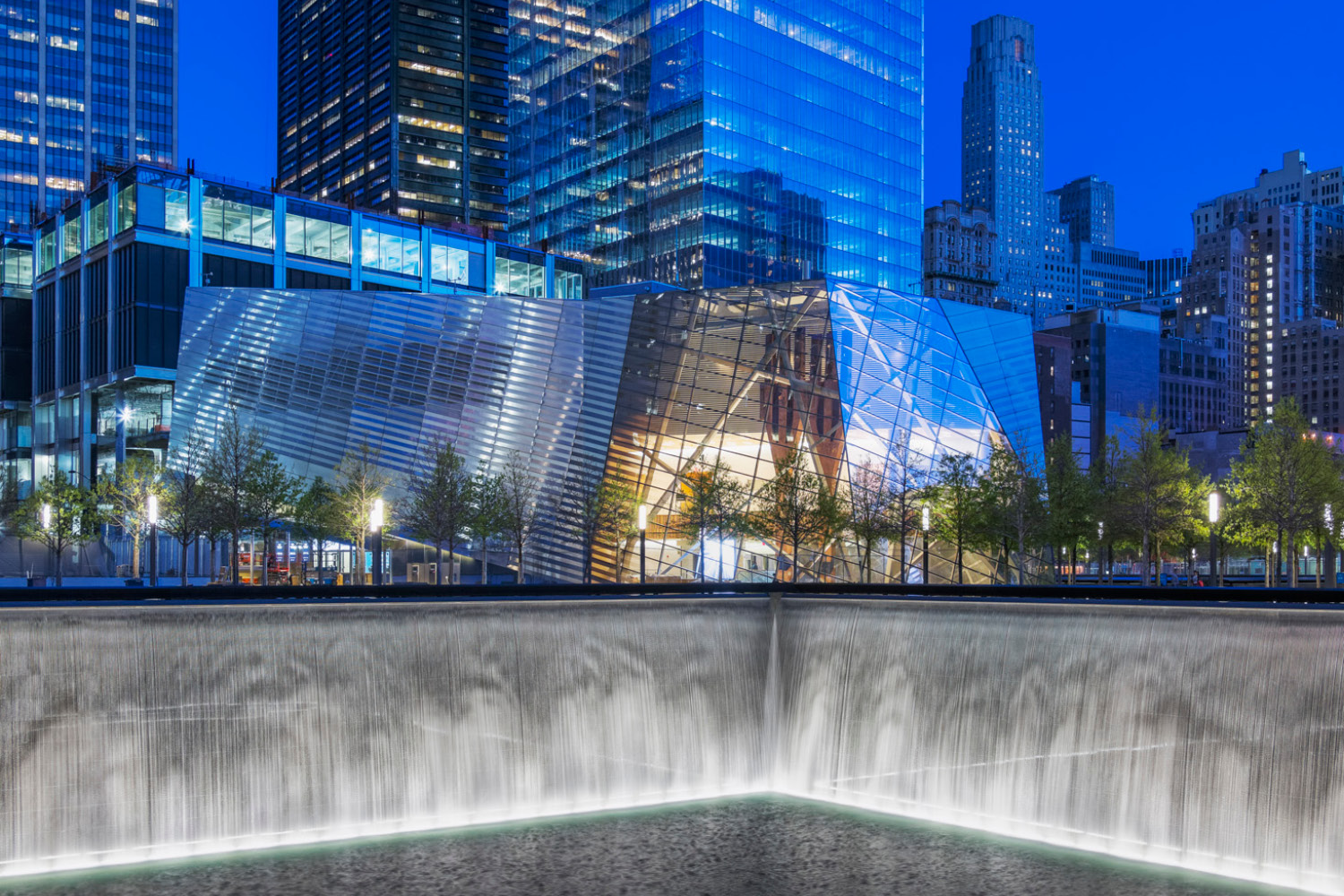
The site establishes a continuous and silent dialogue between the past, present, and future. While still, reflective pools are tied to a specific past, resilient trees and reconstructed silhouettes symbolize growth and continuity. Visitors become participants in this dialogue, their reflections literally overlapping with the names inscribed on bronze plaques. This architectural arrangement ensures that the event is not a closed chapter but an ongoing part of civic consciousness, informing the future without consuming it.
Architecture and Landscape Design: Shaping the Experience
This discipline orchestrates the physical and emotional journey of a space. Moving beyond mere construction, it transforms light, material, and space into a narrative. The result is an environment where every path, vista, and texture feels like a deliberate part of the story. In this way, architecture becomes more than shelter; it becomes a vessel for memory and meaning, shaping how we remember and reflect.
Twin Reflecting Pools: Engineering and Symbolism
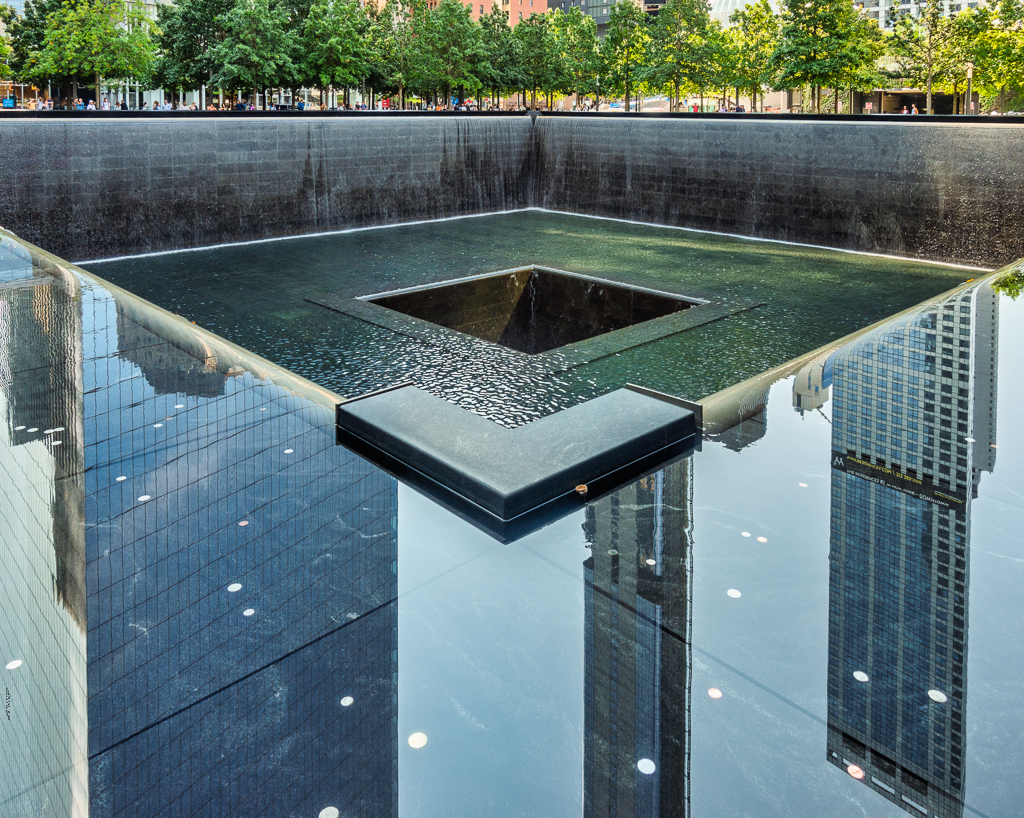
These vast voids are serene feats of deep engineering. They mask the ceaseless waterfalls and the city’s noise, creating an acoustic refuge with the sound of falling water. The water descends into a central chasm—a powerful visual metaphor for irreversible loss. Yet the constant flow implies that life goes on, while the mirrored surface reflects the sky, merging memories with the vibrant world above.
Swamp White Oak Forest: A Living Canopy
This grove is a dynamic, breathing counterpoint to the granite monument. The trees form a shifting canopy of leaves that filters the light and marks the seasons. Their organic, irregular arrangement creates a sense of natural refuge and renewal amidst the urban fabric. This living canopy represents resilience and growth—a quiet promise that life endures even in the face of profound absence.
Bronze Parapets: Inscription of Names
Here, material becomes a memory made permanent. Names are not merely inscribed; they are an inseparable part of the parapet’s surface, inviting a tactile connection. This arrangement defies hierarchy and presents loss as a collective reality. The bronze, warm to the touch and shifting with the light, implies that memory itself is not a fixed point in the past but something living and responsive.
Anma Glade: Honoring Rescue and Recovery Workers
This clearing within the forest symbolizes a distinct and enduring sacrifice. The bare granite blocks rising like rocks from the earth represent the strength, dedication, and fundamental role of these individuals. This open space is not a final destination, but a point of transition, honoring the ongoing journey of those who carry the physical and emotional burdens of that day.
Materiality and Texture: Granite, Water, and Light
These elements form the fundamental language of the space. Cold, sharp granite conveys permanence and the certainty of the commemorated event. In contrast, flowing water introduces the softness of sound, touch, and reflection. Light plays a unifying role, enlivening the veins of the stone, shimmering on the water, and filtering through the trees, allowing the monument to evoke a different feeling with each passing hour and season.
Technical Innovation and Sustainable Heritage
True innovation is measured not by its immediate impact, but by its lasting effect. A sustainable legacy is defined by the seamless integration of advanced systems into the daily rhythm of a place. This approach transforms a project from a static object into a living, breathing participant in its surroundings. Legacy is a dialogue between human ingenuity and ecological responsibility, woven into the very fabric of built form.
Engineering of North America’s Largest Artificial Waterfalls
This is a geological narrative that shapes the raw power of nature within an urban framework. Engineering merges immense hydraulic force with precise structural choreography to create a controlled sublimity. It is significant as a profound civic gesture, restoring a sense of awe and primal scale to the heart of the city. The waterfalls become a symbol of both place and spirit, serving as a reminder that we choose to celebrate, rather than conceal, the presence of nature.
Su Recovery and Filtration Systems
These are the hidden kidneys of a resilient city, quietly carrying out a vital transformation. By converting used water into a renewed resource, they complete a cycle that has been broken for centuries. This infrastructure is crucial as it secures water autonomy and reduces the burden on municipal systems by potentially redefining waste. Integrated into the natural environment, it represents a fundamental shift from linear consumption toward a circular and responsible metabolism.
Urban Ecology: Creating Resilient Green Spaces
This is not merely about planting vegetation, but about cultivating a complex, living tapestry. A resilient green space is designed as an interconnected ecosystem that adapts, thrives, and provides services. It serves as a vital urban refuge, cooling the air, sheltering wildlife, and soothing the human mind. This ecology transforms a plot of land into an active participant in the city’s environmental health, a shared habitat for a multitude of species.
Lighting Design: From Serious Day into the Night
Lighting design is the art of revealing a space’s second character after sunset. It carefully layers illumination to guide emotions, accentuate texture, and ensure safety without erasing the night. This transition is crucial for extending a space’s lifespan and deepening its narrative. The shift from serious day to night can foster contemplation, community, or celebration under a carefully crafted artificial sky.
Discover more from Dök Architecture
Subscribe to get the latest posts sent to your email.