




Our article titled “CULTURAL IMPACT OF THATCH ROOFS“, prepared by Dök Mimarlık, was published in the June 2025 (Issue 184 ) issue of TOKİ Haber magazine!
📍 Publication: TOKI News – www.tokihaber.com.tr
📅 Issue: June 2025 / Issue 184
🎯 Institution: Republic of Turkey Ministry of Environment, Urbanization and Climate Change | Housing Development Administration (TOKI)
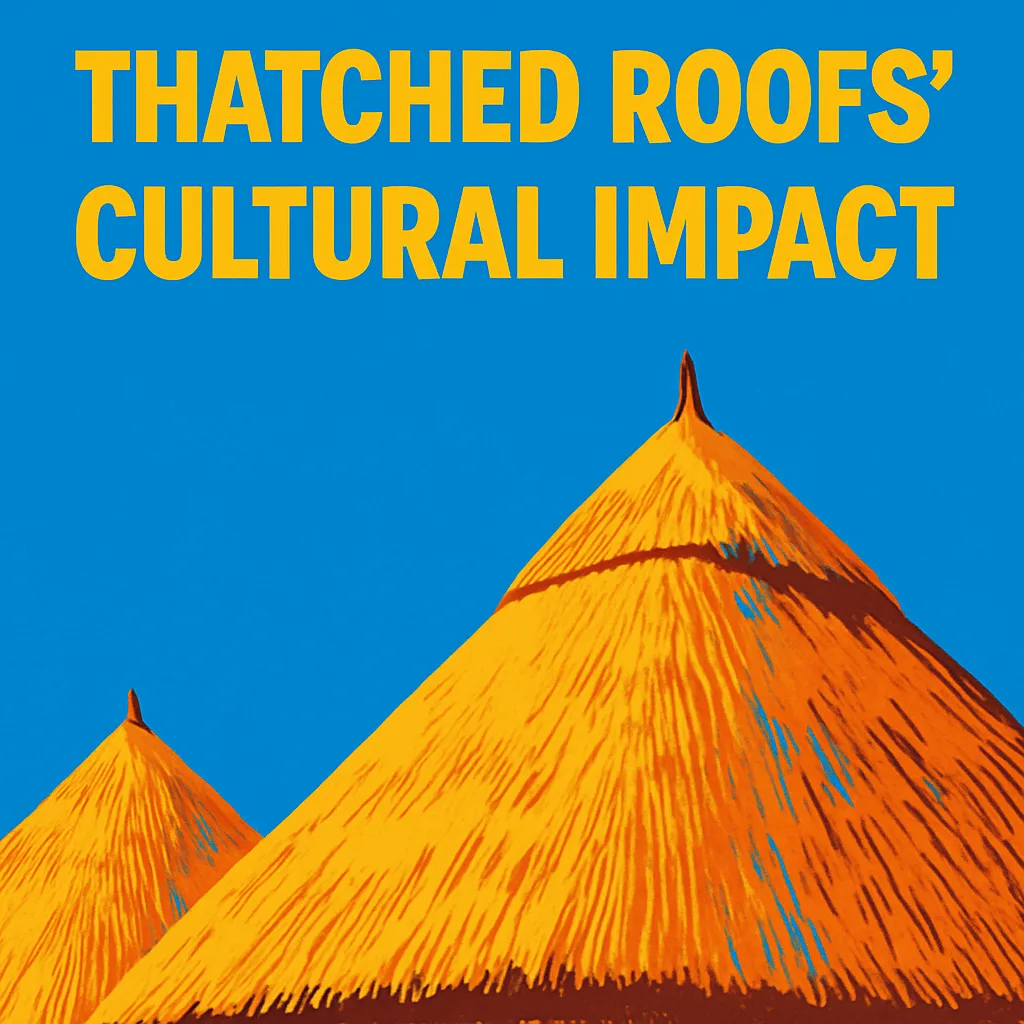
In this article, we examined the place of traditional thatched roofs in architectural heritage from a historical and cultural perspective. Together with the use of local materials, sensitivity to climate, craftsmanship techniques and contemporary examples, we emphasized how the thatched roof builds a bridge from past to present.
This publication is of great importance for us. Because we believe that architecture is not only about producing spaces; it is also a way of thinking, a cultural memory and a narrative open to transmission. Taking part in an important and institutional platform such as TOKİ Haber, conveying architectural knowledge to a wider community and representing an approach that centers on learning, teaching and questioning as DÖK Architecture has been both inspiring and a strong source of motivation for us for the future.
🎓 We will continue to talk about architecture, question and learn by sharing. We will continue to contribute to a more inclusive, intellectual and critical architectural culture with our publications.
✍️ Full text of our article:
CULTURAL IMPACT OF THATCHED ROOFS
Explaining the difficulties and advantages of using thatch in traditional building applications, Kağan Keçeci emphasizes that these structures build a bridge between the past and the future by addressing thatch roofs, which reflect local culture, offer practical living spaces, are seen as a symbol of pastoral life and support a life connected to the natural environment, in a cultural context.
Can you discuss the thatch roof application, which has been preferred as a traditional roofing type in different geographies for centuries, in a historical context?
Thatch roofing is one of the oldest local building techniques with a trace in the architectural history of almost every culture around the world. Used as a practical solution to local environmental conditions, thatch is thought to have been used since ancient times. Archaeological evidence from ancient civilizations, including Egypt, Mesopotamia and early European settlements, shows that thatch served as an accessible, insulating and waterproof cover. According to architect Eduardo Souza, research shows that thatched structures emerged at a time when people were transitioning from nomadic to agricultural life.
Historically, societies have used local and natural materials such as thatch, straw, grass and palm fronds to build roofs that meet functional and aesthetic needs. Over the centuries, it has served many buildings as an accessible, affordable, local and effective roofing solution in areas where timber and stone are limited or inaccessible. In medieval Europe, thatch became the roofing method for rural dwellings and cottages, particularly in the British Isles where local materials such as straw and water reed were abundant. Notable historic examples, such as the thatched roofs of the Cotswolds, are living proof of the cultural continuity and adaptation of this technique over the centuries.

Cotswolds, United Kingdom
Even though industrial roofing materials have provided more efficient solutions in many buildings due to the advancement of technology and the Industrial Revolution, this practical product continues to be a local solution in rural areas around the world.
A LONG-TERM PROCESS
What are the difficulties encountered in terms of the use of thatch in traditional building practices, construction techniques and labor?
The construction and maintenance of thatched roofs is a laborious and long-term process. Skilled workers work in pairs, tying bundles of thatch together and pushing a wire-tied needle from the inside of the building to the outside. Each layer is meticulously tied and secured to ensure waterproofing, insulation and durability. The steep slope (45° to 60°) observed in most thatched roofs is preferred to facilitate water flow and prevent water ingress and rotting. Proper ventilation is essential to allow moisture to escape from the structure, thus extending the life of the roof and reducing decay.
A well-constructed thatched roof can last for decades. In Kayabuki no Satoin Japan, which has 40 buildings with thatched roofs under protection, it has been observed that thatched roofs need to be replaced every 20 years to protect the structures.

Kayabuki no Sato, Japan
During repairs, only trained workers are able to reweave the layers without leaks. Another challenge in repairing thatch roofs is fire. By its very nature, dry thatch is highly flammable and workers need to take precautions against it. Local laws define the use of sprinkler systems (Miyama, Japan) or treated thatch to reduce fire risk in buildings.
MATERIALS USED VARY REGIONALLY
Thatched roofs are constructed by stacking local plant materials on top of each other. Workers gather bundles of dry plants (straw, reeds, palm fronds, grasses, etc.) and lay them upwards from the eaves, each one on top of the one below, to prevent the passage of water. The materials used also vary regionally.
Tropical regions: In the equatorial and Pacific regions, Fijian and Hawaiian houses use fan palm or Pandanus leaves for roofing. In Bali, the black fibers of the sugar palm (ijuk) are used especially for temple and shrine roofs.

Ijuk, Bali
Temperate regions: Straw such as wheat, barley and rye is common. Long, overlapping layers are used for insulation and airtightness. In northern Europe, the slope of the roof facilitates snow and rain runoff. In temperate regions, cereal straw is often collected. In the UK, wheat straw, called “longstraw”, is positioned separately from “water reed”, which is collected from marshes.
Arid regions: In deserts, thicker layers of thatch are used to insulate against extreme temperatures and temperature changes, and water harvesting techniques are integrated into the roof design. In Africa, round huts are built with intricate weaving of straw or grass on wooden pole frames. In East Africa, Kikuyu huts in Kenya are woven from grasses such as Imperata cylindrica (alang-alang) or sugar cane leaves. The iQukwane hut, typical of the Zulu people in and around South Africa, is created by bending thin poles into a dome and weaving grasses tightly around it, then tying the thatch with coiled ropes for stability.

iQukwane Hut
Can you tell us about the functional benefits of thatch roofs?
The thick and layered structure of thatch creates plenty of air space, making it an excellent insulator. Houses with thatched roofs stay warm in winter and cool in summer and need less heating and cooling. During rain, the outer layers quickly retain water, so the thatch on the inside stays dry and retains its density. Research shows that even in wet climates, the innermost layer remains above freezing, increasing thermal comfort.
Thatch is considerably lighter than tile or metal roofing, reducing structural load and allowing flexible architectural forms. The most important feature of thatch is that it is a sustainable material. Renewable and local, it has a smaller carbon footprint than tile or metal roofing systems and can be reused.
SYMBOL OF PASTORAL LIFE
I think it would not be wrong to associate thatched roofs with pastoral rural life, wouldn’t you agree?
Thanks to its rural roots and being a local material, thatch is strongly associated with pastoral charm and folk tradition. A thatched hut with its wavy eaves and thatched roof symbolizes a simple rural lifestyle and tranquility in art and literature. Summer cottages on Lake Balaton in Hungary deliberately use thatch to capture the traditionalism of local architecture. In Africa, thatched huts built with local grasses provide practical living spaces for large communities while reflecting local culture. In Southeast Asia, bamboo and palm thatched structures, common in rural villages, support a life connected to the natural environment. In England, thatched huts are seen as a symbol of an idyllic life.
Although thatched roofs are a construction technique, they also have a rich history and cultural significance. Can you discuss the thatched roof application in a cultural context?
Thatch is a cultural heritage in many societies. In Japan, traditional kayabuki houses have a semi-spiritual status. Thatch-roofed structures are described by thatched-roof master Haruo Nishio as “a space of nothingness… a place of worship… built in gratitude to God, Buddha and our ancestors”. International Global Heritage Boards also often emphasize that thatch as an important element of our historic identity.
It is believed that thatched roofs are a defining feature of buildings and contribute to the character of villages and rural areas. The layers of centuries-old thatched roof structures are considered archaeological treasures that can reveal the daily life and techniques of the past. In terms of cultural impact, thatched roofs represent our past, identity and the continuity of craftsmanship.
How do you evaluate the relationship between structures built with local materials such as thatch roofs and the environment?
Thatched roofs are directly linked to the local ecology. Local materials are used in the buildings. Climatic needs shape the shape of the roof. The slope of the roof should be planned according to the environmental conditions. In tropical regions(monsoon climates) the roof is made very long and steep. The slope allows rain to run off the roof quickly and warm indoor air to rise and escape from the living space. Filipino bahay kubo or Bahay-Kalibo style houses have a sharply angled palm-thatched roof with large overhangs to prevent hot weather and heavy rains.

Bahay-Kalibo
In snowy parts of Japan, gasshō-zukuri houses have thatch roofs that are laid at a 60° slope to avoid snow loads.
The material of thatch roofs and the way they are constructed directly reflect their environment. Therefore, local roofs should be designed to provide protection from local conditions.
“THATCHED ROOFS BRIDGE THE GAP BETWEEN OUR PAST AND OUR FUTURE”
How would you explain the continued use of reeds in contemporary architecture?
In recent years the reed has experienced a renaissance. Many countries are taking steps to promote this technique. The Miyama region of Japan has launched tourism programs(Countryside Stays initiative) to preserve thatched cottages as living museums and offer accommodation experiences. In 2017, in Denmark, architectural practice Dorte Mandrup chose thatched roofs to connect with the built heritage of the region in the design of the Wadden Sea Center, which opens onto the Wadden Sea, a Unesco World Heritage Site, demonstrating the continued search for ecology in modern architecture.

Wadden Sea Center, Denmark
The Netherlands continues the tradition of thatched roofs. Outside Europe, many commercial projects (hotels, zoo pavilions, cultural centers) use thatch to achieve a “sustainable” aesthetic. Conservation organizations such as Historic England have introduced planning rules that encourage the use of thatch in certain buildings. Alongside these initiatives, historic thatched buildings are being carefully preserved.
Thanks to past and present efforts, today thatched roofs are a bridge between our past and our future. Defying time and witnessing our development, the saz continues to serve us not as a practice of the past, but as a heritage value and a real and versatile material that we are becoming interested in again.
Acknowledgements
For their valuable contributions to the subject of “Thatched Roofs” published within the scope of the file news in the June 2025 (Issue 184) issue of TOKİ Haber magazine, and for their qualified studies on the same topic, I would like to thank the following people who shed light on the subject with their articles titled “Ireland’s Cultural and Architectural Heritage: Thatched Roofs“ which shed light on the subject with their articles:
Rümeysa Çılğasıt (ORCID & DergiPark)
Fatih Sultan Mehmet Vakıf University, Graduate School of Education, Department of Architecture, Master of Architecture Program
and
Prof. Dr. Lecturer. Prof. Dr. Uğur Özcan (ORCID & DergiPark)
Fatih Sultan Mehmet Foundation University, Faculty of Architecture and Design, Department of Architecture
We would like to express our sincere thanks to the esteemed academics, express our pleasure to have contributed to a common cultural heritage issue from different perspectives, and congratulate them for their work.
We would also like to thank the Editor Gül Demirdaşfor her interest, support and cooperation in the communication process.
Bibliography:
ArchDaily. (2022, January 14). Thatch roofs: History, performance and possibilities in architecture.
ArchDaily. (2024, April 11). Exploring Africa’s indigenous huts: Weaving as a climatic and social architecture.
BBC Travel(2023, May 9). McDonald, S. Masters of a 5,000-year-old craft.
https://www.bbc.com/travel/article/20230518-the-masters-of-a-5000-year-old-craft
Countryside Stays Japan. Countryside Stays Japan. Japan Tourism Agency.
https://countrysidestays-japan.com/index.html
Dilley, C. (2015). Thatched roofs and open facades: Chickee architecture and its changing role in Seminole society. University Press of Florida.
https://doi.org/10.2307/j.ctvx06x3k
Keçeci, K. (2024, December 12). Thatched roofs in vernacular architecture around the world. Bulk Architecture.
https://dokmimarlik.com/en/thatched-roofs-in-vernacular-architecture-around-the-world/
Keçeci, K. (2024, November 29). Thatched roof coverings with modern applications. Dök Architecture.
https://dokmimarlik.com/en/thatched-roof-coverings-with-modern-applications/
Mandrup, D., & Hjortshøj, R. Wadden Sea Center. Divisare.
https://divisare.com/projects/395006-dorte-mandrup-rasmus-hjortshoj-coast-wadden-sea-center
Miyama Navi. Kayabuki no Sato.
https://miyamanavi.com/en/sightseeing/kayabuki-no-sato
Discover more from Dök Architecture
Subscribe to get the latest posts sent to your email.


