
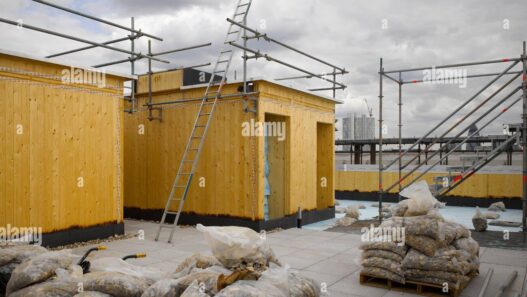
Murray Grove: Waugh Thistleton’s Timber Revolution
This nine-story London apartment block is not just a building, but also a quiet manifesto. By demonstrating that solid timber structures can keep pace with urban density, it has challenged the century-long dominance of concrete and steel. Its cross-laminated panel construction arrived prefabricated and was assembled with a quiet efficiency that feels both ancient and radically innovative. Murray Grove has permanently transformed architectural debates on sustainability and materials by proving that high-rise living can be built from a renewable resource.
The Birth of a Lumber Pioneer
The project began with a fundamental question about material integrity at a time when environmental issues were high on the agenda. The architecture firm Waugh Thistleton saw wood not as a nostalgic escape, but as a sophisticated, engineered solution for the future. Their research-driven approach treated the building as a full-scale prototype, a necessary experiment to test theory against the realities of London’s building regulations and weather conditions. This willingness to be a pioneer led to the emergence of a new architectural language born from carbon sequestration and
Context: The London Housing Crisis and a Radical Proposal
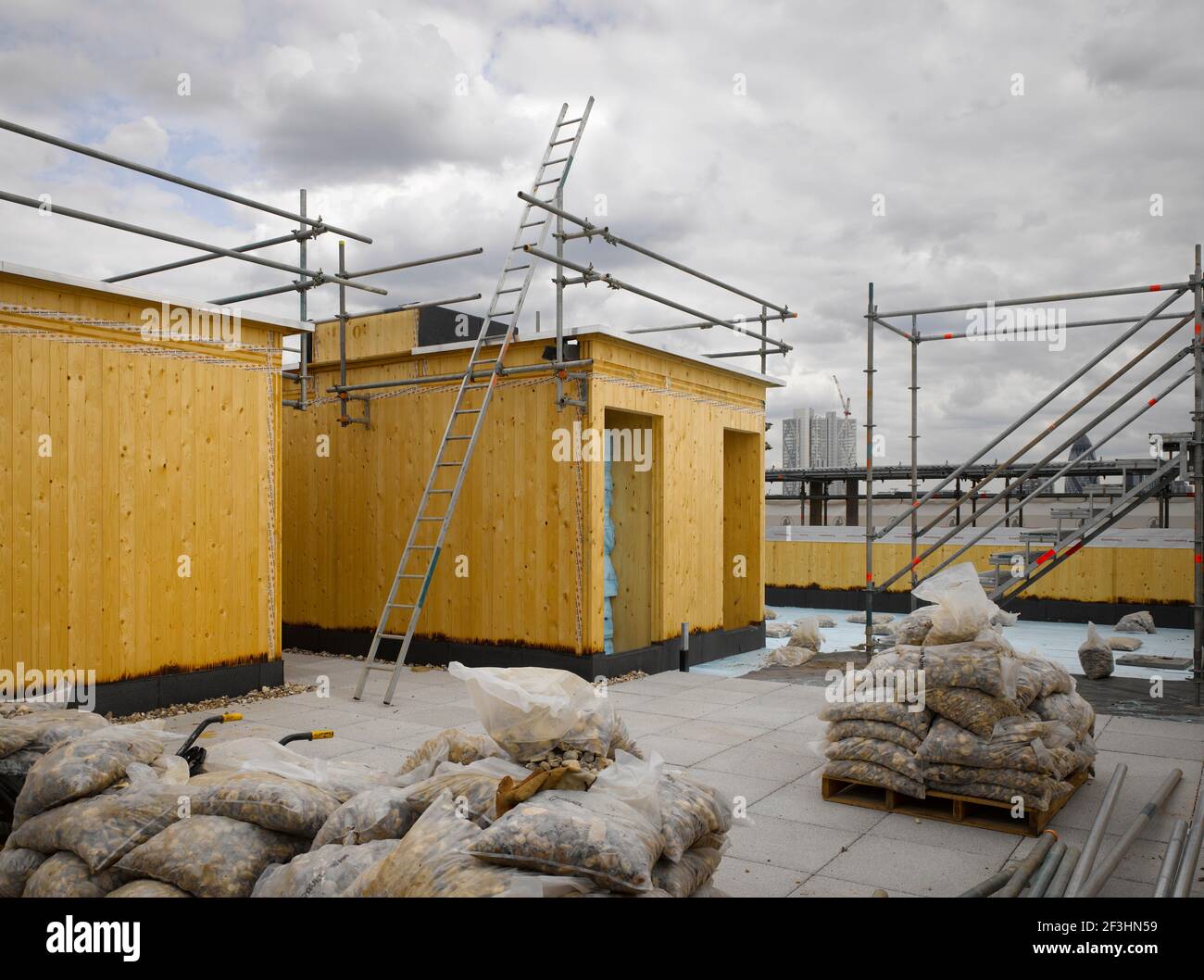
Murray Grove was fundamentally a direct response to the city’s need for quality, affordable housing. The typical solutions of that era were often slow, wasteful, and disconnected from environmental costs. Proposing a tall timber building offered a parallel solution that could enable faster, cleaner construction while enhancing residents’ well-being through the warmth of natural materials. This reframed the crisis not merely as a problem of numbers but as an opportunity for systemic change in how we build our cities.
Client-Architect Vision: A Shared Commitment to Sustainability
This project succeeded thanks to a rare harmony between the producer and the patron. The client, a forward-thinking housing cooperative, shared the architects’ view that a fundamental ecological transformation in construction methods was necessary. The client not only provided a site but also offered a platform for ambition by accepting perceived risks for the sake of a larger principle. This partnership was based on a shared belief that social housing should be a pioneer, not a follower, in adopting innovative and responsible construction techniques.
Overcoming Skepticism: The Challenge of Building Tall Buildings with Wood

The main obstacle was a cultural one, stemming from centuries-old building regulations and insurance models designed for masonry and concrete. Authorities questioned the strength, durability, and fire safety of wood, as the memory of the Great Fire of London remained fresh in the minds of bureaucrats. Architects responded with meticulous engineering and scientific research, using dense, laminated panels that char predictably to protect their cores. Their success turned skepticism into a new regulatory precedent, rewriting the rules of what is safe and possible.
Site Restrictions and Urban Integration in Hoxton
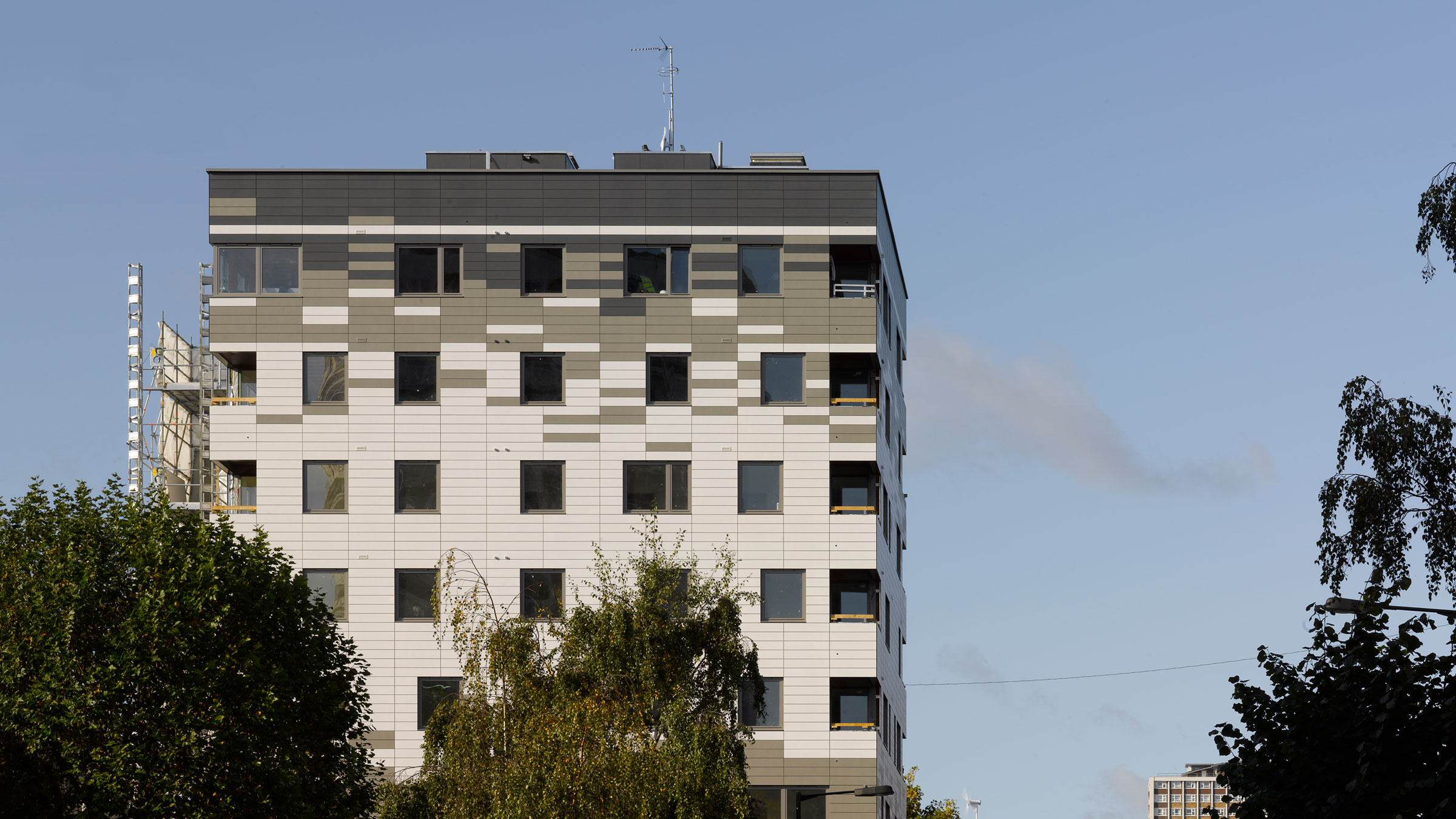
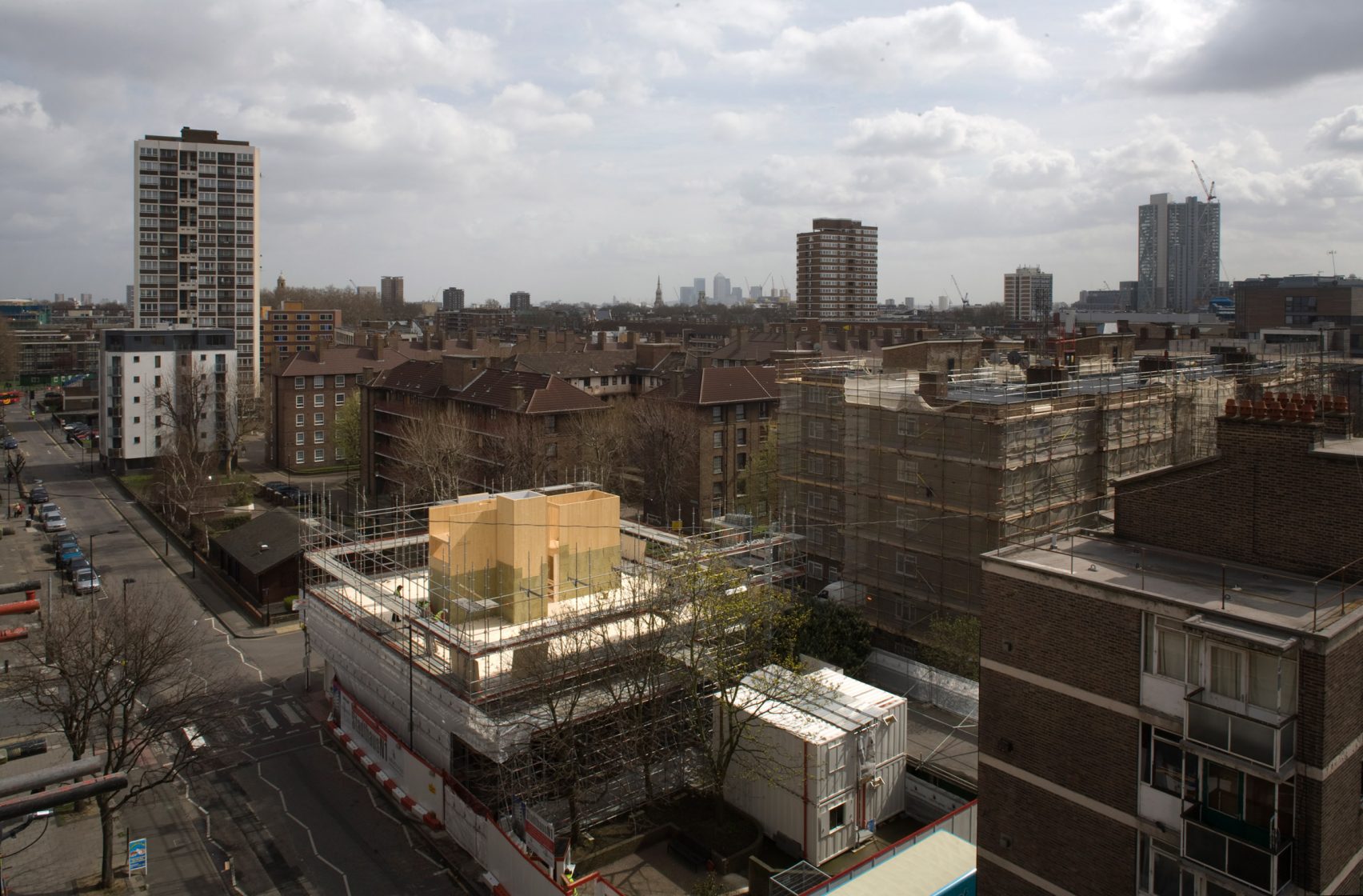
The narrow, infill site in a bustling London neighborhood required a quiet, contextual intelligence. The building’s form is simple, and its prefabricated structure allowed for rapid construction with minimal disruption to the lively street life below. Its wooden facade, clad in lightly charred larch, offers a textured, tactile appearance that will age gracefully alongside its brick and plaster neighbors. This is not an object-building but a thoughtful citizen, demonstrating that a radical structure can both respect and enrich the urban fabric.
Structure of Cross-Laminated Timber (CLT) System
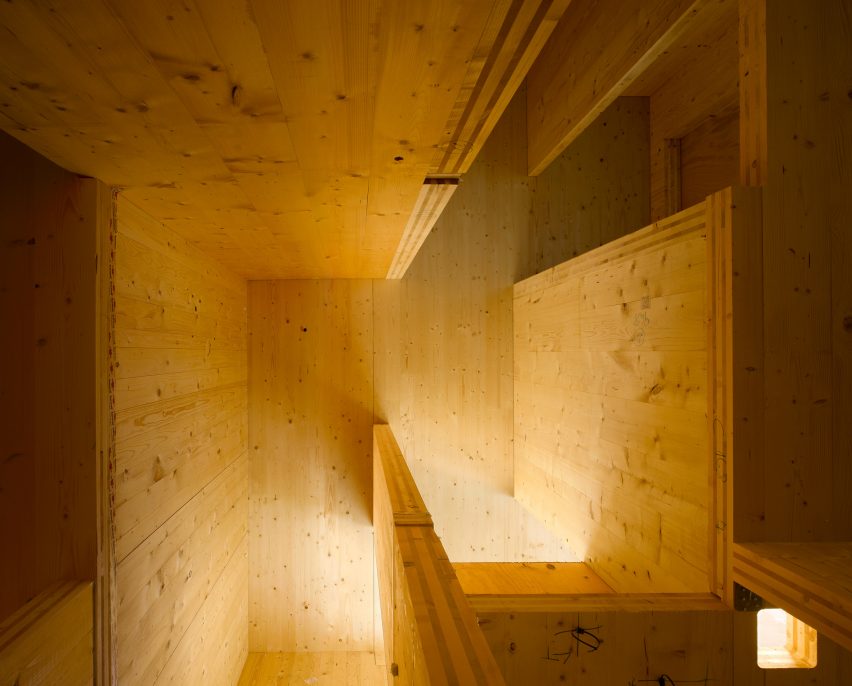
This engineered wood product reimagines the log as a modern, industrial material. It is a solid panel created by bonding layers of lumber at right angles, forming a monolithic slab with dimensional stability. This simple cross-lamination transforms wood into a product capable of bearing loads in two directions, rivaling concrete and steel. The system is significant because it reintroduces biophilia and warmth at an urban infrastructure scale, making carbon sequestration a structural proposition. The Cross-Laminated Timber (CLT) panel begins
Anatomy of a CLT Panel: From Forest to Facade
Assembly Line in the Sky: Prefabrication and On-site Construction
This method shifts complex work from the chaotic construction site to a controlled factory floor. All wall and floor panels, including openings for windows and ducts, are precisely cut using computer-controlled routers. On-site, these large yet lightweight elements are lifted and assembled like a massive, elegant puzzle. This process is significant because it substantially reduces construction time, waste, and neighborhood disruption. By making assembly quiet and swift, it erects a building’s framework in days rather than weeks.
Structural Performance: Strength, Stability, and Fire Resistance
Cross-laminated layers provide the panel with exceptional in-plane strength and stiffness, enabling it to span long distances and resist racking forces. Its monolithic behavior offers inherent stability by functioning both as a load-bearing element and a shear wall. In a fire, the outer layer chars as expected, forming a protective insulating barrier that shields the inner wood and preserves structural integrity. This reliable performance challenges outdated perceptions that wood is a weak or hazardous material. It allows wood to be safely used in the realm of mid-
Acoustic and Thermal Advantages of Solid Wood Cladding
The mass and density of solid wood panels create a natural barrier against sound transmission, resulting in quiet, sheltered interior spaces. This acoustic performance stems from the material’s inherent weight and airtight structure, reducing both airborne and impact noise. Thermally, wood acts as a natural insulator, with its cellular structure buffering against external temperature fluctuations. This forms a robust and temperate building envelope, reducing the demands on mechanical systems. The benefit is a tangible sense of comfort and durability, providing a quiet, well-heated
Architectural Experience and Sustainable Heritage
This building is not a static object; it is a living embodiment of environmental responsibility. Its form and function serve as a direct response to the climate crisis, embedding sustainability into its very foundation. To experience this building is to understand architecture not merely as a shelter within the ecosystem, but as an active participant in it. Its legacy is measured not in decades, but in the carbon it sequesters and the precedent it sets for building a more gentle world.
Spatial Quality and Material Temperature: Interior Atmosphere
Upon entering, the air feels different, filled with the subtle scent of resin and grain. The exposed wooden walls and ceilings create a visual and tactile softness that concrete cannot replicate. This natural material evokes a profound sense of calm and connection, making the space inherently humane. This atmosphere quietly emphasizes that well-being is as vital a structural element as load-bearing capacity.
Carbon Calculation: Embodied Energy and Life Cycle Analysis
Traditional construction assumes a building’s carbon story begins with its use. This approach starts the clock much earlier, at the moment of material extraction and manufacturing. By choosing wood, the structure becomes a carbon bank, sequestering CO2 from the atmosphere throughout its lifespan. This full life-cycle perspective redefines value, and the most critical calculations are the environmental ones, extending far beyond the initial budget.
Murray Grove’s Ripple Effect: Inspiration for a Global Timber Movement
As the first of its kind, it served as a globally resonant physical proof of concept. It transformed tall wooden structures from a theoretical idea in engineering journals into a buildable reality on city streets. This single project instilled confidence in planners, developers, and architects across continents and sparked a new wave of research and construction. Its greatest impact was shifting the industry’s imagination, proving that cities could grow upward from the forest.
Lessons Learned and the Future of Tall Timber Buildings
The project taught that innovation requires examining old codes written for different materials. It showed that fire safety and acoustic performance in tall wooden buildings are challenges to be solved through engineering, not by banning them. These lessons now form the foundational knowledge for the new generation of taller and more complex wooden structures. The future indicated by the project consists of hybrid systems where wood, concrete, and steel are strategically used for their best environmental and structural properties.
Critical Reception and Its Place in Architectural History
Initially met with both skepticism and admiration, this structure forced a reevaluation of what modern and responsible architecture could be. Critics saw it not as a nostalgic return to a timber frame, but as a radically contemporary application of an ancient material. Its historical significance lies in being a clear turning point, marking the moment when sustainable design shifted from a boutique interest to a central technical and aesthetic driving force. The architecture stands as a quiet monument to the early 21st century, when the field began to seriously grapple
Discover more from Dök Architecture
Subscribe to get the latest posts sent to your email.