
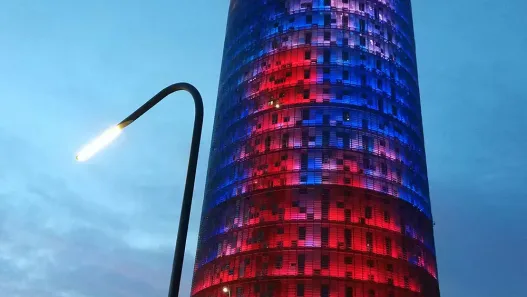

Torre Agbar stands as a striking symbol of modern architecture in Barcelona, Spain. With its unique shape and vibrant colours, this skyscraper has become an integral part of the city’s skyline since its completion in 2005.
- Location: Torre Agbar is located in the Poblenou neighbourhood of Barcelona, Spain and serves as an important landmark in the city’s skyline.
- Architectural Design: Designed by French architect Jean Nouvel, the tower features a unique bullet-shaped silhouette that is both modern and striking.
- Height: At 144 metres (473 feet) high, it is one of the tallest buildings in Barcelona.
- Construction Timeline: Completed in 2005, Torre Agbar took about four years to build and was inaugurated the same year.
- Lighting Features: The tower is renowned for its dynamic LED lighting system that illuminates the structure in vibrant colours at night, making it a visual beacon in the city.
- Facade: The exterior of the building consists of more than 4,500 glass panels designed to reflect sunlight during the day and create a shimmering effect.
- Functionality: Torre Agbar serves as an office building that houses various businesses and organisations, including the Agbar Group, a water supply company.
- Cultural Symbol: The tower is often seen as a symbol of Barcelona’s modernisation and innovation and represents the architectural evolution of the city.
- Environmental Considerations: The design incorporates sustainable features such as a water recycling system and a focus on energy efficiency.
- Public Reception : Initially met with mixed reviews, Torre Agbar has become a beloved landmark and an important part of Barcelona’s architectural identity, especially when illuminated at night.
Designed by renowned French architect Jean Nouvel, Torre Agbar is not just a building; it represents a fusion of art, engineering and cultural identity. The tower is a reminder of Barcelona’s ongoing evolution as a centre of innovation and creativity.

Historical Context
The story of Torre Agbar is deeply intertwined with the transformation of Barcelona in the early 21st century. Following the Olympic Games, the city underwent a major urban reorganisation, particularly in the Poblenou district, where Torre Agbar is located. Once an industrial centre, this area was in need of revitalisation. The tower was built by the Agbar Group, a water supply company, to serve as its headquarters. The development was intended not only to elevate the company’s corporate image, but also to symbolise the city’s modernisation efforts and commitment to sustainable urban growth.
Architectural Significance
Torre Agbar is famous for its innovative design and engineering achievements. The metre-high tower has a bullet-like shape that is both functional and artistic. The building’s exterior is a mesmerising interplay of glass and concrete, and more than 4,000 LED lights illuminate the structure at night. This dynamic lighting not only enhances the aesthetic appeal, but also reflects the vibrancy of Barcelona. The design incorporates sustainable technologies, including a rainwater harvesting system and energy-efficient materials, and demonstrates a commitment to environmental responsibility.
Location and Environment
Located in the heart of the Poblenou district, Torre Agbar has a strategic location that increases its importance. The tower is surrounded by a mix of residential, commercial and cultural areas, making it a focal point for locals and tourists alike. The nearby Glòries Square serves as a vibrant public space connecting the tower to the bustling life of the city. The juxtaposition of Torre Agbar with traditional Barcelona architecture creates an intriguing dialogue between old and new, showcasing the city’s rich architectural heritage.
The Inspiration Behind the Design
The inspiration for Torre Agbar was drawn from various sources, reflecting Nouvel’s intention to create a building in harmony with its surroundings. The design resembles a geyser, symbolising the flow of water, given the Agbar Group’s focus on water management. Furthermore, the tower’s colour palette and façade design were influenced by the nearby Montserrat mountain range and the Mediterranean landscape. This connection with nature is intentional, as Nouvel aimed to create a landmark that captures the spirit of innovation while harmonising the building with its surroundings.
Building Overview
Torre Agbar is not just a visual marvel; it is a sophisticated building that integrates modern technology with aesthetic excellence. The building’s shell consists of a double-layered facade that allows for natural ventilation and temperature regulation. The layout inside is designed to encourage co-operation and creativity among the occupants. Open floor plans and an abundance of natural light contribute to a productive working environment. A testament to both engineering skill and artistic vision, Torre Agbar stands as a beacon of contemporary architecture, inviting discovery and admiration to all who encounter it.
Design and Architecture
Design and architecture are intertwined disciplines that shape our environment and influence how we interact with spaces and structures. Blending art and science, they focus on creating functional, aesthetically pleasing and sustainable buildings. The relationship between design and architecture goes beyond mere construction; it involves understanding human needs, cultural contexts and the environment. This synergy leads to spaces that inspire, provoke thought and enhance the quality of life of their inhabitants.
Architect Jean Nouvel
Jean Nouvel is a leading figure in contemporary architecture, often recognised for his innovative designs that challenge traditional forms and ideas. Born in France in 1945, Nouvel’s work reflects a profound understanding of place and context, combining bold aesthetics with a deep respect for the environment. He aims to create buildings that resonate with their surroundings and interact with users in unique ways.
Nouvel’s architectural philosophy is based on the idea that each project should respond to its specific location, culture and the needs of its users. The Institut du Monde Arabe in Paris is an important example of this, where he masterfully incorporated traditional Islamic motifs into modern design, creating a dialogue between history and the present. His buildings often feature dynamic facades that change according to light and weather conditions, emphasising the relationship between the building and its surroundings. Through his work, Nouvel redefined urban spaces, making them more accessible and visually striking.
Structural Innovations
Structural innovation is the hallmark of modern architecture and Jean Nouvel exemplifies this through the use of advanced engineering techniques and materials. His designs often push the boundaries of what is structurally possible, allowing unique forms and functions that traditional methods could not achieve.
For example, Torre Glòries in Barcelona, once known as Torre Agbar, showcases Nouvel’s ability to manipulate form and material. The building’s bullet-shaped silhouette is not only visually striking, but also maximises energy efficiency through the innovative use of glazing and ventilation systems. It stands as a testament to how modern engineering can be integrated with architectural creativity, leading to buildings that are not only beautiful but also sustainable.
Nouvel’s approach often involves collaboration with engineers and artists, leading to the creation of structures that challenge conventional norms. His work emphasises the importance of adaptability in architecture, allowing buildings to evolve with their surroundings and the communities they serve.
Materials Used
Materials play a crucial role in the language of architecture, influencing both the aesthetic and functional aspects of a building. Jean Nouvel’s choice of materials often reflects his commitment to sustainability and innovation. He often uses glass, metal and concrete in ways that redefine their traditional uses.
In the Qatar National Museum, for example, Nouvel takes a unique approach to materials, bringing together a mix of traditional and modern elements. The design of the building is inspired by the desert rose, a natural formation, and demonstrates how materials can be used to create organic forms in harmony with the environment. The museum’s facade of interlocking discs not only serves an aesthetic purpose, but also improves thermal performance and reduces energy consumption.
Nouvel’s work demonstrates how careful choice of materials can enhance a building’s relationship with its surroundings and address environmental concerns. The use of innovative materials not only contributes to the visual impact of their buildings, but also ensures their durability and sustainability.
Facade Aesthetics
The exterior aesthetic of a building is often the first point of interaction for observers, and Jean Nouvel excels at creating striking facades that attract attention and evoke emotion. His designs are characterised by a bold use of form, colour and texture and often reflect the cultural and environmental context of the site.
The Louvre Abu Dhabi is a prime example of this; its exterior features a striking dome that filters sunlight, creating a play of light and shadow within the museum. This design not only enhances visual appeal, but also serves the practical purpose of reducing heat gain in the building. The interaction of light through the intricate patterns of the dome blurs the lines between indoors and outdoors, connecting visitors to the natural environment.
Nouvel’s buildings often incorporate elements of transparency and reflection, allowing them to interact dynamically with their surroundings. This approach creates a sense of fluidity, where the structure changes according to the time of day and weather conditions. Their exterior design is intriguing, encouraging passers-by to interact with the building and explore its interiors.
Interior Layout and Functionality
The interior layout of a building is crucial in determining how the spaces are experienced and utilised. Jean Nouvel’s designs prioritise functionality while ensuring that interiors reflect an inclusive architectural vision. His approach often involves creating flexible and adaptable spaces that meet the diverse needs of users.
In the One Central Park project in Sydney, Nouvel has designed residential units that seamlessly blend indoor and outdoor living. The incorporation of greenery and open spaces into the building enhances the quality of life for residents, fostering a sense of community and connection to nature. Interior layouts have been carefully planned to maximise natural light and ventilation, contributing to a healthier living environment.
Nouvel’s attention to detail extends to the choice of materials and finishes in the interiors, creating an immersive experience for users. His designs often include special elements that reflect the identity of the space and ensure that functionality does not compromise on beauty. Emphasising the importance of the user experience, Nouvel’s interiors encourage a sense of belonging and enhance the overall impact of his architectural vision.
In conclusion, Jean Nouvel’s contributions to architecture exemplify the dynamic interplay between design, structure, materials, aesthetics and functionality. His work challenges traditional boundaries, creating spaces that are not only visually striking but also deeply connected to their environment and society. With its innovative approach, Nouvel continues to inspire architects and designers around the world by pushing the boundaries of what architecture can achieve.
Lighting and Visual Impact
Lighting in architecture serves much more than a functional purpose; it transforms spaces, influences moods and shapes our experience of the built environment. The interplay of light and shadow can evoke emotion, guide movement and emphasise architectural features. Understanding the visual impact of lighting is crucial for architects and designers when creating spaces that resonate with users and enhance the urban landscape.
Night Lighting
As the sun sets, the character of a building changes dramatically under artificial light. Night lighting brings buildings to life and creates a cosy atmosphere that invites people to explore. Effective night lighting can emphasise a building’s unique architectural features, turning it into a beacon at night.
Think of the Eiffel Tower, dazzling with its twinkling lights every evening. This lighting not only emphasises its iconic silhouette, but also creates a sense of wonder, attracting visitors. Similarly, the Sydney Opera House adapts to various events and celebrations with dynamic lighting schemes, showcasing its form and establishing a connection with the surrounding harbour.
Strategically designed night lighting can also improve safety and accessibility. Well-lit pathways and entrances guide people through urban environments, making places feel safe and inviting. This is vital for public spaces where effective lighting can encourage social interaction and community engagement after dark.
Use of Colour and Pattern
The colours and patterns in lighting can profoundly affect the perception of a space. Different hues evoke a range of emotions; warm colours such as yellows and oranges can create comfort, while cool colours such as blues and greens can encourage calm. For example, the colourful projections on the facade of the Tate Modern in London transform the museum’s exterior, making it an ever-changing canvas reflecting contemporary art and culture.
Patterns created through light can add depth and intrigue to a space. Architectural features such as columns and arches can be emphasised with shadows dancing across surfaces, highlighting their texture. The use of light as a design element allows architects to play with visibility and invisibility, creating a dynamic that engages viewers in unexpected ways.
Moreover, colour and pattern can also serve functional purposes. In healthcare facilities, for example, relaxing colour palettes are often used to reduce patients’ anxiety. In educational settings, vibrant lighting can encourage creativity and focus among students. By thoughtfully incorporating colour and patterns into lighting design, architects can enhance the user experience and contribute to the overall narrative of a space.
Impact on Cityscape
Lighting has a profound impact on the cityscape and shapes how we perceive and interact with urban environments. Well-designed lighting can transform ordinary streets into vibrant avenues that encourage exploration and socialising. Consider San Francisco’s illuminated bridges, which serve not only as critical crossing points but also as striking visual landmarks that define the city’s identity.
Cities like New York have embraced lighting as a way to enhance their cultural narratives. The bright lights of Times Square are not just advertising; they create an atmosphere that embodies the energy and bustle of the city. Transforming public spaces through lighting encourages a sense of place and community, inviting both residents and tourists to engage with the environment.
Moreover, sustainable lighting practices are becoming increasingly important in urban design. Cities are adopting energy-efficient LED technologies that reduce light pollution while maintaining visual appeal. This change not only benefits the environment, but also improves the night-time experience of urban areas and makes the stars visible again in less populated areas.
Technological Aspects of Lighting
Advances in technology have revolutionised the field of architectural lighting. Innovations such as smart lighting systems that can be controlled remotely enable architects to create dynamic environments that respond to changing conditions. By adjusting brightness according to time of day or occupancy, these systems can optimise energy use and improve occupant comfort.
Furthermore, the integration of light emitting diodes (LEDs) has changed the way buildings are illuminated. LEDs are energy-efficient, long-lasting and versatile, enabling a wide variety of designs and applications. From subtle ambient lighting to bold accent features, LEDs can be tailored to meet the specific needs of any space.
Moreover, the development of interactive lighting installations has opened new avenues for creativity. By reacting to movement or sound, these installations engage audiences and create immersive experiences that elevate public art. An important example of this is the “Light Vortex” at San Francisco International Airport, which reacts to the movements of passengers, making the journey through the airport more interesting and memorable.
Public Acceptance of Lighting Design
The success of a lighting design often depends on its acceptance by the public. Involving the community in the design process can lead to solutions that resonate more deeply with users. Public forums and workshops allow architects to gather feedback and understand the needs and desires of the community, fostering a sense of ownership and pride in the resulting spaces.
Projects such as the “Path of Light” at Hudson Yards in New York can be seen how lighting design has been received. The community has embraced this interactive installation that invites visitors to interact with light in a playful way. Such positive public responses can encourage further investment in public spaces and contribute to the cultural vibrancy of a city.
Moreover, the emotional response to lighting can influence how people interact with their environment. Well-considered lighting can create a sense of comfort and security, whereas poorly designed lighting can lead to a sense of unease. This underlines the importance of careful lighting design in enhancing the overall experience of public and private spaces.
In conclusion, lighting plays a multifaceted role in architectural and urban design. Its ability to influence mood, emphasise architectural features and shape the cityscape makes it an indispensable tool for architects and designers. By understanding the complex relationship between lighting and visual impact, we can create environments that not only illuminate but also inspire.
Cultural and Social Impact
Architecture is not just about constructing buildings; it embodies the values, aspirations and narratives of a society. The cultural and social impact of architecture is profound and influences how people interact with their environment and each other. As cities develop, the structures that populate them reflect the dynamic interplay of culture, history and society. This section examines the role of architecture in urban development, its symbolic importance in places like Barcelona, its ability to encourage public interactions, its impact on tourism, and community engagement initiatives that encourage participation and co-operation.
Role in Urban Development
Urban development refers to the process of designing and building infrastructure in cities to improve the living conditions of urban residents. Architecture plays a critical role in shaping urban areas, influencing everything from transport systems to public parks. Carefully designed architecture can revitalise neglected areas into vibrant community centres. For example, the transformation of former industrial areas into mixed-use neighbourhoods can foster a sense of community by providing housing, commercial spaces and recreational areas.
Moreover, architecture contributes to sustainable urban development. Green buildings with environmentally friendly materials and technologies not only reduce energy consumption, but also improve the quality of urban life. Cities like Copenhagen, with its pedestrian-friendly design and extensive cycling infrastructure, show how innovative architectural practices can lead to more liveable environments.
Symbolism in Barcelona
Barcelona is a city where architecture and culture intertwine, creating a unique identity that resonates with residents and visitors alike. The works of Antoni Gaudi, particularly the Sagrada Familia and Park Güell, serve as symbols of the city’s artistic spirit and cultural heritage. They are not just architectural achievements; they epitomise the philosophy of Catalan Modernism, which blends natural forms with innovative design techniques.
Still under construction more than a century later, the Sagrada Familia symbolises the city’s enduring commitment to creativity and faith. Its intricate facades and soaring towers tell stories of nature, religion and humanity, inviting interpretation and reflection. Similarly, Park Güell, with its colourful mosaics and organic shapes, embodies the harmony between architecture and nature, encouraging visitors to experience the city in a fun and immersive way.
Public Interactions and Events
Architecture enriches the social fabric of urban life by acting as a backdrop for public interactions and community events. Public squares, parks and cultural spaces are designed to host gatherings, performances and festivals, strengthening the bonds between city residents. The design of these spaces greatly influences how people interact with each other.
In many cities, innovative architectural projects have transformed public spaces into vibrant places for social interaction. For example, the High Line in New York transforms a former railway line into a linear park where locals and tourists alike stroll, relax and participate in community programmes. Such spaces encourage a sense of belonging and facilitate cultural exchange, reinforcing the idea that architecture is not just about buildings, but about the experiences they create.
Impact on Tourism
The architectural landscape of a city significantly influences the tourism sector. Iconic buildings and well-designed public spaces attract millions of visitors each year, contributing to the local economy and encouraging cultural exchange. Barcelona’s unique blend of Gothic and Modernist architecture attracts tourists from around the world who want to experience its artistic heritage.
Tourism shaped by architecture can also lead to economic revitalisation. Cities that embrace their architectural uniqueness often find that this enhances their global appeal. In cities such as Florence and Rome, for example, the preservation of historic sites not only attracts tourists, but also fosters local pride. As visitors explore these architectural wonders, they interact with the city’s history, culture and community, emphasising the strong link between architecture and tourism.
Community Engagement Initiatives
Community participation in architecture involves involving residents in the design and planning processes of their neighbourhood. This participatory approach ensures that the built environment reflects the needs and desires of the community. Initiatives such as workshops and public forums allow residents to voice their views, encouraging a sense of ownership and pride in their environment.
Cities around the world are increasingly recognising the importance of community engagement. In urban regeneration projects, for example, architects and planners often collaborate with local organisations to create spaces that serve the needs of the community while respecting cultural heritage. This approach not only improves the functionality of public spaces, but also strengthens social bonds by making residents feel more empowered to shape their environment.
As a result, the cultural and social impact of architecture is multifaceted, influencing urban development, symbolism, public interactions, tourism and civic engagement. As societies continue to evolve, the role of architecture remains vital in creating spaces that reflect and enhance the human experience, fostering connections between people and their environment.
Sustainability Features
In the modern world, sustainability in architecture has evolved from a niche concern to a fundamental principle guiding the design and construction of buildings. As we face environmental challenges, architects and builders are increasingly focussing on creating structures that not only serve human needs but also protect and enhance the planet. This approach is manifested in a variety of sustainability features that can be integrated into buildings and significantly reduce their ecological footprint while promoting a healthier environment.
Energy Efficiency Measures
Energy efficiency is at the centre of sustainable architecture. It involves designing buildings that require less energy to operate, which can be achieved through a variety of strategies. One key concept is passive design, where buildings are orientated and configured to make effective use of natural light and ventilation. For example, large windows can maximise natural light, reducing the need for artificial lighting throughout the day.
Insulation is another critical factor. Modern materials such as advanced foam and cellulose significantly reduce heat loss in winter and heat gain in summer, resulting in lower energy bills and less dependence on heating and cooling systems. Furthermore, energy-efficient appliances and smart home technologies contribute to overall lower energy consumption.
Real-world applications of these measures can be seen in projects such as the Bullitt Centre in Seattle, often referred to as “the world’s greenest commercial building”. This building utilises innovative energy saving technologies, including a solar array that covers all its energy needs, and demonstrates how energy efficiency can be taken to new heights.
Water Saving Techniques
Water conservation is a sine qua non of sustainable architecture, especially in regions where water scarcity is a growing concern. Architects use a variety of techniques to minimise water use and improve the efficiency of water systems. One common approach is the use of low-flow fittings such as taps, shower heads and toilets, which significantly reduce the amount of water consumed without compromising performance.
Rainwater harvesting systems are also becoming increasingly popular. These systems collect rainwater from roofs and store it for irrigation or non-potable uses, reducing the demand on municipal water supplies. Greywater recycling is another innovative technique where water from sinks and showers is treated and reused for irrigation or toilet flushing.
A prime example of water-saving techniques is the Bosco Verticale in Milan, a pair of residential towers featuring extensive green terraces. These terraces not only provide natural insulation and improve air quality, but also demonstrate how architecture can harmonise with nature to conserve vital resources by using a sophisticated irrigation system that recycles water.
Use of Renewable Resources
The use of renewable resources is one of the cornerstones of sustainable architecture. This involves selecting materials and energy sources that are sustainable and have minimal environmental impact. For example, the use of bamboo as a building material is gaining traction due to its rapid growth and renewability. Unlike traditional timber, bamboo can be harvested every few years without depleting resources.
In addition, many architects are now utilising natural energy to power buildings by incorporating solar panels and wind turbines into their designs. This not only reduces dependence on fossil fuels, but also enables buildings to generate their own energy, making them more self-sufficient.
A striking example of this approach is the Edge in Amsterdam, recognised as one of the world’s most sustainable office buildings. It features an energy-generating glass façade and extensive green roofs, effectively utilising renewable resources to create a harmonious and efficient workspace.
Long Term Environmental Impact
The long-term environmental impact of sustainable architecture extends far beyond individual buildings. When communities adopt sustainable practices, they can significantly reduce their collective carbon footprint. Sustainable buildings tend to last longer due to the high quality materials used and innovative designs, which means less frequent renovation and demolition that can contribute to waste.
Furthermore, sustainable architecture often promotes biodiversity. Through green spaces and natural landscaping, these buildings can support local wildlife and create healthier ecosystems. The integration of nature into urban environments not only enhances aesthetic appeal, but also provides psychological benefits to residents.
An inspiring example is the High Line in New York City, where a repurposed elevated railway was transformed into a public park. This project not only revitalised a neglected area, but also created a thriving habitat for a variety of species, demonstrating how thoughtful design can have profound positive impacts on the environment.
Recognition in Sustainability Awards
Recognition in sustainability awards serves as an important benchmark for architectural innovation and environmental stewardship. These awards highlight projects that demonstrate excellence in sustainable design and inspire others in the field to adopt similar practices. Awards such as LEED certification and the World Architecture Festival Sustainability Award recognise buildings that excel in reducing energy consumption, improving occupant well-being and conserving natural resources.
For example, One Central Park in Sydney has received numerous awards for its commitment to sustainability. Featuring green walls and innovative energy-efficient systems, the project demonstrates how contemporary architecture can lead the way in environmental responsibility.
In conclusion, sustainability features in architecture are not just a trend, but essential components of modern building design that address the pressing challenges we face today. By prioritising energy efficiency, water conservation, renewable resources and long-term environmental impacts, architects are paving the way for a more sustainable future, one building at a time.
Conclusion and Future Prospects
When we look back at the architectural wonders that define our cities, we realise that buildings are more than just structures; they are reflections of culture, innovation and the dreams of the people who live in them. In this exploration of Torre Agbar and its implications for future urban architecture, we see a blend of history, art and forward-thinking design that has shaped the landscape of Barcelona and beyond.
The Legacy of Torre Agbar
Designed by renowned architect Jean Nouvel, Torre Agbar stands as a testament to the evolution of modern architecture. Completed in 2005, this iconic skyscraper transformed Barcelona’s skyline, symbolising the city’s embrace of contemporary design and technology. Its unique bullet-shaped form and vibrant façade, which changes colour as the sun moves across the sky, has made it an emblem of innovation. The building serves not only as a functional office space, but also as a cultural landmark that attracts visitors and inspires local artists.
Torre Agbar’s legacy extends beyond its aesthetic appeal. It has sparked debate on the integration of sustainable practices into urban architecture. By utilising energy-efficient systems and sustainable materials, it has set a precedent for future projects in the city. As we continue to assess the impact of architecture on urban life, Torre Agbar remains an important case study of how design can enhance both functionality and visual appeal.
Potential Upgrades and Innovations
Looking ahead, Torre Agbar is not just resting on its laurels. The potential for upgrades and innovations is huge. As technology advances, there are opportunities to incorporate intelligent building systems that can further improve energy efficiency and the user experience. Imagine integrating advanced sensors to optimise lighting and climate control, making the building not only more sustainable but also more responsive to the needs of its occupants.
Moreover, the exterior of the building can be adapted to incorporate green technologies such as vertical gardens or solar panels, making it contribute even more positively to the urban environment. These improvements will be in line with global trends towards sustainability and resilience in architecture and will ensure that Torre Agbar remains relevant in an ever-evolving urban landscape.
Ongoing Maintenance Challenges
Torre Agbar, despite its splendour, faces maintenance challenges common to modern skyscrapers. The unique materials and design can require special care, and ensuring the structural integrity and aesthetic appeal of the building requires constant attention. Regular maintenance not only maintains the visual impact of the building, but also ensures the safety and comfort of the occupants.
Furthermore, as the city of Barcelona grows and develops, the surrounding environment and infrastructure changes. This can pose challenges in terms of the building’s accessibility and integration with public transport systems. Addressing these issues requires innovative solutions and a commitment to maintaining the building’s relationship with the urban fabric.
The Future of Urban Architecture in Barcelona
The future of urban architecture looks bright in Barcelona, where Torre Agbar is an important source of inspiration. As the city continues to develop, architects and planners are increasingly focused on creating spaces that prioritise community, sustainability and technological integration. The shift towards more pedestrian-friendly environments, the inclusion of public green spaces and the emphasis on mixed-use developments are trends that reflect a shift in architectural philosophy.
Furthermore, with the ongoing dialogue on climate change, future projects are likely to prioritise eco-friendly designs that minimise environmental impact. By learning from the successes of Torre Agbar and the challenges it faced, new developments can emerge as beacons of innovation and make the city not just a place to live, but an example of how architecture can harmonise with the environment.
Final Thoughts on Architectural Excellence
Ultimately, architectural excellence is defined not only by splendour or innovation, but by its ability to resonate with the society it serves. Torre Agbar embodies this philosophy and stands as a symbol of what is possible when creativity meets functionality. Looking to the future, the lessons learnt from this iconic building will undoubtedly influence the next wave of architectural design and encourage a harmonious relationship between buildings and the urban landscape.
Embracing advances in technology, sustainability and civic engagement, the future of architecture in Barcelona – and indeed around the world – holds the promise of creating spaces that are not only beautiful but also enriching for all who experience them. The journey of architectural discovery continues, and with it the endless possibilities to shape our environment in meaningful ways.
FAQ
1. What is Torre Agbar?
Torre Agbar is a modern skyscraper located in the Poblenou neighbourhood of Barcelona, known for its distinctive bullet-shaped design and vibrant night lighting.
2. Who designed Torre Agbar?
The tower was designed by French architect Jean Nouvel, who aimed to create an icon that reflects the innovative spirit of Barcelona.
3. How high is Torre Agbar?
Torre Agbar is one of the tallest buildings in Barcelona with a height of 144 metres (473 feet).
4. When was Torre Agbar completed?
The construction of Torre Agbar was completed in 2005 and was officially inaugurated in the same year.
5. What makes Torre Agbar unique at night?
The tower has a dynamic LED lighting system that illuminates its facade with vibrant colours, creating a striking visual effect and making it a night beacon in the city.
6. What materials were used in construction?
The facade of Torre Agbar consists of more than 4,500 glass panels designed to reflect sunlight and enhance the aesthetic appeal of the building.
7. What is the primary function of Torre Agbar?
Torre Agbar primarily serves as an office building and is home to several businesses, including the Agbar Group, which focuses on water supply and management.
8. Is Torre Agbar environmentally friendly?
Yes, the design incorporates sustainable features such as water recycling systems and energy-saving technologies.
9. How was Torre Agbar received by the public?
Initially, the tower received mixed reviews; however, it has since become a beloved symbol of Barcelona’s architectural identity and is especially appreciated for its night lighting.
10. Can visitors access Torre Agbar?
Although the tower primarily serves as office space and is not open to the public, it can be admired from various points in the city.
My Thoughts About Torre Agbar
The Torre Agbar is a remarkable example of modern architecture that has a significant impact on the skyline of Barcelona. Designed by Jean Nouvel, the unique bullet-shaped silhouette of this building reflects the innovative spirit of the city and attracts attention with its illumination, especially at night. Completed in 2005, it has become a symbol of Barcelona’s modernisation efforts.
The exterior of Torre Agbar is covered with more than 4,500 glass panels, offering a glowing appearance in daylight and a colourful feast at night thanks to a dynamic LED lighting system. This feature allows the building to go beyond being just an office building and contribute to the cultural identity of the city.
The building also stands out with its sustainable features such as energy efficiency and water recycling systems. In this way, Torre Agbar stands out as an important building both aesthetically and environmentally.
What do you think about Torre Agbar? How does its architecture and night lighting reflect the cultural identity of Barcelona? What impressed you the most during your visit? Don’t forget to share your thoughts with us. If you want to take a look at other interesting building reviews, you can also take a look at our other architectural works.
Architect: Jean Nouvel
Architectural Style: Modern Architecture
Year: 2005
Location: Barcelona, Spain
Discover more from Dök Architecture
Subscribe to get the latest posts sent to your email.