


Regenerative architecture treats each project as a participant in its local environment, designed to improve ecological health, strengthen communities, and create conditions that are better than before. This concept is rooted in the idea of living systems and early regenerative design theory, and is then implemented through net positive energy, water, and habitat outcomes. Programs such as the Living Building Challenge demonstrate how buildings can actively increase human and ecological well-being rather than merely reducing harm. The urgency for the sector is clearly evident in recent global reports linking buildings to a large portion of energy demand and CO₂ emissions. This makes regeneration not just a slogan, but a practical necessity.
From Sustainability to Renewal
Sustainability has generally aimed to slow down damage through efficiency and adaptation; renewal, however, requires projects to create new capacity where they are located. This shift redefines the goal from “less bad” to producing measurable surpluses in energy, water, land, and social capital. It represents a transition from static checklists to evolving relationships between people and the ecosystems that sustain them.
Defining Regenerative Architecture
Regenerative architecture is the design and management of environments that renew their resources: soils, watersheds, biodiversity, and cultural vitality. It measures success not by isolated building metrics but by the health of entire systems, treating humans as beings that evolve alongside nature. The origins of this tradition stretch from Lyle’s regenerative design to Reed’s systems framework and today’s net positive standards. In practice, this means projects that harvest more than they consume and strengthen the resilience of the community over time.

What is the Difference Between Regenerative Design and Sustainable Design?
Sustainable design reduces footprints; regenerative design creates handprints that enable repair and enrichment. While sustainability optimizes building performance, regeneration optimizes the relationships between the site, community, and biological region. Net positive targets for energy, water, and habitat replace minimum compliance baseline values and align project benefits with ecological improvement.
The Driving Forces Behind Change
Climate science and policy agree on the enormous role of the built environment. According to recent reports from the UN and GlobalABC, buildings account for approximately one-third of global energy demand and more than one-third of energy- and process-related CO₂ emissions. Professional targets such as RIBA 2030 Climate Challenge translate this into energy, water, and concrete carbon thresholds. Market signals, supported by incentives and policies prioritizing renovation over demolition, are strengthening the transition to low-carbon materials and circularity through adaptable reuse and mass timber. These pressures combined are rewarding designs that move from reduction to restoration.

Architectural Practices and Their Impact on Mindset
The application expands from delivering an object to achieving results at the local level (watershed, neighborhood, and supply chain). Working with teams, ecologists, communities, and policymakers, it sets renewable performance targets that include carbon, biodiversity gains, and social equity indicators throughout the entire life cycle. Adaptable reuse becomes the first question, bio-based and circular materials become the default, and long-term monitoring becomes part of the commission. The mindset shift is moving from designing buildings to designing relationships that continue to improve after delivery.
Fundamental Principles of Regenerative Design in Architecture
Regenerative design transforms a project into a catalyst that restores ecological capacity, strengthens culture, and improves local conditions over time. It aligns building performance with the health of living systems at the site and community scale, moving from static checklists to site-specific outcomes. Contemporary frameworks such as the Living Building Challenge and SITES make these outcomes practical by linking design decisions to measurable results in areas such as site, water, energy, materials, equity, and landscape.

Systems Thinking and Full Site Integration
Systems thinking approaches a building as an element within larger systems such as soil, hydrology, habitat, and local economies. Therefore, design begins with understanding how these systems function and how the project can contribute to their development. This integrative process, championed by practitioners like Regenesis, reframes the scope from object to place and requires teams to develop strategies in collaboration with watersheds and communities. Site frameworks like SITES translate this into concrete goals for soil conservation, runoff reduction, and long-term management, while the Living Building Challenge incorporates site-based performance into its summary.
Resource Renewal and Circularity
The resource strategy is shifting towards minimizing waste, putting materials into circulation at their highest value, and extending life cycles through reuse, adaptability, and design for disassembly. The circular economy guide demonstrates how reducing demand for carbon-intensive materials and keeping components in productive cycles can reduce concrete emissions and increase resilience. Global council and EU guidelines detail practical steps such as playbooks, modular assemblies, material passports, and refurbishment-first decision trees, while regenerative standards set net-positive targets for water and energy, ensuring projects give back more than they take.
Biodiversity, Ecology, and Landscape Synergies
Regenerative projects treat the landscape as infrastructure for water, climate, and life, committing to habitat creation, connectivity, and soil health as primary outcomes. Policy is also striving to keep pace with these developments: the UK’s Net Gain on Biodiversity requires most development projects to deliver at least a 10% net gain, assessed using the statutory Biodiversity Metric 4.0. Landscape guidelines such as SITES and related research transform open spaces into active ecological assets by highlighting how vegetation conservation and soil restoration improve stormwater management and ecosystem function.
Human and Social Well-being in Regenerative Projects
Healthy building research links improved indoor air quality, lighting, acoustics, and humidity control to enhanced cognitive abilities and lower health risks, transforming building occupants’ well-being from a luxury into a sustainable performance area. The WELL Standard translates this evidence into verifiable features across air, water, light, movement, comfort, and mind domains, while the Harvard Healthy Buildings program distills this science into 9 Core and COGfx studies. RIBA’s social value tools help teams measure social outcomes such as access, equity, participation, and long-term benefits, keeping human development on par with ecological restoration.
Strategies and Technologies for Regenerative Buildings
Regenerative buildings combine low-impact choices with net positive outcomes, so that materials, systems, and processes actively repair the space. The toolkit brings together carbon accounting, circular construction, electrical loads, water reuse, life envelopes, and verified performance in use throughout the entire life cycle. What matters is not innovation, but measurable gains over time in terms of energy, water, land, biodiversity, and human health. Global benchmarks and standards now make these gains practical and comparable.
Material Selection and Life Cycle Thinking
The life cycle concept begins with recognized methods and data, enabling decisions to be tracked from the quarry to reuse. ISO 14040/14044 defines the LCA framework, and EN 15804 regulates the reporting format for the impacts of EPDs for construction products. The RICS Whole Life Carbon Assessment then combines product, construction, operation, and end-of-life into a single carbon budget, providing information on design actions and renovation priority selections. Specification setters compare options in real time based on databases and tools such as ICE and EC3, reducing pre-emissions through reuse, low-carbon mixes, and shorter supply chains. The result is a material narrative that is verifiable, optimizable, and communicable to customers and planners.
Future Energy, Water, and Waste Systems
Net-zero operational emissions are based on three pillars: very low demand, no on-site combustion, and the default use of heat pumps for clean electricity, heating, and water heating. On the water side, the reuse of on-site non-potable water and rainwater harvesting advance projects toward Net Positive Water, as demonstrated in Living Building examples. Organic materials are considered resources that reduce methane gas in landfills and produce useful energy or soil inputs through aerobic or anaerobic processes. Together, these systems reduce dependence on distant infrastructure while making buildings more resilient to price shocks and drought.
Adaptive Facades and Life Systems Integration
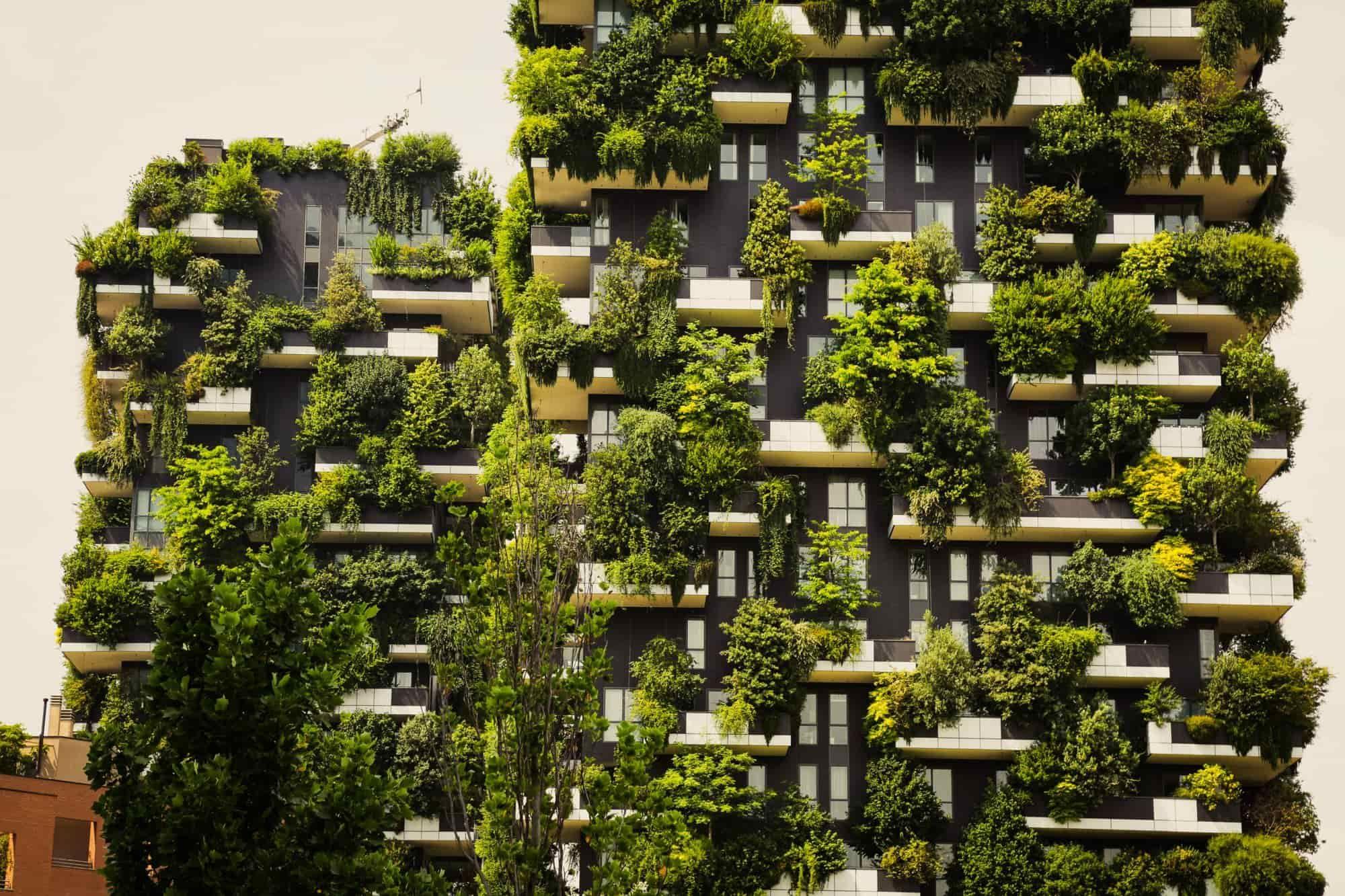
Adaptive envelopes utilize dynamic glass, BIPV, thermal mass, and living layers to regulate the microclimate and generate energy where needed. Electrochromic glass modifies cooling and lighting loads by regulating glare and heat, enhancing comfort, while BIPV transforms shading devices, rain screens, or double walls into generators. Plant-covered roofs and walls cool cities, buffer storms, and create habitats. Experimental bio-facades like BIQ in Hamburg demonstrate how living systems can perform shading and energy-generating functions. The goal is not a static coating but a facade that behaves like a small ecosystem.
Monitoring, Feedback Loops, and Performance Metrics
Renewal is validated in use, so teams develop feedback plans from day one. POE collects human and technical data, while Soft Landings guides the team from the handover process through to the long-term maintenance phase. Energy and water savings are credited through M&V plans under IPMVP, while ISO 50001 integrates continuous improvement into daily operations. NABERS ratings in the UK and other countries bridge the gap between design intent and actual performance by basing portfolios on real meter data. Dashboards are useful, but the real key is discipline: measure, share, adjust, and lock in gains every year.
Case Studies and Future Expectations
Regenerative applications are no longer just a concept; they can be seen in buildings that produce more energy and water than they consume, and in areas that restore damaged landscapes. These projects demonstrate that performance can be validated in use, financed in real markets, and replicated across different climates and typologies. Policy is also rapidly catching up with this development and creating the necessary infrastructure to scale the results from individual sites to entire cities.
Examples of Renewable Architecture Projects
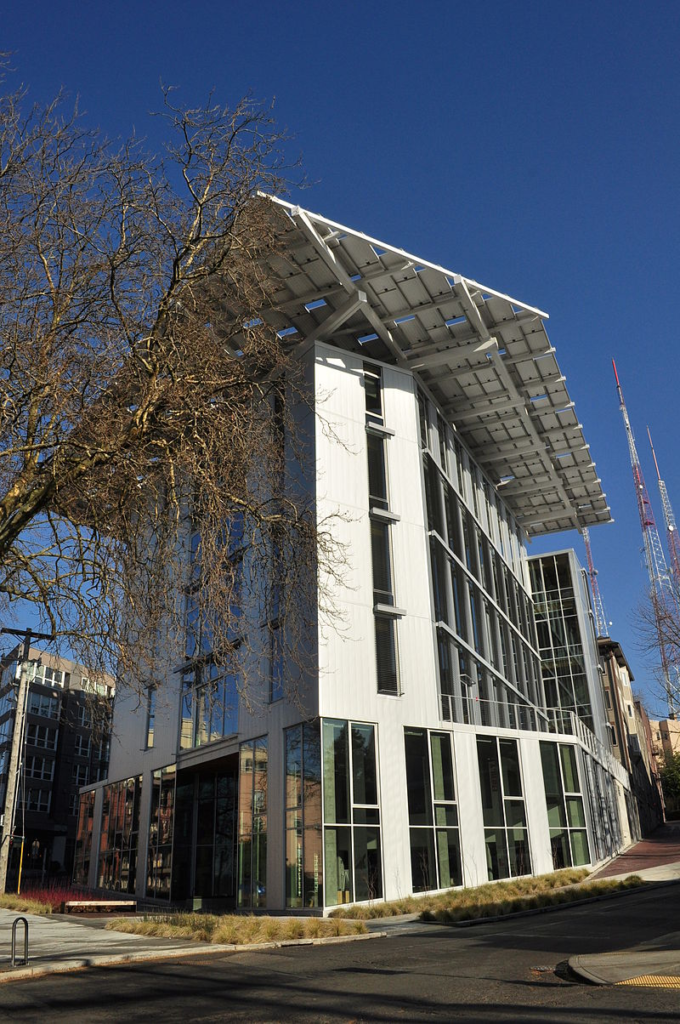
The Kendeda Building at Georgia Tech earned full Living Building certification by demonstrating net positive energy and on-site water purification, setting a new benchmark for campuses. In downtown Portland, the PAE Living Building became a commercial pioneer project led by developers and proved its applicability in a dense urban environment by achieving full certification in 2024. The Bullitt Center in Seattle continues to be a benchmark for net-positive operations and material transparency, while the Brock Environmental Center has advanced drinkable rainwater, composting, and coastal resilience. Together, they are charting the path from pioneering pilot projects to mainstream applications.

Lessons Learned and Common Challenges
Two persistent barriers are materials and water: Eliminating Red List chemicals has required training suppliers and developing new product groups, and there are still fragmented regulations regarding on-site reuse or permitting potable rainwater. Teams also report that reducing carbon emissions depends on early design choices and the availability of low-carbon cement, steel, and assembly parts on the market. Finally, performance differences persist unless projects adhere to post-use assessments and operational ratings that reward actual outcomes. Rigorous execution of processes from design to operations is supported by rules and incentives that value results over intent.
Scaling Regenerative Design: Urban, Campus, Community Levels
At the campus scale, Stanford’s Energy Systems Innovations provided heating with electricity and leveraged large-scale solar energy, reducing emissions by approximately two-thirds and lowering drinking water demand; this created a model for research areas and hospital facilities. At the urban block scale, Barcelona’s superblocks provided measurable health and comfort benefits by reallocating streets to people and trees. At the metro scale, the uncovering of rivers like Seoul’s Cheonggyecheon restored flood capacity and biodiversity while reshaping public life. Planning tools like London’s Urban Greening Factor have fixed habitat, soil, and shaded areas in every major development. These mechanisms transform building-level renewal into neighborhood and city infrastructure.
The Future of Architecture: Towards a Renewable Built Environment
The convergence process continues: Buildings Breakthrough aims to make near-zero emission, resilient buildings the global norm by 2030, the EU’s revised EPBD and national renovation plans are pushing building stocks towards zero emissions, and Digital Product Passports promise transparent material flows for true circularity. In parallel, jurisdictions are adopting Building Performance Standards and NABERS-style operational ratings that pay for proven results rather than modeled promises. As these policies tighten, winning projects will combine circular supply chains with verified operational performance and net biodiversity gains as standard practice. The goal is a built environment that restores climate, water, and nature while improving human health and equity.
Discover more from Dök Architecture
Subscribe to get the latest posts sent to your email.