

The Origins and Evolution of London’s Corridors
Medieval courtyard circulation
In medieval London, the hall was the heart of the house; it was an open, multi-purpose space where cooking, eating, and social life all took place under one roof. These halls typically opened directly onto a central courtyard, which served as the primary route for movement between the different parts of the house and its outbuildings. As privacy became more valued over time and the need for smoke control increased, these open halls were divided into smaller sections, and cross-passages—short corridors connecting the hall to exterior doors—emerged to improve circulation and ventilation. This transformation laid the groundwork for more defined entrances and service routes in later centuries.
Georgian period terraced house arrangements
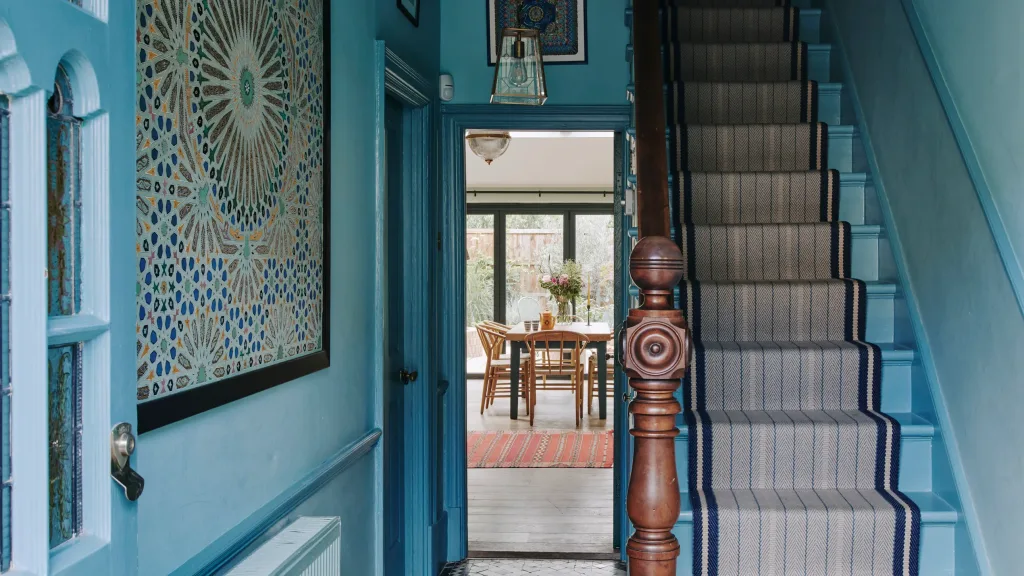
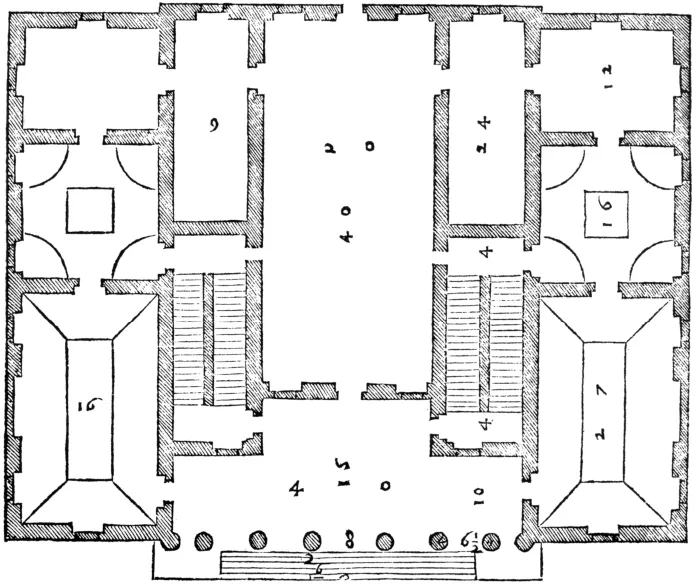
In the early 18th century, terraced houses brought to London after the Great Fire of 1666 were designed with formal entrance halls around which the front rooms were arranged, displaying symmetry and proportion inspired by Palladian ideals. These halls were typically long and narrow, directing guests directly to a central staircase or reception room, while secondary doors were discreetly placed to the sides. Corridor plans became universal in larger Georgian houses, replacing courtyards and emphasizing a linear transition from public to private spaces. The adoption of winged windows and advancements in construction techniques further reinforced this shift toward longer interior corridors.
Victorian corridor innovations
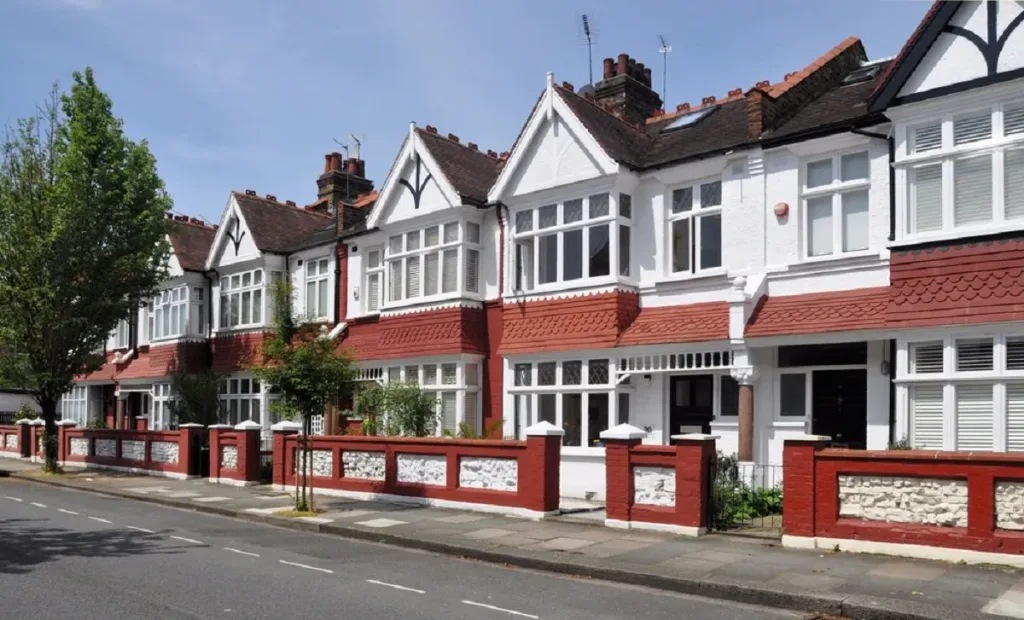
The rapid urbanization and boom in terraced housing in Victorian London led to the emergence of more compact floor plans. Houses were typically “two up, two down” and featured a narrow corridor running along one side of the house, connecting the front and back rooms and providing access to the staircase. These corridors, which were often less than a meter wide, prioritized space efficiency and marked a clear division between the formal entertainment areas at the front and the more private family or service areas at the rear. The corridor also became a subtle indicator of class hierarchy, as servants used the same narrow passages to move around discreetly.
Edwardian service passageways
The Edwardian period brought with it a desire for lighter, less cluttered interiors, as well as an increasing focus on separating service functions from family life. In middle-class townhouses, private service corridors hidden behind main walls connected kitchens, sculleries, and staff quarters without disturbing the main reception rooms. These passageways, typically featuring flat surfaces and accessed through hidden doors or panels, formed an almost invisible network for servants, reflecting the concerns of the era regarding the order of the home and the sanctity of family spaces.
Interwar period apartment access
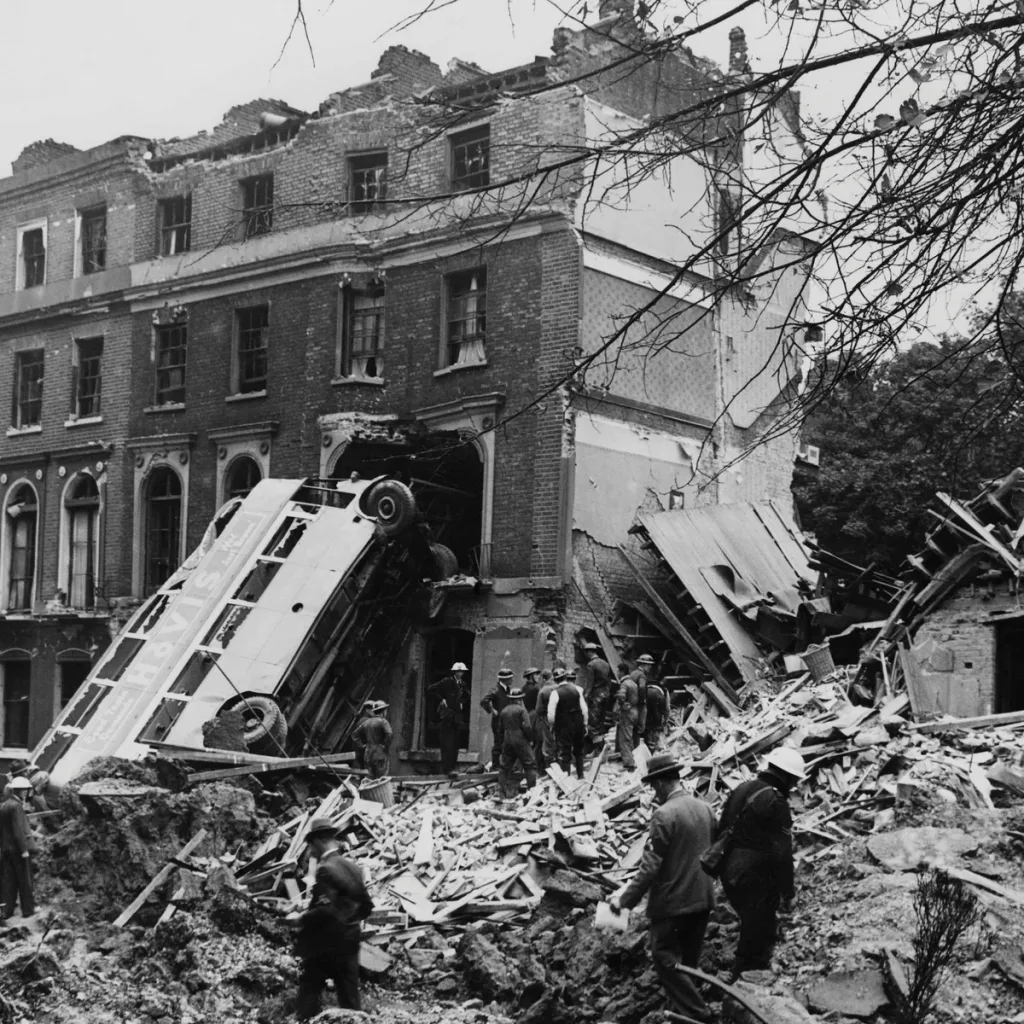
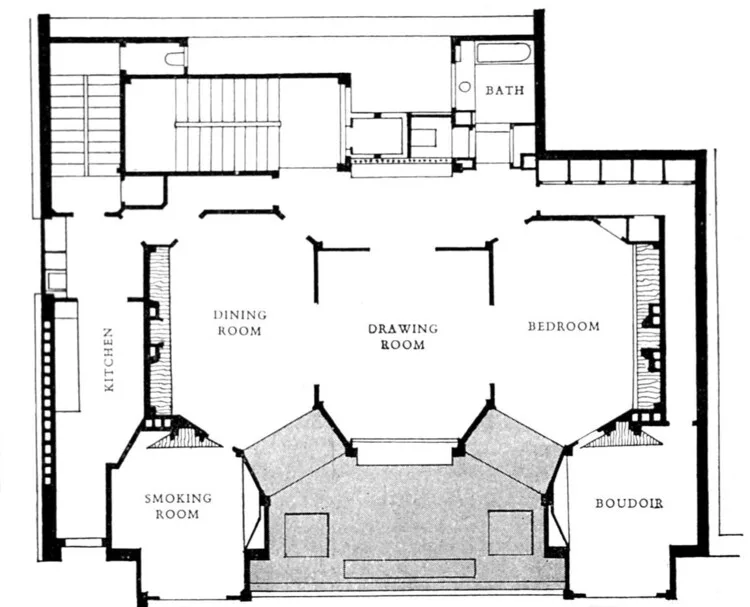
Between 1934 and 1939, there was a significant increase in the construction of private apartment buildings in London, with tens of thousands of apartments built in more than 300 blocks constructed during the interwar period. Architects responded to this by maximizing natural light and ventilation while providing shared corridors that served multiple apartments. In some pioneering designs, these corridors were expanded and insulated to create semi-public social spaces, forming a sharp contrast with the narrow, service-oriented corridors of earlier periods. This evolution underscores a shift toward collective living that reflects modernist ideals of community within density, where the corridor serves both as an entryway and a place for chance encounters.
The Architectural Anatomy of the Urban Corridor
Spatial proportions and dimensions
Spatial ratios in urban corridors are primarily governed by the relationship between corridor width and adjacent building heights, and this ratio frames the perceived density of the space. A corridor whose width is approximately two-thirds of the height of the surrounding facades tends to feel sufficiently open for both intimacy and comfort. In pedestrian walkways, this balance promotes a sense of enclosure without claustrophobia, guiding movement while preserving sightlines. Urban planners typically adopt the “1:1” or “1:2” width-to-height ratio to maintain human scale and visual harmony—meaning a 6-meter-wide corridor is surrounded by buildings 6 to 12 meters tall.
Lighting and ventilation strategies
Effective corridors promote healthy environments by taking advantage of both views that allow daylight to enter and cross ventilation. Designers create channels that allow air to flow through blocks and disperse pollutants by directing openings and air paths along prevailing wind paths. Skylights, light wells, and semi-transparent roof coverings enhance interior brightness while reducing reliance on artificial lighting. In climates prone to overheating, projecting eaves and louvered shutters modulate solar gain, shading corridors during high sun angles while allowing low-angle light during cooler periods. Such strategies reflect the hygienist concerns of 19th-century planners like Ildefons Cerdà, who aligned streets with prevailing winds to clean the urban atmosphere.

Material pallets and coatings
Corridor coverings combine durability with perceived warmth. Drywall continues to be a ubiquitous wall surface, providing a smooth, paintable plane that conceals structural joints and integrates acoustic applications. Floor choices vary depending on traffic volume: terrazzo and luxury vinyl tile (LVT) withstand heavy foot traffic in public walkways, while carpet can soften noise in office corridors. Sized stones like honed limestone or polished marble serve both as structural cladding and decorative statements; a range of surfaces—honed, brushed, or thermal—provide textural richness underfoot or above.
Structural load-bearing elements
Behind their apparent lightness, the corridors are supported by robust structural systems. The steel frame construction allows for column-free spans, providing wider passageways and minimal visual obstructions. Reinforced concrete beams and load-bearing masonry walls provide natural fire resistance, which is crucial in exit routes. In reinforcement projects, exposed wooden glulam beams can bridge the gap between heritage aesthetics and modern codes by combining warm textures with engineering strength. Visible truss beams and support frames rhythmically punctuate long corridors and affirm the building’s tectonic integrity, often transforming structural expression into an architectural gesture.
Decorative moldings and trims
Although corridors are inherently functional, decorative moldings express style and hierarchy. Classic designs feature cyma recta and astragal profiles framing doorways, creating a sense of proportion and harmony rooted in Greek models. In Victorian-era passageways, cast iron wrought iron screens and bracketed cornices introduced wrought iron ornamentation by adding delicate, lace-like patterns to structural railings. Today, minimalist interiors can revive delicate shadow lines through recessed moldings or thin recessed joints, preserving the sharp geometry of a corridor while honoring its decorative heritage.

Corridors as Social and Cultural Interfaces
Barriers between the public and private sectors
Corridors generally function as calibrated thresholds, mediating between visible street life and the secluded private spaces of homes. This threshold role is deeply embedded in architectural theory, which posits that facades and entrance corridors are designed to balance belonging and protection. In many local traditions, a stepped or recessed entrance hall signals a deliberate shift in social expectations—from everyday public circulation to anticipated private etiquette. Over time, designers have modified threshold width, ceiling height, and ornamental rhythm to express varying degrees of invitation or separation, thereby imbuing the act of transitioning into the interior space with cultural meaning.
Domestic worker movement
In the grand city houses of the 19th century, service corridors formed an invisible network that maintained family dignity while keeping household tasks running smoothly. These back or side passageways allowed servants to move between kitchens, pantries, and bedrooms without being seen in the formal living areas, effectively rendering domestic labor invisible within the mansion’s design. Architectural studies of the period highlighted the coding of “served” (public) and “servant” (support) areas, emphasizing separate door entrances, quiet finishes, and staircases reserved for staff. Even the width and lighting of these corridors were carefully designed: narrower passages with minimal natural light reinforced hierarchical distinctions, while later sites featured more spacious service halls, signaling shifting attitudes toward domestic workers.
Neighbors’ chance encounters
In multi-unit housing and community-oriented developments, corridors can become random social interaction arenas. Inter-unit designs and external walkways encourage random interactions, allowing residents to greet each other, engage in short conversations, or linger in common areas. Studies on shared housing models have shown that staggered front door alignments and recessed porch pockets along corridors significantly enhance neighborly relationships and a sense of shared stewardship. Urban planners now acknowledge that these “social thresholds” reduce isolation, facilitate spontaneous gatherings without pressuring private residences, and provide clear sightlines and occasional seating areas.
Children’s play corridors
Corridors often double as impromptu play areas where children demand linear spaces for imagination and movement. Architectural experiments ranging from telescopic wall panels to integrated playrooms invite young users to transform corridors into obstacle courses, reading nooks, or hide-and-seek hideaways. Iconic examples like the “jungle gym” house in Bangkok integrate ramps, tunnels, and netted bridges directly into circulation paths, transforming ordinary passageways into dynamic play areas. In institutional settings like children’s hospitals, designers are now creating corridors that mimic village streets or forest paths, acknowledging that playful spatial cues can reduce anxiety and support healing through interaction with the built environment.

Gender-specific uses of space
Historically, corridors within homes have reinforced gender roles, with certain passageways coded as masculine (e.g., access to libraries or study rooms) and others as feminine (e.g., paths leading to sewing rooms or nurseries). Sociological studies show that the internal layout of homes often maps social relationships, reflecting and perpetuating norms of male authority and female caregiving. Contemporary research at the intersection of gender and architecture critiques these inherited patterns, advocating for fluid circulation that resists binary relationships and promotes equal access to all areas of the home. Advances in inclusive design propose the complete elimination of gender-based thresholds and the preference for universal layouts where corridors are neutral channels rather than coded pathways. In some modern co-living projects, corridors are intentionally redefined as shared lounges, thereby resolving gender-based uses and encouraging collective ownership of common spaces.
The decline of corridor-centered design in residential buildings reflects profound changes in post-war policy, cultural preferences, and economic pressures. After World War II, public housing reforms prioritized rapid delivery and standardization, often favoring compact layouts and multi-functional entry areas over long interior corridors. In the 1950s and 1960s, open-plan living emerged as a social ideal, transforming corridors into fluid “daylight” zones that blurred the boundaries between cooking, eating, and living. Concurrently, modernist high-rise slab blocks, favored for their efficiency and density, replaced traditional corridor plans with stair cores and elevator lobbies serving stacked apartments. Rising land values and cost concerns further reduced circulation space, prompting architects to minimize inefficient corridors. Finally, changing lifestyle expectations demanding flexible, social, and light-filled interior spaces determined the corridor’s fate, as residents embraced open layouts that encourage interaction over enclosed passageways.
Post-War Housing Reforms
In the decades following World War II, Britain’s welfare state launched an ambitious public housing program to alleviate acute shortages, delivering more than 370,000 homes at its peak in 1968. Local authorities prioritized speed and economy, opting for repetitive designs with central stairwells and minimal internal corridors to facilitate construction and reduce maintenance costs. This standardization often meant abandoning long, private corridors in small homes in favor of circulation through multi-functional entrance halls or shared lobbies. As subsidies decreased in the 1970s and 1980s, tighter budgets further eroded the space allocated to corridors, solidifying compact layouts in both municipal and private housing.
The Emergence of Open Plan Living
The cultural shift toward open-plan living gained momentum in the post-war years and was championed by pioneers such as Frank Lloyd Wright, who designed Prairie School homes that brought dining and living areas together around a central hearth. By the 1950s, this approach had evolved to combine functionality with the ideals of modern living, promoting flow, sociability, and adaptability in homes. Open floor plans eliminated corridors, replacing them with continuous spaces that maximized natural light and visual connections. This change reflected and reinforced shifting social habits—meals became family events, and living rooms doubled as informal gathering spots, reducing the need for separate transition areas.

High-Rise Floor Block Typologies
In the mid-20th century, modernist architects adopted high-rise slab blocks and towers as a solution to urban density and housing shortages. Characterized by their long, linear footprints and repetitive facades, these buildings centralized circulation in central cores (stairwells and elevator lobbies) rather than individual corridors. This reorganization enabled smaller apartments, maximum window visibility, and more efficient vertical service. In doing so, the floor plan typology reduced corridors to shared atriums and exterior galleries, externalizing movement and discouraging private corridors, thereby fundamentally transforming the home experience.
Cost and Land Value Pressures
Rising land values in large cities have made large, inefficient corridors an expensive luxury by increasing the value of developable land. Economic models show that minimizing circulation space increases net rentable or saleable space and directly improves the viability of projects in high-value markets. More stringent zoning and planning regulations may also restrict building footprints, forcing architects to use smaller or shared corridors. As a result, contemporary residential projects often employ “broken plan” layouts (partial partitions and multi-functional entry areas) to create the sense of openness once provided by full corridors while optimizing land use.
Changing Lifestyle Expectations
Today’s residents value flexibility, natural light, and fluidity more than formal transition spaces in their homes. Research on housing preferences shows that demand for long, narrow hallways is declining, with buyers seeking integrated living spaces that support work, entertainment, and shared activities. The rise of remote work has further blurred the boundaries between home functions, and as daily spaces transform into multi-functional environments, corridors have begun to look outdated. Furthermore, the societal emphasis on social interaction and visibility has led to open, shared spaces like kitchen-living areas being preferred over isolated corridors, signaling the end of the corridor’s definitive place in modern residential design.
The removal of special buffer corridors has eroded the intermediate zones that once modulated transitions between public and private rooms, making homes more open to external and internal activities. Acoustic privacy is compromised in open layouts where sound travels unimpeded, increasing stress and reducing concentration. Increased visual permeability fills interior spaces with light but also removes barriers, making every movement visible and weakening the sense of retreat. Psychologically, unlimited openness can counteract ideals of freedom and sociability by increasing feelings of vulnerability and cognitive overload. In response, designers are now carving out private “retreat” niches (small, enclosed alcoves or wellness zones) in open-plan homes to reintroduce a measure of solitude.
Loss of buffer zones
When corridors and entrance corridors are removed, the spatial buffer between living and service areas disappears, causing functions that were once separate to become immediately adjacent. This compression of spaces means that the act of moving from the front door to a social area or from the kitchen to a private workspace occurs without the “breathing space” provided by corridors, leading to the erosion of arrival and departure rituals. Research on post-COVID home adaptations shows that the loss of these buffer zones increases perceived crowding and reduces household members’ ability to mentally compartmentalize activities, contributing to stress and role conflict.
Acoustic intrusion detection
In open-plan layouts, sound travels freely between rooms that were previously closed off, making conversations, media noise, and kitchen sounds audible throughout the entire home. Studies on open-plan offices and homes emphasize that the absence of corridor barriers exacerbates distraction and fatigue due to ambient noise interfering with concentration and disrupting relaxation. Even specialized acoustic applications like ceiling panels and partitions can only partially reduce this, as low-frequency sounds still travel under thresholds and around partitions, leaving occupants vulnerable to unexpected, unwelcome disturbances.
Visual transparency and sight lines
The removal of corridors typically requires the removal of interior walls or their replacement with glass partitions, which significantly increases the viewing distance between multiple functions. Spatial layout analyses show that higher visual connectivity is associated with lower perceived privacy, as occupants feel constantly observed and have less control over who can see their activities. Architectural privacy research positions these “transparency thresholds” as dynamic features: while increasing daylight and openness, they also eliminate opacity, allowing users to choose when and how they appear.
The psychological effects of openness
Contrary to initial promises of liberation, widespread openness can lead to cognitive overload, as the brain struggles to filter sensory input and maintain focus. Public health studies have linked housing instability and constant exposure to environmental stimuli to increased anxiety and sleep disorders, demonstrating that constant spatial exposure weakens mental well-being. A systematic review of privacy theory highlights that buffer zones, such as corridors, play an important role in emotional regulation by providing moments to process sensory information before entering a new context.
Redefining personal relaxation areas
In response to these challenges, contemporary designers are reintroducing micro-retreat spaces (small enclosed niches or garden rooms) that offer controlled solitude within more open floor plans. Innovations such as pod-like wellness rooms combine acoustic insulation, visual screening, and biophilic touches to create personal sanctuaries that support focused work or relaxation without leaving home. Case studies in shared homes demonstrate that even modest partitions, sliding panels, or strategically placed furniture can restore privacy and strengthen individual identity and agency within fluid living environments.
The redesign of corridors in contemporary London involves breathing new life into historic passageways through adaptable reuse, creating vibrant hybrid circulation and living spaces that blur traditional boundaries, and maximizing natural light through integrated light wells and atriums. Modular privacy screens offer flexible visual and acoustic separation in open-plan interiors, while insights from recent housing policies emphasize the need to create a layout that balances density with social and environmental well-being. When these strategies come together, they indicate that corridors can be used not merely as connection points but as dynamic, multi-functional spaces that honor heritage, encourage community interaction, and respond to evolving lifestyle and sustainability goals.
Adaptive reuse of historic corridors
Adaptive reuse transforms underutilized or abandoned corridors into attractive public and social spaces. The New London Architecture report highlights example plans where old service passageways in Victorian warehouses have been converted into pedestrianized galleries and existing structural rhythms have been utilized to create cultural promenades. Similarly, MMoser’s case studies demonstrate how industrial corridors in old factories around Kings Cross have been redesigned as illuminated art spaces by preserving heritage elements such as cast-iron columns and exposed brickwork and adding contemporary lighting and signage. Kohn Pedersen Fox (KPF)’s leading applications emphasize transforming preserved corridors in landmark buildings into linear meeting spaces that honor their original proportions and craftsmanship by maintaining their “famous length.” This approach not only minimizes demolition and preserves embodied carbon but also fosters a sense of continuity between past and present architectural narratives.
Hybrid circulation and living spaces
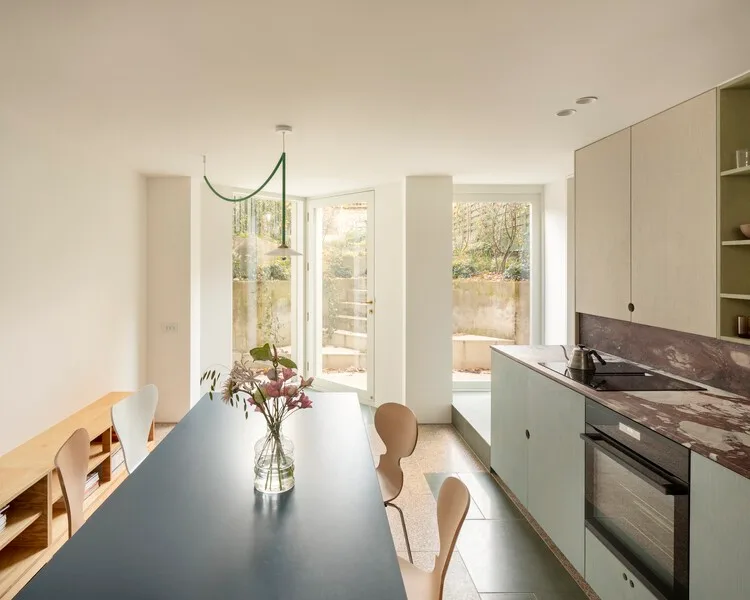
Hybrid spaces promote fluid movement and multifunctionality by combining corridors and living areas. O’Sullivan Skoufoglou Architects’ RAW House in Clapham demonstrates this by weaving gallery exhibition spaces directly into the home’s circulation, allowing art to be displayed and home life to coexist seamlessly. Research on “mat-hybrid housing” shows that variable transition paths featuring sliding partitions and reconfigurable walls enable residents to adapt spatial layouts seasonally or functionally, narrowing or expanding corridors as needed to create livable zones. These designs respect the corridor’s connecting logic while incorporating diverse uses (dining nooks, work corners, and social thresholds) along its length, promoting interaction without compromising privacy.
Integration of light wells and atriums
Daylight integration through light wells and atriums enhances natural lighting deep into the building core, enlivening corridors. The Wrap House in the Metropolitan Green Belt features a central glass atrium that channels sky light through a stacked staircase, bathing adjacent corridors in diffused daylight and reducing the need for artificial lighting. Academic studies conducted at high latitudes show that linear atrium designs with light-reflecting panels can increase daylight levels by up to 50% during winter months, enhancing occupant comfort and reducing energy consumption. Contemporary London projects can create healthier and more appealing passageways by providing natural light to previously dark corridors through strategically placed vertical voids and curtain openings.
Modular privacy screens
Modular screens offer adaptable privacy solutions for open corridors and living spaces. The recycled aluminum panels of the Metal Garden Screen demonstrate how perforated modules can provide visual screening while allowing airflow and filtered light. Marica McKeel’s modern wooden curtain elements, designed to slide along exterior glass walls, show how wooden modules can create intimate retreats along circulation paths. Composite modular fence panels made from wood-plastic composites offer durable, low-maintenance partitions suitable for balcony corridors, providing acoustic buffering in mixed-use developments. These systems enable residents to adapt the permeability and privacy of their corridors in response to changing privacy and social needs.
Lessons for future housing policy
Policy guidance emphasizes the importance of adaptable, well-lit circulation in high-density housing. The Greater London Authority’s Housing Design Standards advocate for the preservation and reuse of existing infrastructure, including corridor networks, to minimize embodied carbon and promote settlement continuity. The Guardian’s report on Kidbrooke Village highlights how integrating green corridors and shared pathways into housing master plans can improve mental health, biodiversity, and social cohesion, demonstrating the value of corridor areas beyond mere circulation. The Financial Times’ analysis of new city proposals highlights the government’s role in securing land values that allow for generous circulation and shared amenities, and warns that overcrowding corridors in the pursuit of density could harm community well-being. Finally, the London Mayor’s Housing Design Guide calls for small development plans to optimize land capacity through flexible internal layouts rather than standard corridor plans and to encourage hybridized circulation that accommodates diverse household configurations. When these policy approaches are combined, they point to corridor design as a strategic lever for delivering sustainable, socially rich, and people-centered housing for London’s future.
Discover more from Dök Architecture
Subscribe to get the latest posts sent to your email.