

Understanding Silence as a Design Principle
Silence Beyond Sound: A Spatial Philosophy
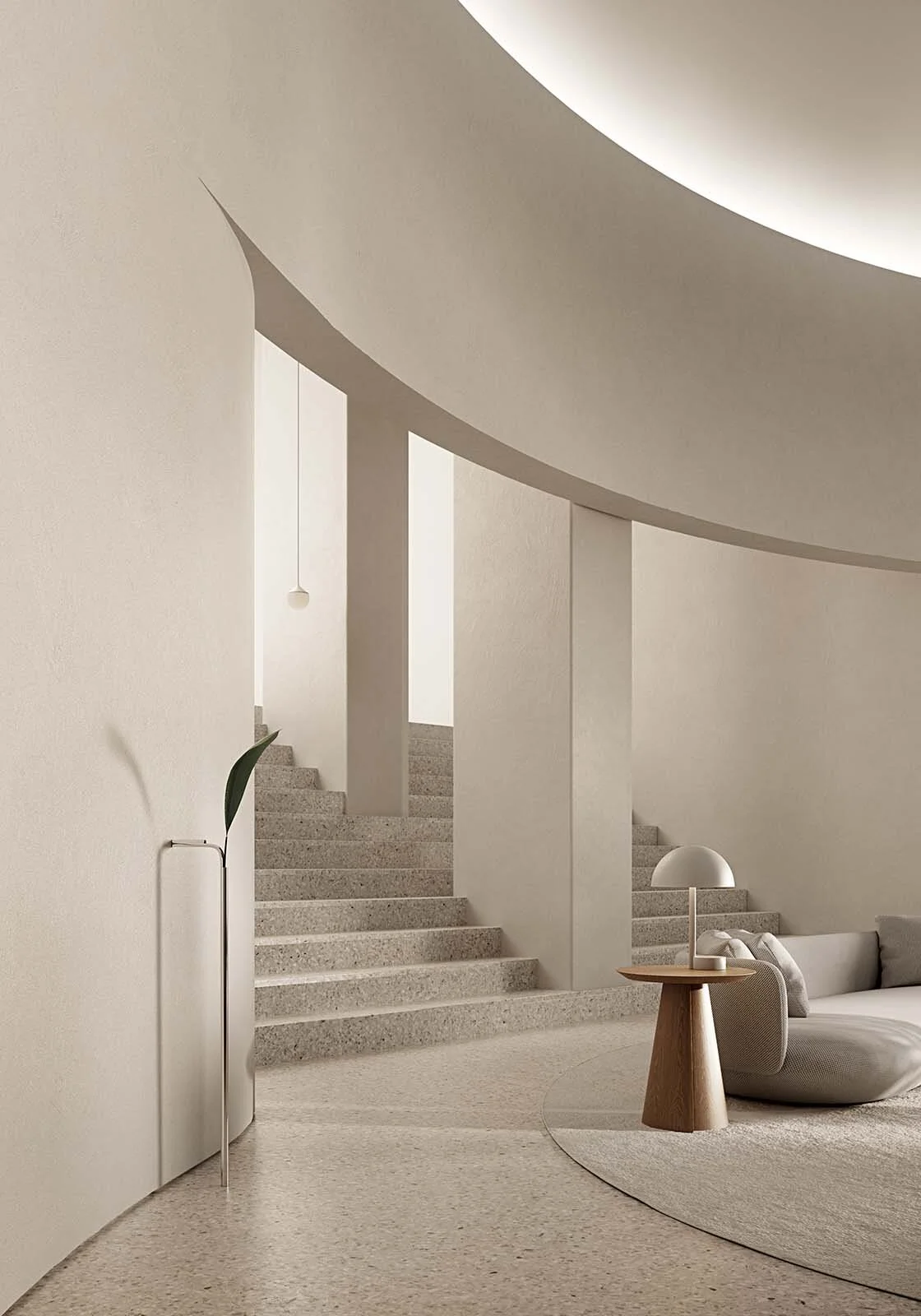
Silence in architecture is more than just a low decibel level; it is the careful adjustment of all stimuli to allow a space to hold attention without drawing attention to itself. The theory of soundscape reminds us that every space has an acoustic identity and that designers can transform this identity from noisy to meaningful by shaping materials, volumes, and edges. Phenomenology expands on this: silence emerges when a room appeals not only to the eye but to the whole body, so that texture, weight, and warmth calm the mind. Architects like Peter Zumthor speak of atmospheres where silence is a felt intensity, a presence that allows things to exist.
The Psychological Effects of Silent Architecture
Noise is not only annoying; it causes measurable harm to health, increasing the risks of hypertension, heart disease, sleep disorders, and cognitive impairment, making architectural silence a public health issue. Evidence also shows that softer sensory environments and natural views help people regain their attention and reduce stress more quickly, improving focus and mood. Therefore, a window overlooking trees, a fixed acoustic space, or a calm material palette can shorten recovery times and reduce physiological stress. Therefore, designing for silence is designing for cognition, renewal, and cardiovascular health.
Historical Pioneers in Monasteries and Sacred Places
Cistercian monasteries framed silence as a spatial discipline: thick stone, simple ornamentation, subdued light, and measured speech and chanting requiring long reverberation. At Le Thoronet Abbey, the limestone church produces an unusually long resonance, demanding a communal tempo and shared attention. Architecture teaches silence by making sound visible over time and aligning daily rituals with the room’s acoustics. These examples demonstrate silence not merely as absence but as a cultural technology.
Modern Interpretations of Minimalist Architecture
Minimalist works transform these lessons into a contemporary form: by reducing elements, they allow light, proportion, and surface to reflect the mood. In Tadao Ando’s Church of Light, the bare concrete volume and a single light cut create a sanctuary where awareness of visual and auditory constraints is heightened. John Pawson’s practice frames silence as clarity and argues that when light and proportion are right, nothing else is needed. Alongside Zumthor’s concept of atmosphere, these approaches elevate silence from a side effect to a deliberate design choice.
Materials and Form in Acoustic Design
Sound-Absorbing Surfaces and Textures
Porous absorbers work by converting pressure fluctuations into friction heat within the material’s pores, and the low-frequency range is largely a function of thickness and airflow resistance. Absorption in real rooms depends on frequency and angle, so the same panel may exhibit different behaviors between normal radiation and zero radiation. Standards such as ISO 354 and 11654 convert detailed laboratory data into practical single-number ratings, but the spectrum is still important for speech and music clarity. The fabric can disperse high frequencies, but actual absorption still depends more on depth, porosity, and rear air voids than on surface pattern.
Natural Materials That Mute and Soften Sound
Wool, mushroom, and plant fiber panels effectively absorb sound because their highly porous structures slow airflow and disperse energy. Studies show that natural fibers such as kenaf, hemp, and sheep’s wool can provide high absorption in the mid-to-high frequency range while also offering thermal and environmental benefits. Mushroom-based composites and highly porous woods provide acoustic comfort with a renewable palette by adding damping properties with low mass. These materials soften rooms acoustically and culturally by combining silence with a tactile, human surface language.
The Role of Geometry in Limiting or Propagating Noise
The form shapes the sounds we hear by directing early reflections, either to include bass frequencies or to break up glare. Diffusers based on number theory, such as Schroeder’s QRD, distribute energy across bands, allowing rooms to feel lively without reverberation, while convex or directional elements spread reflections to expand the ideal listening point. Concert and theater applications treat diffusion as a complement to absorption, controlling speech intelligibility and reverberation time while preserving envelopment. From a design perspective, geometry is an acoustic tool that adjusts spatial presence without creating visible clutter.
Invisible Acoustic Technologies in Contemporary Applications
First modeled by Maa in 1975, microperforated panels (MPP) provide broadband sound absorption using millimeter-scale holes on an air gap, creating clean, finished surfaces. Seamless acoustic plasters and mineral boards extend this concept to room scale, offering Class A sound absorption and ISO-tested performance while appearing as continuous ceilings or walls. Active noise control is increasingly used in situations where passive treatment is resistant to low-frequency or open-aperture problems, and window and duct prototypes show measurable broadband reductions. These systems conceal performance within the cladding, making silence understandable in its purest form.
Case Studies: Spaces That Materialize Silence
Libraries, the Sanctuary of the People’s Silence
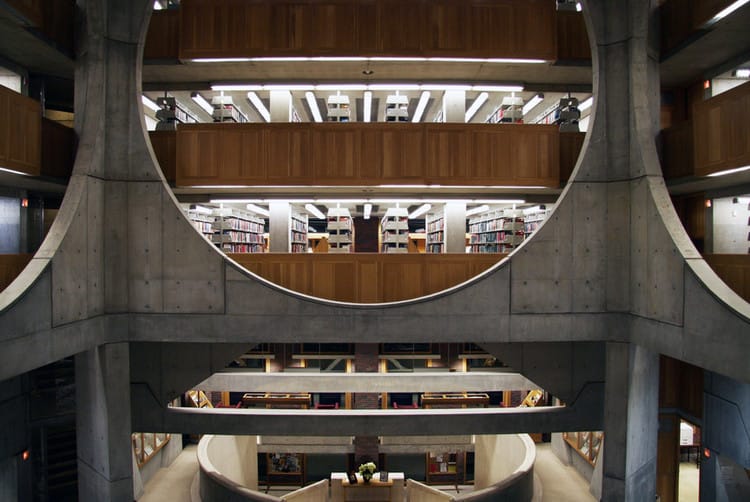
Silence in the library begins not with a sign on the wall, but with how light and mass are used. At Yale University’s Beinecke Library, thin marble panels transform daylight into a steady amber glow, turning the room into a softbox that protects the books while being pleasing to the eye. In Exeter, Louis Kahn separates reading booths, bookshelves, and the atrium into interlocking rings, so readers sit along the porous brick edge bathed in natural light while books occupy a quiet center. The Stuttgart City Library adds an inward-focused focal point with a double-sided, light-emitting “heart,” blocking street noise and making the act of reading feel ceremonial in the bright, centrally located void.
Thermal Baths and Spa Architecture
At Therme Vals, silence is composed of stone and warmth. Designed by Peter Zumthor, the complex is embedded into the hillside, and heavy, cool rooms have been created using local quartzite layers, where sounds are muffled and footsteps slow down. The mineral water provides a contrast to the body. The architecture, with its narrow openings and a series of pools that regulate speed and perception rather than decoration, reads like a quarry of light and water.

Quiet Homes: Indoor Silence in Residential Design
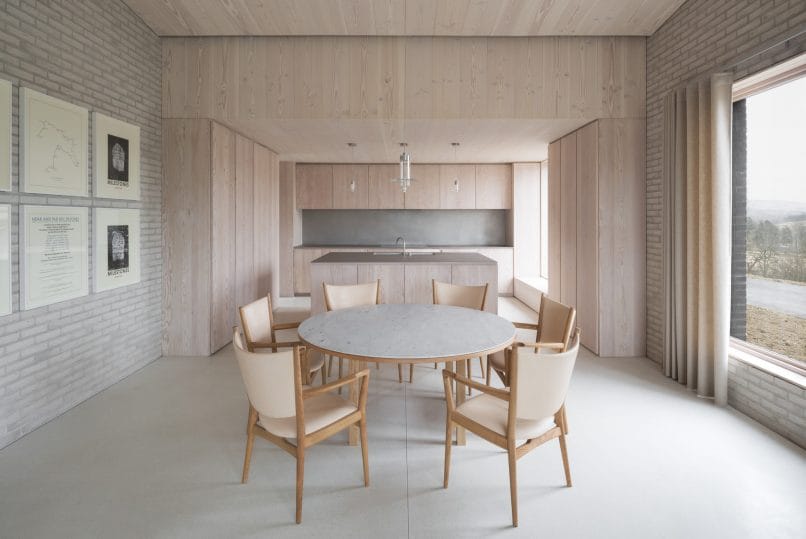
John Pawson’s Life House is a residential sanctuary that organizes daily rituals such as reading, bathing, and listening in dedicated rooms, using simple materials to maintain focus. The house treats silence not as a mood but as a program, combining simple volumes with framed views to make tranquility the default state of life. Tadao Ando’s Koshino House achieves a similar tranquility through concrete and light. Here, slits and recessed walls soften glare and echo, giving the rooms a slow, considered feel.
Meditation rooms, retreats, and sound minimalism
At Honpukuji’s Water Temple, one arrives in a choreographed manner with gravel, walls, sky, and an oval lotus pond, then descends the central stairs into the lower hall, thus entering silence like a threshold. The descent, filtered daylight, and reduction of form create a mental pause before a word is spoken. At Taipei’s Su-Ay Monastery, long columned galleries, a reflective pond, and minimal colors transform movements into contemplation, while the city disappears behind layered walls. Retreat centers like IMS’s Forest Retreat formalize “noble silence,” proving that policy and planning can work with architecture to maintain collective silence for days and weeks.

Design for the Senses in a Noisy World
Balancing Urban Noise with Inner Peace
Cities expose millions of people to levels of transportation noise known to be harmful to health, so indoor spaces must become a refuge. Effective quiet begins at the exterior: layered facades and acoustic windows reduce noise intrusion while preserving daylight and ventilation when needed. Inside, steady background noise from ducts is reduced and adjusted; in areas where speech privacy is important, calibrated sound masking makes conversations less intelligible without making rooms feel noisy. Rating systems now treat this as a fundamental design element rather than an afterthought, offering credits and guidelines that require projects to demonstrate acoustic performance.
Silence as an Element of Comfort in Healthy Living Architecture
Silence functions like clean air or good daylight: it improves sleep, mood, and recovery, and therefore should be included in every health report. Public health guidelines link environmental noise to cardiovascular and cognitive risks and set conservative nighttime thresholds for true rest. The health toolkit responds with criteria for background noise, speech privacy, and reverberation, aligning building choices with measurable human outcomes. In practice, this means treating silence not as a matter of chance but as a service provided by the building.
Creating Transitions: Thresholds of Transition into Silence
Maintaining calmness is easier when you stage it, so quiet rooms should be accessed via buffers that slow down sound and speed. Soundproof entrances, quiet lobbies, and short acoustic corridors reduce the energy of conversations before reaching the focus area. Design these thresholds like instruments that balance isolation, absorption, and controlled reverberation, so the body can sense the change before the “quiet” signal is given. The soundscape framework helps measure not only the decibel value at the end but also the quality of this transition.
The Future of Acoustic Comfort in Design Thinking
Two forces will shape tomorrow’s silence: increasing urban noise and smarter control at the facade and room scale. The more widespread use of closed or ventilated double walls and new active systems in openings is expected to reduce low-frequency traffic noise while preserving fresh air. In interiors, workplaces, and homes, smaller, purpose-built quiet rooms will be added due to ongoing research showing that uncontrolled noise and insufficient privacy reduce satisfaction and performance. Across all types, soundscape methods and health-focused standards will continue to shift from “less noise” to “better experience.”