


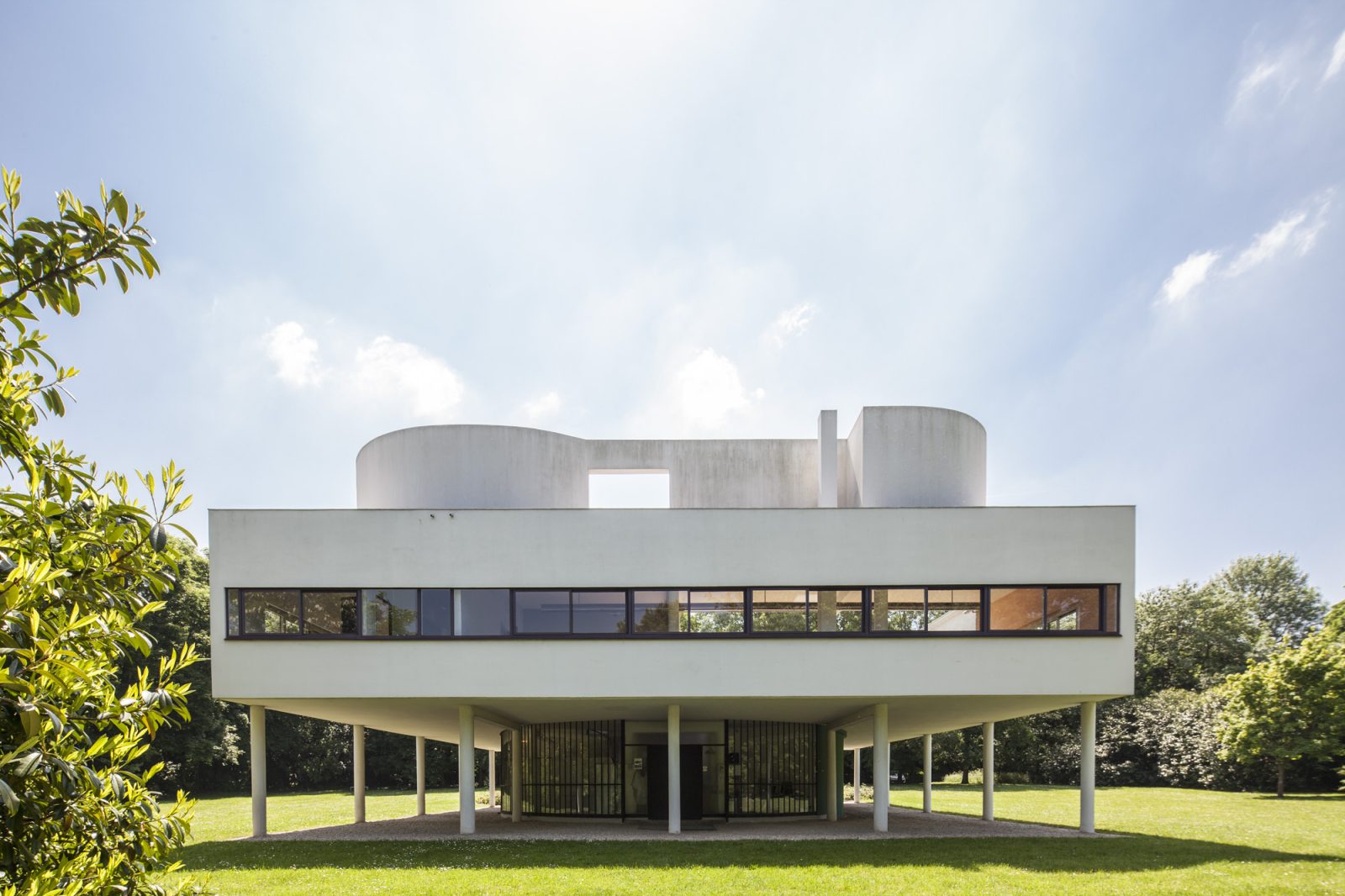
Villa Savoye À Poissy -Future Past
Designed by Le Corbusier and completed in 1929, Villa Savoye, a UNESCO World Heritage Site, is considered one…
International Style Architecture is an important branch of modernism that developed in the 1920s and 1930s. This style combines functionality, simplicity and aesthetics.
Key Features:
Simple Forms: Flat surfaces and geometric forms are at the forefront.
Functionality: The function of the buildings is at the center of the design.
Glass, Concrete and Steel: Intensive use of modern materials creates light and spacious structures.
Open Plan Layout: Provides flexibility and width in interior spaces.
Important Representatives:
Le Corbusier: Known for projects such as “Villa Savoye”.
Mies van der Rohe: One of the pioneers of the international style with the “Seagram Building”.
Walter Gropius: Founder of the Bauhaus school; known for his functional design approach.
International style architecture responds to the needs of modern life, offering simple and effective structures.
