
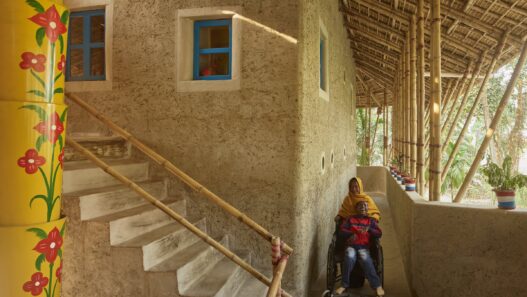
Anandaloy Center: Studio Anna Heringer
This building is more than a structure; it is a physical manifesto for social and environmental justice. Rising from the soil of Bangladesh, its composition of compressed earth and bamboo declares that beauty and dignity are universal rights. It stands as a quiet yet powerful argument against the global export of cold, industrial materials, proposing local earth as the ultimate luxury. Like a beacon, the center draws its light from the community it serves, proving that architecture can heal both people and the planet simultaneously.
The Birth of Anandaloy: Philosophy and Context
The starting point was not a sketch, but a conversation built on years of trust in Rudrapur. It emerged from a simple yet profound question: How can architecture actively repair social divisions and empower the most marginalized? This philosophy rejects the parachute project, where a designer drops in with a ready-made solution, and instead advocates for a slow, collaborative culture. The context demanded a response that was both deeply local in material terms and boldly universal in its human aspirations. Thus, Anandaloy was conceived
Anna Heringer’s Human Design Ethics
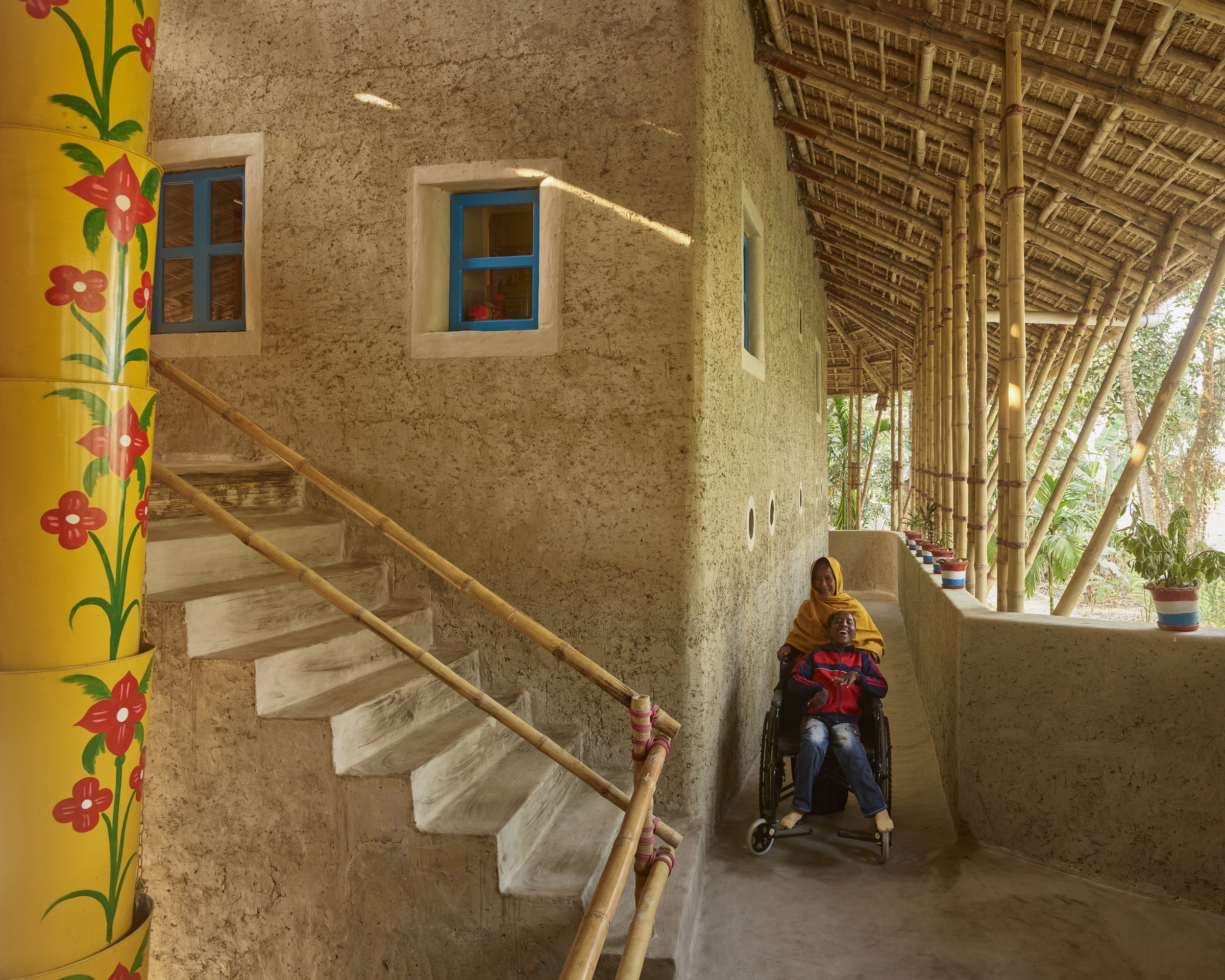
For Heringer, design is a tool for love, a tangible means to express care and foster equality. His philosophy positions architecture not as an artistic service for the few, but as a fundamental human right for all. This belief shifts the focus from spectacular form to profound process, turning building into an act of education and economic empowerment. He champions materials and techniques that strengthen local economies and ecological cycles, framing sustainability as a social project. In his hands, a construction site becomes a classroom, and the
Earth and Community: Rudrapur, Bangladesh
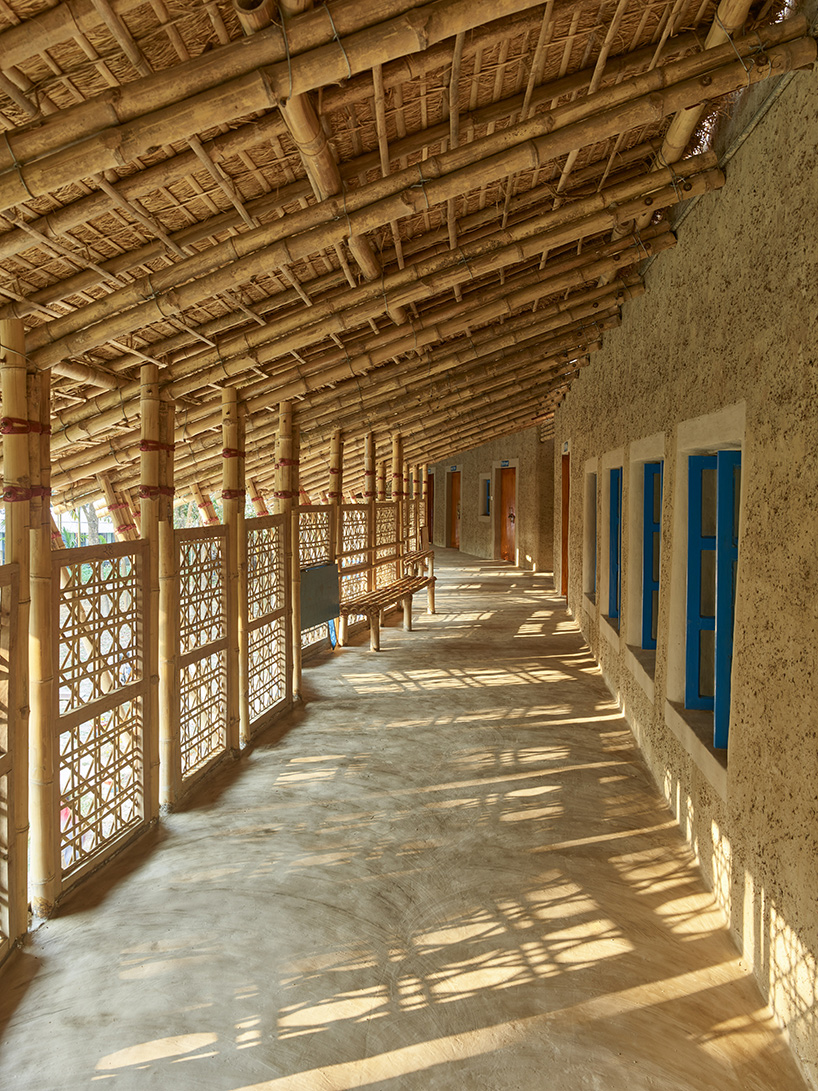
Rudrapur is a rural landscape where the rhythm of life is closely tied to the land. The community’s knowledge of monsoons and harvests became the foundational plan for the project. This is a place where global supply chains feel abstract and foreign, and the logic of local materials is not only ecological but also highly practical. Building here meant listening to the deep wisdom available about the soil and life. Architecture should become a natural extension of this wisdom, a new layer in the ongoing story of
Core Mission: Therapy and Handicrafts Center
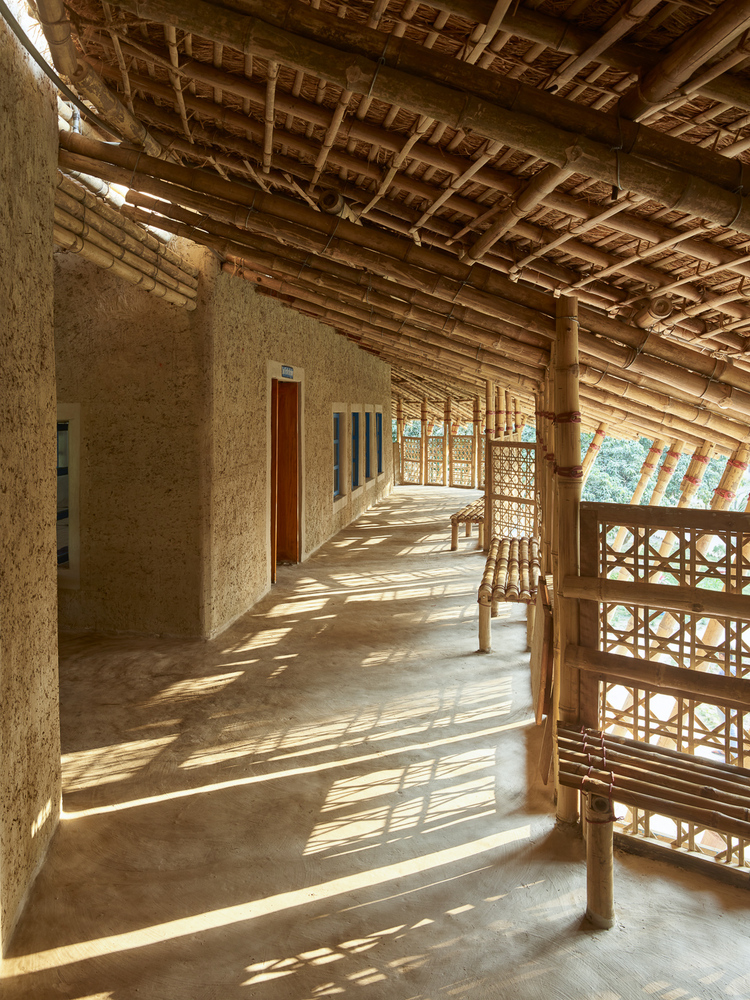
This project conveys a symbolic and social message by physically merging two seemingly distinct programs under a single roof. A therapy center for people with disabilities is located directly beneath a vibrant textile workshop, creating an intentional vertical connection. This arrangement challenges societal perceptions by placing care and creativity on equal footing and keeping them in constant dialogue. It fosters a community where individual therapeutic journeys are supported by a collective creative economy. The building becomes a tool that demonstrates how inclusion is most powerful when integrated into the daily fabric of work and life
Adoption of Local Dialect: A Modern Interpretation
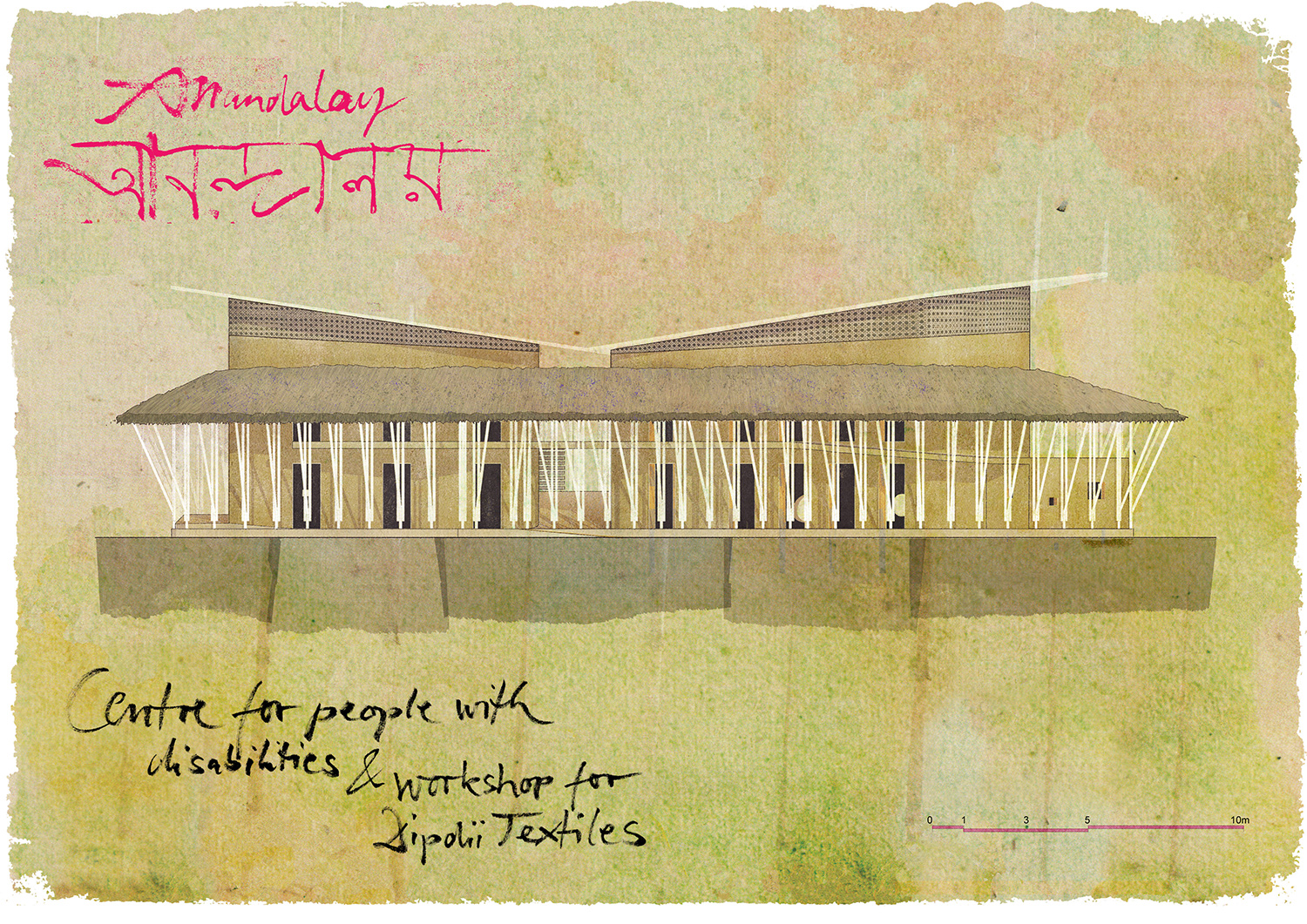
This is not a nostalgic replica, but a conscious evolution of vernacular principles. While embracing the cultural intelligence of bamboo and earth, it refines them with contemporary engineering rigor. The modern interpretation lies in the bold, sculptural form and open social agenda; these concepts are as innovative as any new material. The building speaks a familiar language with a new and confident grammar, demonstrating that tradition can be a springboard for the future. It proves that true sustainability is a living tradition, continuously reinterpreted for new
Architectural Anatomy: Materials, Form, and Structure
This is the fundamental language of architecture, the tangible reality of building. Materials are the chosen words, form is the constructed sentence, and structure is the underlying grammar that holds the thought together. Their interaction defines not only physical presence but also emotional resonance, from the heavy permanence of stone to the tensile lightness of a suspended ceiling. To understand this anatomy is to read a building’s deepest intentions, its dialogue with gravity, climate, and human use.
The Supremacy of Mud: Techniques and Sustainability
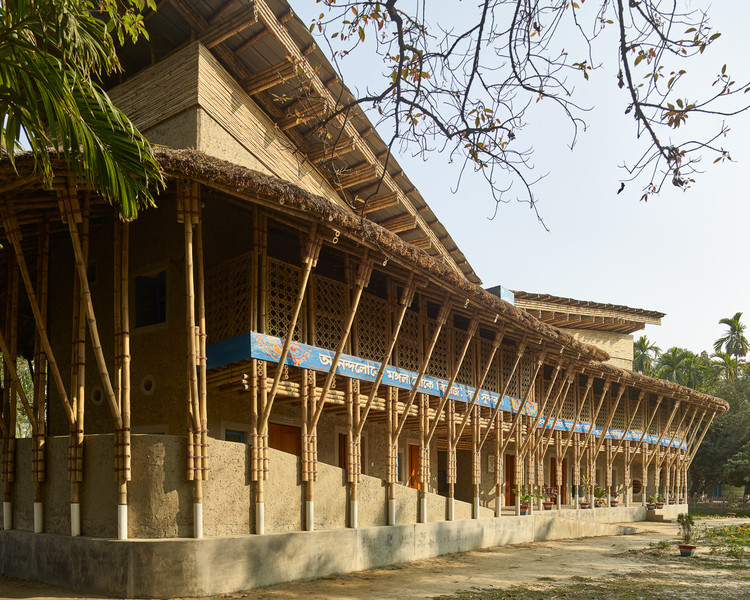
Mud is architecture’s oldest and most democratic material; it is earth transformed directly into shelter. Its significance lies in a deep thermal intelligence and a life cycle that gracefully returns to the soil. Modern rammed earth or adobe techniques turn this humble material into monolithic, breathable walls that store coolness or warmth with quiet efficiency. This is building as an act of belonging; creating forms that seem to grow from the site itself, leaving the lightest of traces.
The Role of Bamboo: From Scaffolding to Structural Poetry
Bamboo, initially a pragmatic tool, is used as a temporary framework upon which permanent structures are built. However, its true architectural role is to offer a vivid lesson in structural efficiency and elegance. Its hollow columns provide exceptional strength with minimal mass, creating rhythmic, ascending frames that dance with light and shadow. This material teaches resilience and flexibility, crafting spaces that feel both rooted and alive, and stands as a testament to growth as a design principle.
Spiraling Ramp: Symbol of Inclusivity and Journey
More than just a circulation element, the spiral ramp redefines vertical movement as a continuous and democratic experience. It rejects the fragmented interruptions of staircases and instead offers a unified path accessible to all. This slow, deliberate ascent becomes a narrative device, revealing space and view in sequence. It embodies the idea that the journey itself is as significant as the destination, bringing people together in a shared, unfolding procession.
Light, Air, and Spatial Experience
These are the intangible elements that shape space, the active components that breathe life into architecture. Light molds perception, creates volume from shadow, and paints surfaces according to the time of day. Air moves as a breeze, a tactile presence that connects interior and exterior, carrying scent and sound. Together, they transform static enclosed spaces into dynamic sensory environments—containers of atmosphere that calm, energize, or inspire through the very feeling of being within them.
Details and Craftsmanship: Products Crafted by Local Artisans
The point where two materials meet tells the story of care and context. It is where global design intentions are brought to life through local craftsmanship, with knowledge and traditions woven into every joint and finish. This kind of craftsmanship imbues the building with a tangible humanity and texture that machines alone cannot replicate. It represents the dialogue between the architect’s vision and the artisan’s touch, ultimately creating a space that is thoughtful, authentic, and rooted in its community.
Impact and Legacy: Beyond Built Form
Its true significance lies not in its physical structure, but in the social framework it creates. The project demonstrates that architecture’s deepest impact is measured by the lives it changes and the community dynamics it transforms. It shifts a building’s legacy from a static monument to an active, living process. This redefines success in the field by prioritizing enduring human values over transient aesthetic trends.
Social Catalyst: Empowering Women and People with Disabilities
This architecture functions as a platform for agency by intentionally reversing traditional power dynamics. By placing design tools and construction training directly into the hands of marginalized groups, it transforms users into creators. The built environment becomes both a testament to their skills and a source of economic independence. This process fosters dignity and reshapes the community’s perception of capability, proving that inclusivity is not a limitation but a creative force.
A Model for Sustainable and Ethical Architecture
Here, sustainability is interwoven with social justice and cultural continuity. The model reduces the environmental footprint while strengthening regional identity by prioritizing local materials and traditional techniques. Its ethical essence lies in a participatory process that values community knowledge as highly as technical expertise. This creates an ecologically gentle and resilient architecture with deep roots in its place, offering a holistic alternative to global exploitative practices.
Recognition and the 2021 Obel Award
This award confirms that architectural discourse has achieved a significant expansion beyond form and function. It demonstrates a growing consensus that the greatest challenges of the profession are social and environmental. This recognition elevates community-led activist practices to the highest level of international prestige. It serves as a powerful signal, encouraging architects worldwide to undertake work with measurable human impact.
Lessons for the Global Architecture Community
The project teaches that the scale of ambition is not synonymous with the scale of construction. It convincingly demonstrates that architecture is not an author but a facilitator, not a product but a process. The greatest lesson is that true innovation often lies not in reinventing forms, but in reimagining relationships. By offering a scalable template for meaningful interventions, it proves that profound change can begin with listening and local empowerment.
Discover more from Dök Architecture
Subscribe to get the latest posts sent to your email.