
Development of a Unified Design Language
Architects can develop a unified design language that is sustainable and contextually appropriate by identifying key principles such as sustainability, cultural resonance and adaptability. These principles allow for a coherent approach while meeting the different needs of urban and rural environments.


For example, sustainability in urban areas may involve advanced technologies such as green roofs, while in rural settings it may mean using local materials such as timber or adobe. Firms such as Kéré Architecture demonstrate this by using clay bricks in rural Burkina Faso and modern designs in urban projects such as the Zhoushan cultural district in China.
Highlights
- Unified Design Language: By focusing on sustainability, cultural sensitivity and adaptability, architects can create a cohesive design language tailored to local materials and community needs in both urban and rural settings.
- Material Selection: Using locally sourced, durable and culturally resonant materials such as bamboo or rammed earth in rural areas and recycled materials in urban areas ensures accessibility and sustainability.
- Cultural and Functional Flexibility: Modular and adaptable designs, as well as the inclusion of common cultural elements such as courtyards or local motifs, allow architecture to reflect common values while addressing site-specific differences.
- Challenges and Considerations: Balancing consistency with local adaptation requires careful consideration of material availability, labour skills and cultural contexts, particularly in low- and middle-income areas where resources may be limited.
Material and Detailing Strategies
Selecting materials that are durable, culturally resonant and logistically accessible is critical, especially in low- and middle-income areas. Locally sourced materials, such as bamboo in Vietnam or rammed earth in India, reduce costs and environmental impacts while honouring local traditions. Anupama Kundoo uses mud and local craftsmanship for both rural and urban projects. Detailing techniques should be simple, utilising local skills for ease of construction and maintenance, such as traditional timber joinery rather than complex metal fasteners.


Expressing Shared Cultural Values
Architects can use flexible typologies, such as courtyards or modular systems that adapt to different scales and densities, to design public infrastructure or housing that serves both urban and rural populations. Alejandro Aravena’s phased housing model, in which residents extend basic structures, works both in urban Iquique and in smaller coastal cities such as Constitución. The inclusion of common cultural elements, such as regional colours or patterns, allows designs to resonate across contexts, while allowing site-specific adaptations for lifestyle differences.


Comprehensive Strategies for Integrated, Sustainable and Culturally Harmonious Architecture
Developing a Unified Design Language in Urban and Rural Contexts
Creating a unified design language that remains sustainable and contextually appropriate in different environments requires a balance between consistency and adaptability. Architects can achieve this by basing their work on core principles that transcend location while allowing for local customisation. These principles include:
- Sustainability: A commitment to reducing environmental impact guides material choices and construction methods. In urban areas, this may include high-tech solutions such as energy-efficient systems or green roofs, as seen in Stefano Boeri’s Vertical Forest in Milan. In rural areas, sustainability often relies on passive design strategies and local materials such as rammed earth and bamboo, as used by Anna Heringer in Bangladesh.
- Cultural Sensitivity: Incorporating local aesthetics ensures that designs resonate with local communities. For example, Vo Trong Nghia uses bamboo in both urban and rural Vietnam, creating a consistent aesthetic that reflects local traditions while introducing modern forms.
- Adaptability: Flexible design systems, such as modular or prefabricated components, allow architects to tailor projects to specific contexts. Anupama Kundoo’s Full Fill Homes for urban affordability and the rural Voluntariat Houses in Pondicherry demonstrate adaptability by using modular construction with local materials.
Architects such as Francis Kéré exemplify this approach. His rural projects in Gando, Burkina Faso, use locally sourced clay bricks reinforced with cement for thermal mass, while his urban projects, such as the Zhoushan cultural district in China, integrate modern forms with local heritage. Similarly, Shigeru Ban’s use of recycled cardboard tubes for disaster relief shelters in both Kobe, Japan and rural Rwanda creates a unified aesthetic that is lightweight, sustainable and adaptable.
Strategies for Bridging Urban Rise and Fall
| Strategy | Description | Example |
|---|---|---|
| Modular Design | Systems that can be scaled or reconfigured for different densities and site conditions. | Alejandro Aravena’s incremental housing in IquIque, Chile, allows residents to expand basic units. |
| Use of Local Materials | The use of region-specific materials, such as timber in Scandinavia or bricks in India. | Kéré’s clay brick schools in Burkina Faso. |
| Community Engagement | Involving local people in the design and construction process to ensure cultural adaptation and skills development. | Heringer’s community-built housing in Bangladesh. |
| Local Integration | Incorporation of traditional forms or motifs to maintain cultural continuity. | Kundoo’s use of traditional Indian vaulted roofs in modern designs. |
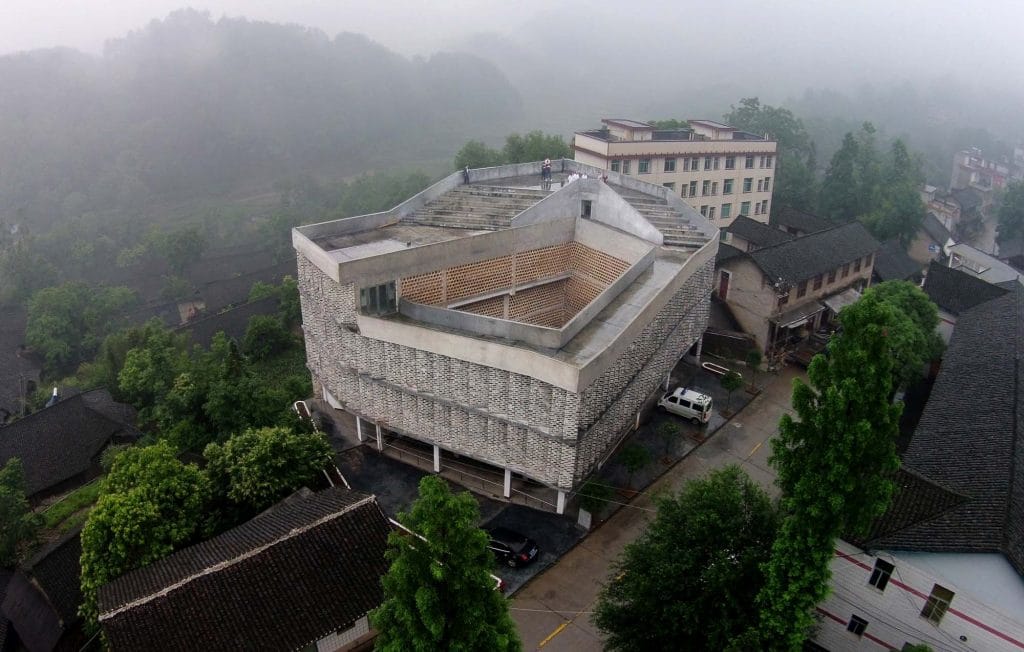
These strategies ensure that the design language remains consistent while responding to local material availability, labour expertise and local aesthetics. For example, Rural-Urban Framework’s projects in China, such as Angdong Hospital in rural Hunan, use local materials and community labour, while its urban work adapts similar principles to denser contexts.

Material and Detailing Strategies for Durability and Accessibility
Selecting construction materials and detailing techniques that are durable, culturally resonant and logistically accessible in low- and middle-income areas requires a focus on local resources and simplicity. Key strategies include the following:
- Local Sourcing: Using materials such as adobe, rammed earth, or bamboo reduces costs and carbon footprint, while adapting to local building traditions. For example, the Hunnarshala Foundation in India utilises the skills of local artisans by using mud and thatch for rural housing.
- Durability and Maintenance: Selecting materials that are resistant to local climates and require minimal maintenance, such as rammed earth for thermal mass in hot regions or timber for resilience in seismic zones. Shigeru Ban’s Nepal earthquake relief houses utilised timber-framed brick structures for durability and ease of construction.
- Simplified Detailing: Using construction techniques that local labour can apply, such as traditional wood joinery or mud plastering, eliminates dependence on special tools or skills. Anna Heringer’s Bangladesh projects increase accessibility by training local people in rammed earth techniques.
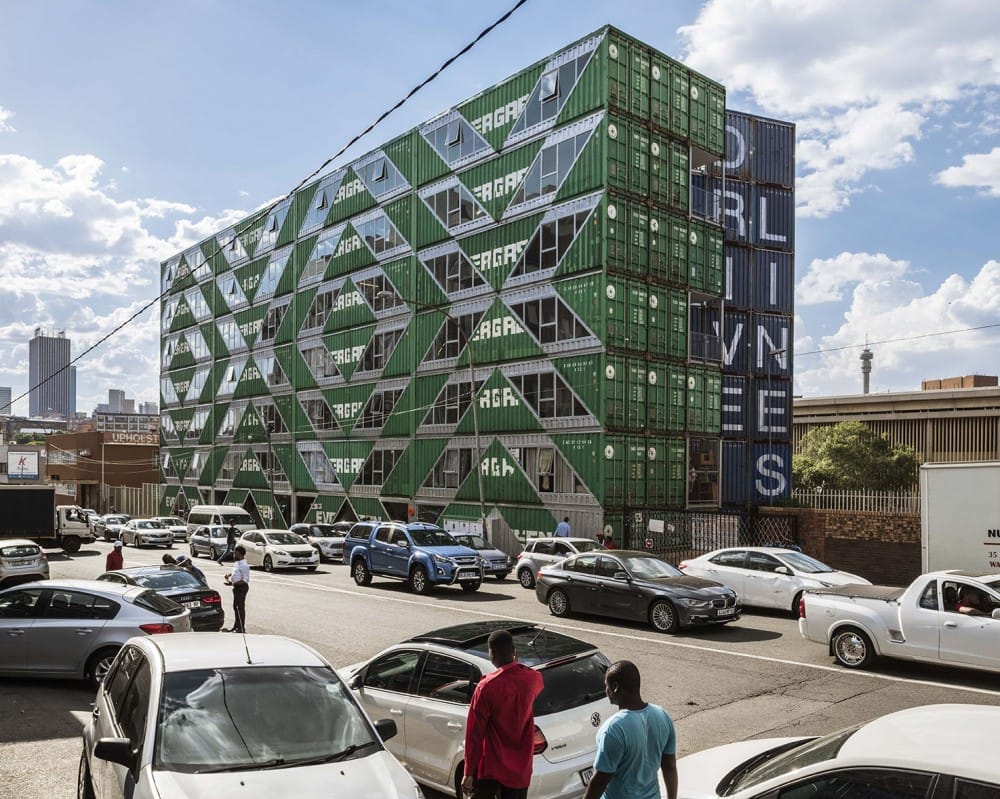
- Life Cycle Assessment: Evaluating materials from procurement to disposal ensures sustainability. In urban settings, recycled materials such as shipping containers, as used in the Maboneng District of Johannesburg, offer affordability and durability.
- Prefabrication: Modular components, as in Kundoo’s Full Fill Homes, simplify construction and reduce costs, making them viable for both urban and rural projects.
These approaches are particularly effective in transition economies where infrastructure may be limited. For example, Yatin Pandya’s Footprints E.A.R.T.H. project in India utilises recycled municipal waste for sustainable construction in both urban and rural contexts.
| Material Strategy | Urban Example | Rural Sample |
|---|---|---|
| Local Ingredients | Recycled shipping containers in Maboneng Precinct, Johannesburg | Bamboo and rammed earth in Heringer’s dwellings in Bangladesh |
| Recycled Materials | Recycled waste in Pandya’s urban projects | Architecture Brio’s waste limestone quarry in Konchur, Karnataka |
| Prefabrication | Kundoo’s Full Houses in urban India | Ban’s paper tube shelters in rural Rwanda |

Expressing Shared Cultural Values with Flexibility
Public infrastructure or housing design serving both urban and rural populations requires an architectural language that balances common cultural values with site-specific adaptability. Strategies include:
- Flexible Typologies: The use of spatial patterns such as courtyards or arcades that adapt to different scales. Courtyards in urban Morocco may be compact, while those in rural areas may be spacious, but both reflect cultural traditions of common space.
- Modular Systems: Scalable designs, such as Aravena’s incremental housing, allow residents to customise spaces, adapting to urban density or rural sprawl. The “half decent house” model in Iquique provides a framework that works across contexts.
- Cultural Motifs: The incorporation of regional elements, such as zellige tiles in Morocco or bamboo in Vietnam, ensures cultural continuity. Kéré’s use of clay and thatch in Burkina Faso and modern forms in the Serpentine Pavilion in London ensure a coherent aesthetic based on community and place.
- Multifunctional Spaces: Designing flexible spaces, such as community centres serving as markets in rural areas or educational centres in cities, meets different lifestyle needs. The Druk Padma Karpo School in Ladakh reduces rural migration by doubling as a community centre.


Projects such as Social Design Collaborative’s ModSkool in Delhi blend urban and rural needs by creating modular, community-orientated schools for farming communities in an urban context. Similarly, MASS Design Group’s work in rural Africa and urban areas of Montana creates a cohesive design language, emphasising community engagement and local materials.