

Museum of Islamic Art: I.M. Pei’s Desert Oasis
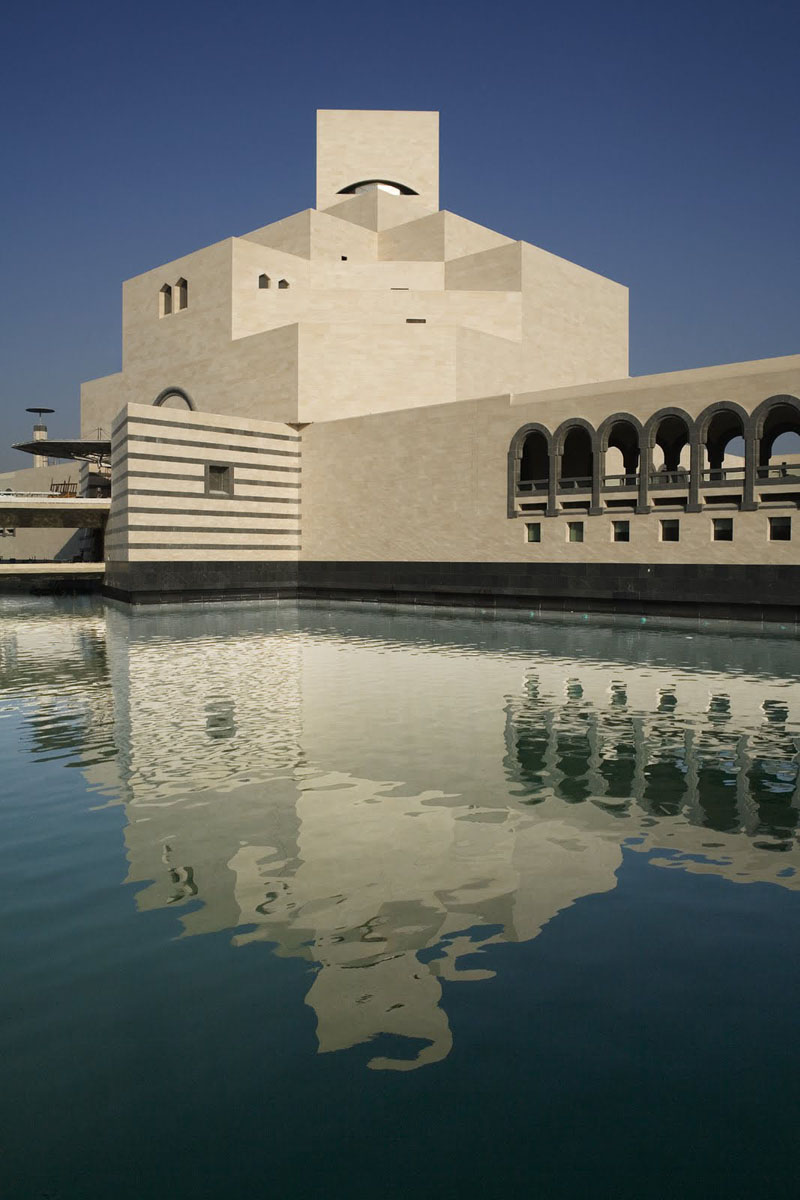
This building is not merely a space for displaying artworks; it is a profound expression of cultural reverence in geometric form. Rising from an artificial peninsula in Doha Bay, its silhouette stands as a quiet monument against the water and sky. Its architecture transforms centuries-old Islamic design principles into a timeless, contemporary language of light and stone. Serving as an oasis for the soul, the building offers a serene counterpoint to the bustling modern city that surrounds it. Here, the desert engages in a dialogue with the sea
A Monumental Task: The Birth of a Vision
The project began as an ambitious nation-building endeavor, aiming to anchor Qatar’s future in the rich soil of its historical identity. This task required more than technical skill; it demanded deep cultural empathy and intellectual translation. For the architect, this was an opportunity that came late in his career to engage with a tradition entirely outside his own—the ultimate test of universal design principles. The vision was to create an icon that would highlight the enduring significance of Islamic civilization in the modern world. This was not merely a
The Emir’s Invitation and Pei’s Initial Hesitations
The Emir’s personal invitation carried the weight of an entire culture’s aspirations. At the time, the retired Pei understood the immense responsibility of representing a heritage not his own. His hesitation stemmed from reverence, from an awareness of the vast scholarly and spiritual journey required before a single line could be drawn. This pause was the project’s first and most crucial act of integrity. It ensured the work would proceed not from assumptions, but from genuine inquiry and understanding.
Journey of Discovery: Exploring Islamic Architectural Heritage

Pei embarked on a six-month journey across the Muslim world, from Spain to India. He was not seeking a style to imitate, but rather the underlying geometric and spiritual logic. Visiting grand mosques and humble tombs, he studied how light defines sacred spaces and how patterns reflect infinite unity. This journey moved the project from abstraction to essence, grounding it in a tangible tradition. The research transformed the architect from an outsider into an interpreter, filtering a broad tradition through his own modernist lens.
Finding the Essence: The Inspiration Behind the Ibn Tulun Mosque


In the simple, fortress-like austerity of Cairo’s Ibn Tulun Mosque, Pei experienced an illuminating revelation. The mosque’s stark geometry and the power of its unadorned architectural form deeply moved him. Its archetypal courtyard and soaring minaret distilled Islamic architecture down to its fundamental principles of mass and void. This encounter provided the key: modernity already existed within the ancient, waiting to be revealed. The museum’s final form reflects this discovery, favoring primal geometric clarity over decorative complexity.
Site: Creating an Island and a Horizon

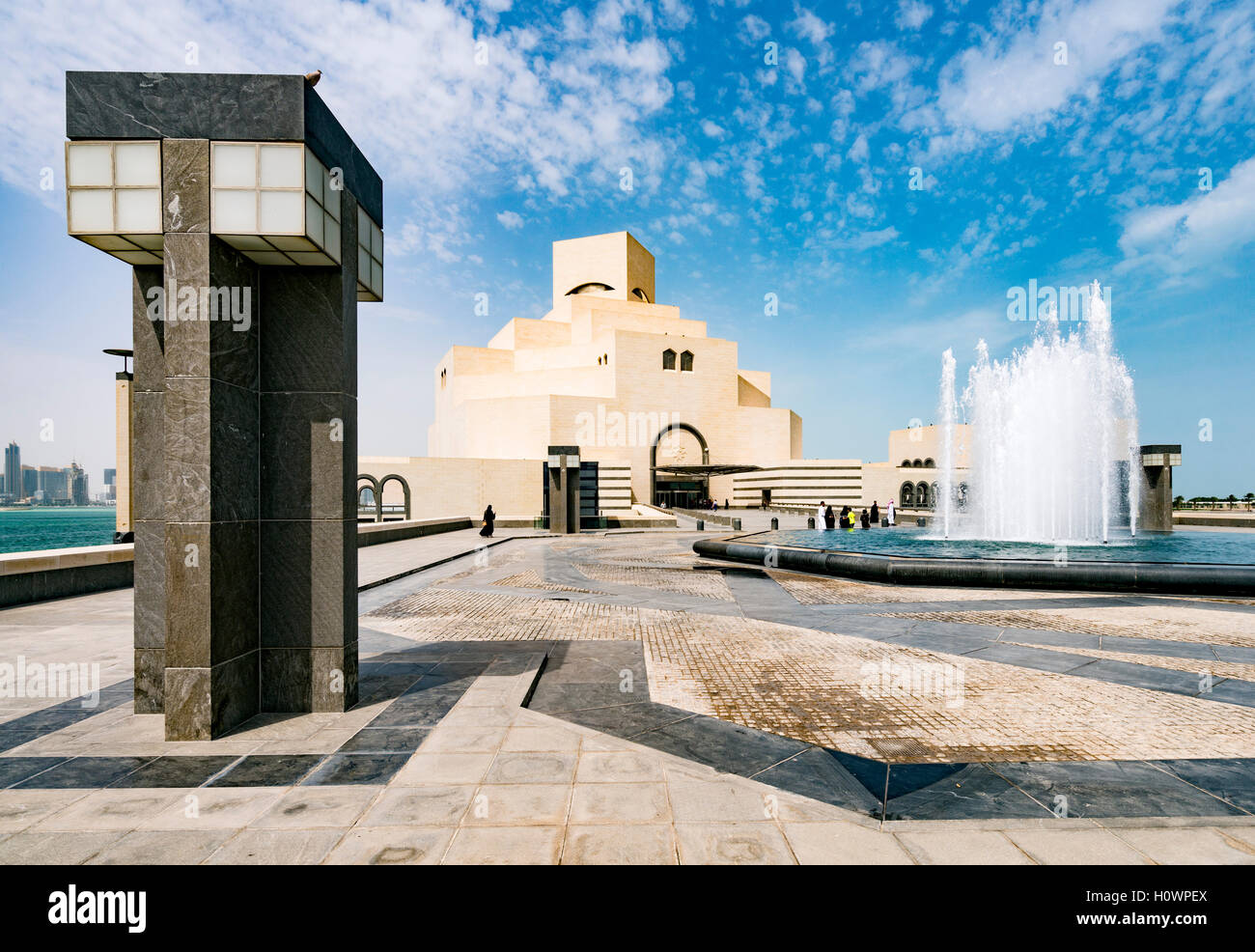
The location was an act of intentional world-making, a peninsula specifically built to give the museum its unique context. Surrounded by water on three sides, the building exists in a state of reflective isolation, set apart from the temporary city. This invented geography frames the architecture as a solitary, contemplative object against the horizon. The resulting silhouette is both iconic and serene, like a human-made mountain rising from the Bay. The site itself became the first exhibition, informing visitors about arrival, approach, and passage
Architectural Philosophy and Form
This is the belief system that gives a building its soul, the invisible logic behind every visible choice. By going beyond mere style, it answers a fundamental question: why does a structure exist in a particular form? A strong philosophy transforms construction into a cultural dialogue, embedding timeless human values into a contemporary form. It is the architect’s manifesto, written in stone, light, and space.
Geometric Purity: The Power of Simple Forms

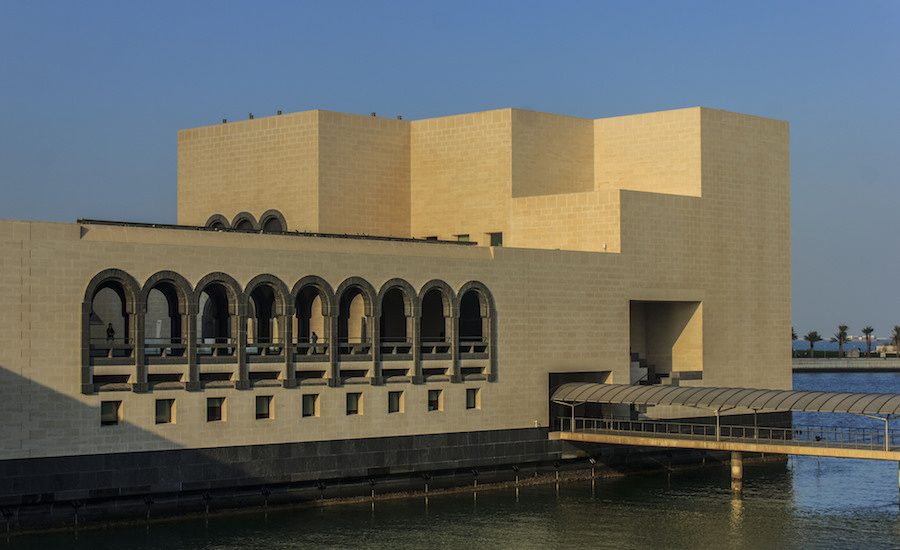
Simple forms possess a primitive authority, speaking a visual language understood across cultures and centuries. The cube, sphere, and cylinder are the fundamental and timeless alphabets of architecture. Their power lies in their clarity, which focuses attention on proportion, scale, and the essence of material. In a complex world, these pure shapes provide a profound sense of order and tranquility. They are the silent giants upon which visual complexity is built.
Light as a Material: Central Atrium and Oculus
Light is not merely illumination; it is a physical substance that can be shaped and directed. The central atrium acts as a massive light reservoir, collecting sunlight and diffusing it deep into the heart of the building. An oculus transforms the roof into an instrument akin to celestial bodies, marking the sun’s passage with a moving spotlight. This intentional framing turns ambient brightness into a dramatic, experiential event. By making the abstract tangible, it gives shape to time.
Interaction of Mass and Void: Solid Geometry and Openings
Architecture is the art of defining space by carving emptiness out of matter. The solid mass of a wall gains meaning only through the void of the window it frames. This relationship is a silent dialogue between enclosure and freedom, between weight and weightlessness. Strategic openings choreograph views and movement, guiding the body and the eye. The balance between them determines a structure’s breath and rhythm.
Modern Interpretation of Muqarnas
Muqarnas is a historical transitional grammar that transforms a flat ceiling into a stepped crystalline vault. A modern interpretation abstracts this principle, capturing its essence of gradual fragmentation and dematerialization. The ornate stone lacework is transformed into layered screens or directional glass, preserving the interplay of light and shadow. This is not mere replication, but a resonance that merges a complex heritage with minimalist contemporary logic. By translating its core idea into a new material language, it honors the past.
Material Palette: Limestone, Steel, and Glass
This selection tells the story of earth, industry, and sky. Limestone connects the building to geological time, offering a warm, textured facade that ages with dignity. Steel provides silent tensile strength for bold cantilevers and openings, forming the skeleton of modern ambition. Glass dissolves boundaries, merging the elegance of interior spaces with the outside world in a seamless visual field. Together, they form a triad of permanence, progress, and transparency. The dialogue between them defines an era’s technological confidence and
Spatial Experience and Enduring Legacy
This building is like a geometric island rising from the sea, feeling as if it was not constructed but discovered. This deeply evokes a sense of having escaped the daily urban life and arrived here. It instills a feeling of silent monumentality, where light and shadow become the primary materials. It is designed not as a temporary spectacle but as a permanent gift to the future—a timeless structure that will transcend its era. The legacy it leaves is a serene gravity that lingers long after one has departed.
Ceremonial Approach: Bridge, Courtyard, and Grand Staircase
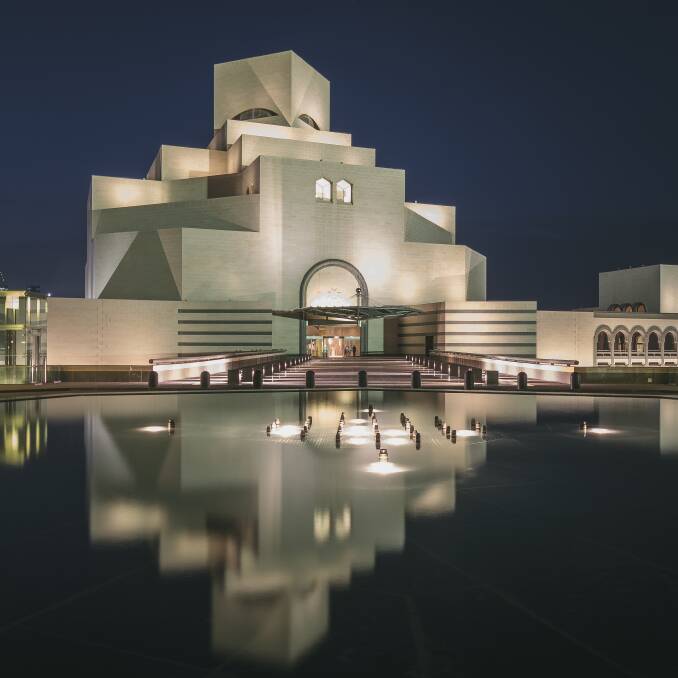
The journey begins with a bridge over water, a symbolic transition from the mundane to the cultural. This deliberate sequencing builds anticipation, framing the museum as a significant destination. The courtyard offers a moment of pause, serving as an open-air hub where the architecture can be fully appreciated. Finally, the grand staircase draws you upward with ceremonial grace, completing the ritual of arrival. This choreographed approach transforms a simple visit into a meaningful pilgrimage.
Curatorial Canvas: Galleries Designed for Artworks
Galleries are not neutral containers but active participants in the narrative of the objects they house. Their proportions and lighting are meticulously calibrated to honor the scale and materiality of ancient artifacts. The walls are curved and the spaces interconnected, creating an intuitive flow that encourages contemplation rather than haste. Each room transforms into a stage where history takes center stage, quietly supported by the architecture. This design philosophy ensures that art retains its sovereignty, framed by a respectful and resonant silence.
A Civil Pillar: The Role of the Museum in Doha’s Cultural Ascent
This museum is a physical declaration of a nation’s commitment to its past and its global cultural future. By placing such a monumental institution on a reclaimed coastline, it recenters the city’s identity around knowledge and beauty. The museum serves as a catalyst, attracting international discourse and enriching the local creative environment. Transforming from a building into an icon, it symbolizes the shift from resource-based wealth to heritage-based influence. Its true function is to add a new page to the city’s history, written in light and
Pei’s Last Masterpiece: The Closing of a Brilliant Career
This project represents the essence of a lifetime of architectural principles, a master’s final statement. It revisits and refines his lifelong fascination with pure geometry, light, and culturally resonant forms. There is a profound clarity and confidence here, the work of an architect with nothing left to prove. It serves as a perfect bookend, merging the modernist rigor of his early career with a timeless, almost ancient sensibility. This building is his lasting whisper—a calm and powerful testament to the career that shaped the